For Families who speak English as a Second Language who have been driven to Warrington by circumstance
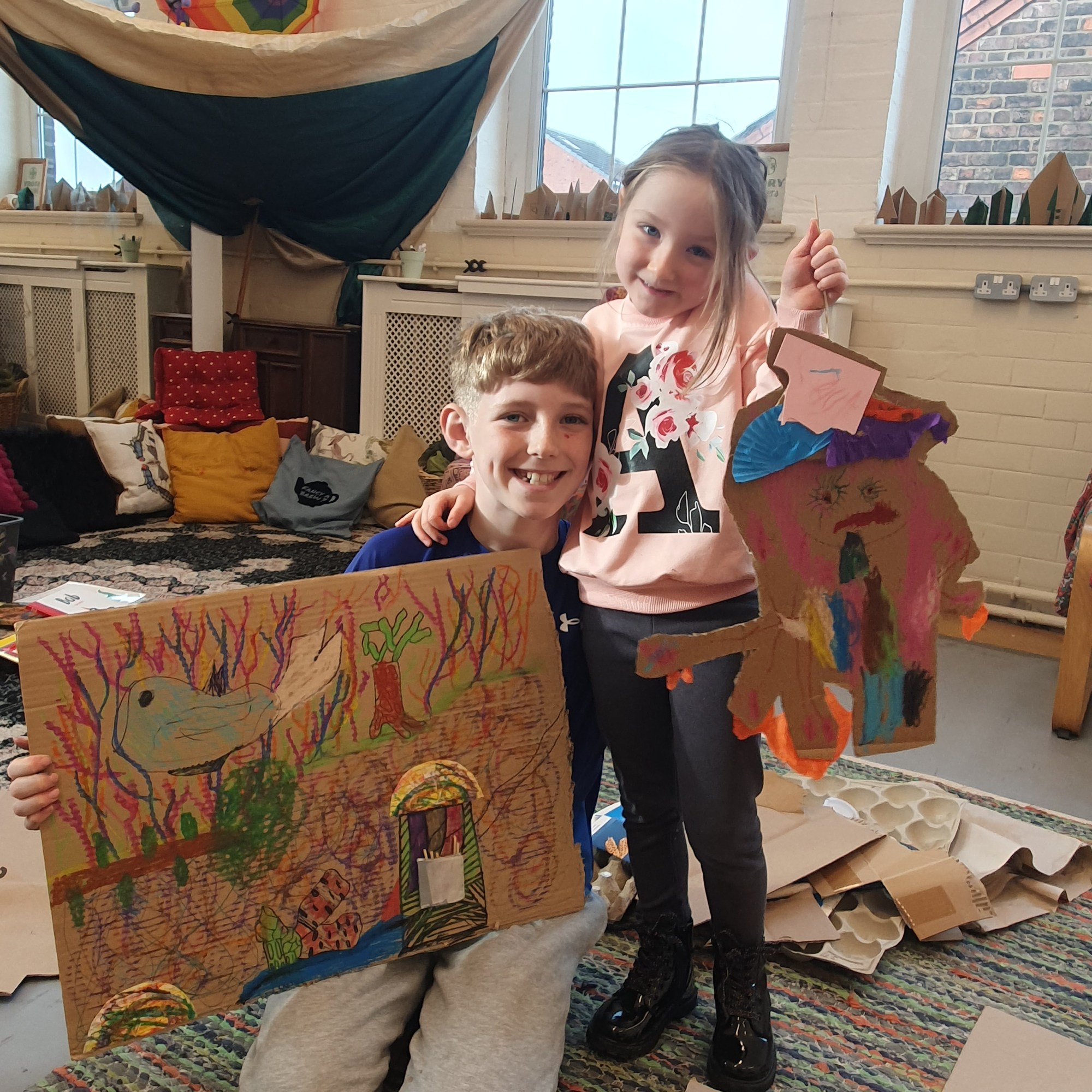
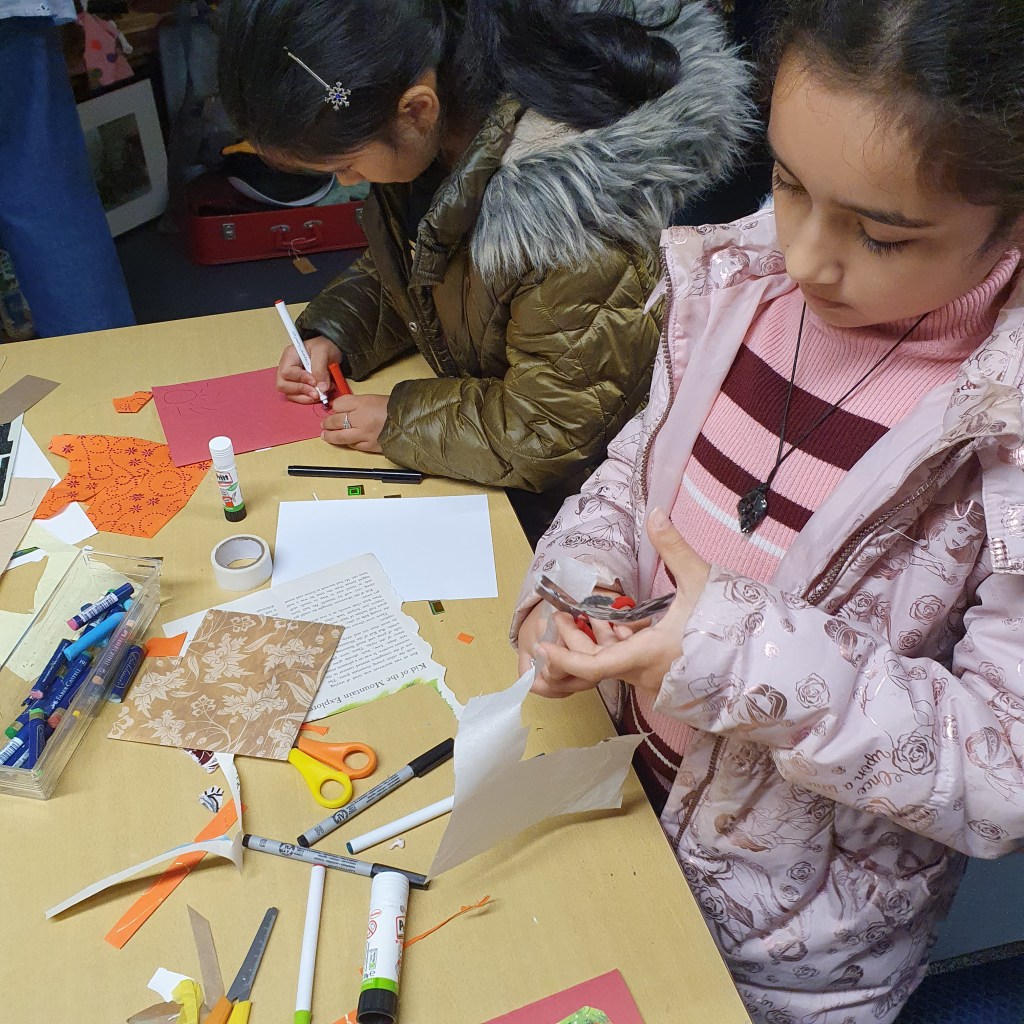
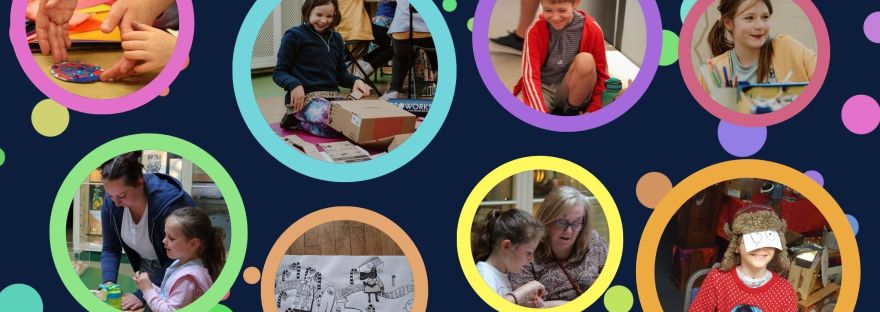
At our Story Makers group we aim to support families who have arrived in Warrington through diverse circumstances by offering accessible, arts-based activities that encourage expression, community connection and celebrate our cultures, with support for ESOL learners.
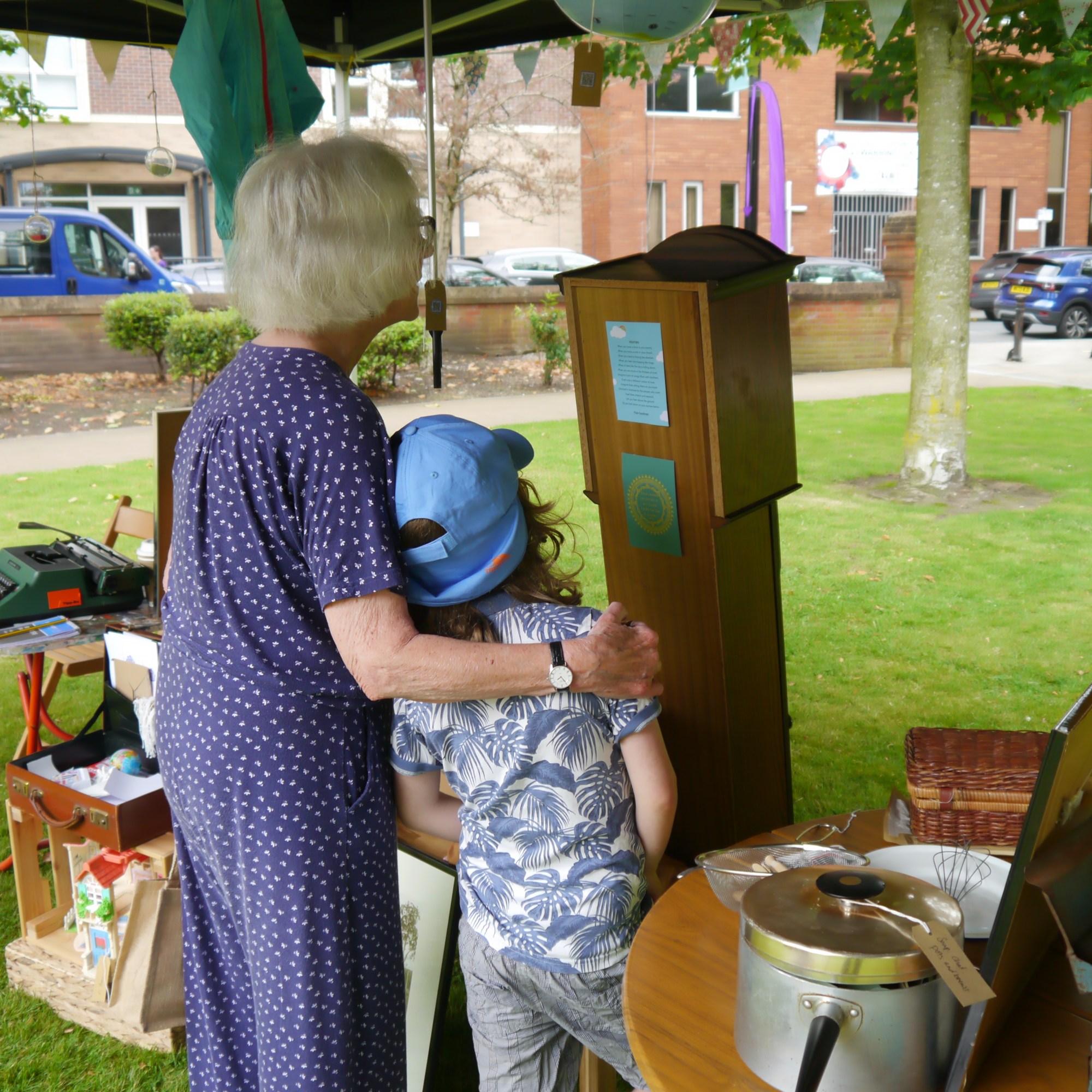
Children, parents and grandparents are all welcome to come together to share stories, play and learn English.
Everyone’s story matters. Everyone is welcome.
What We Do:
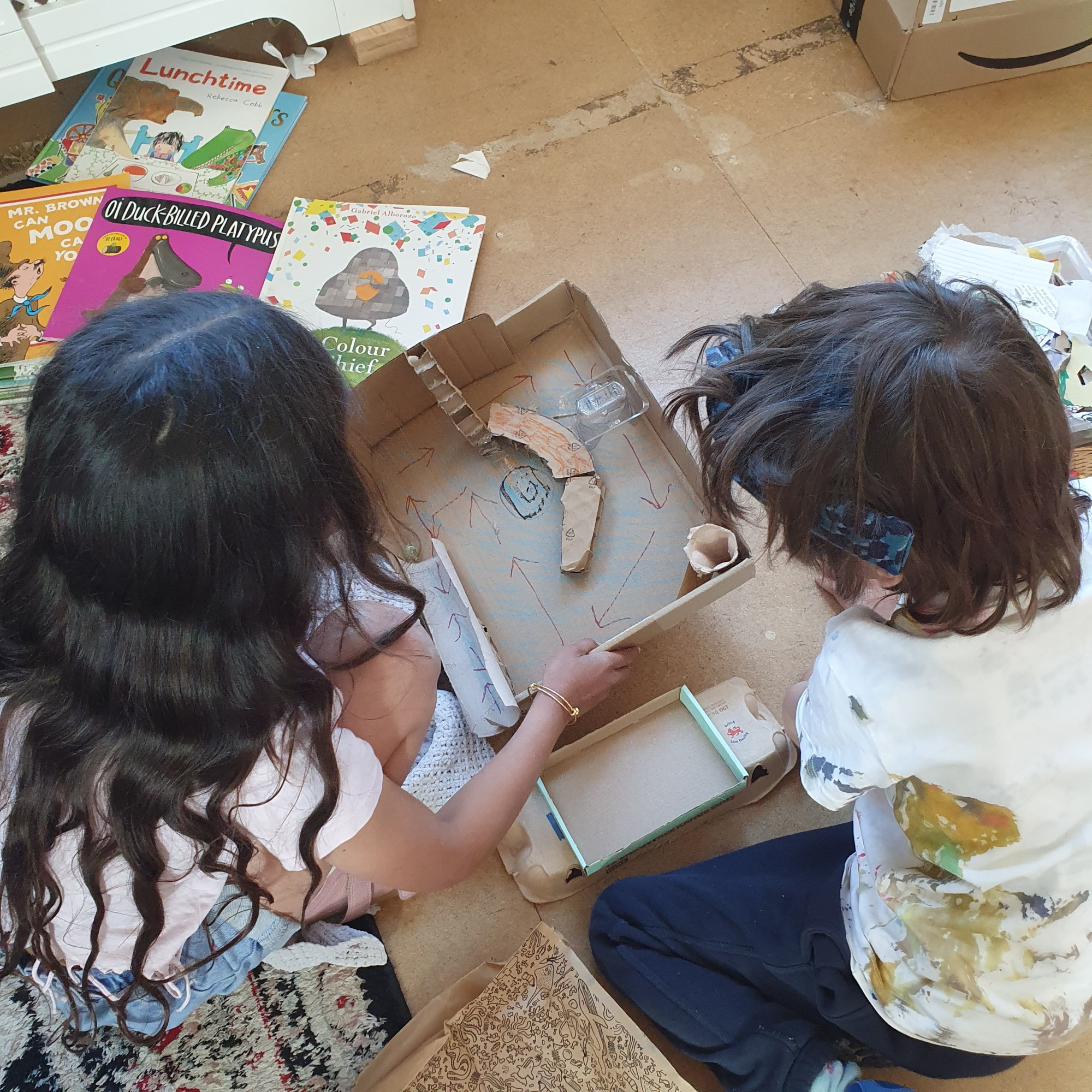
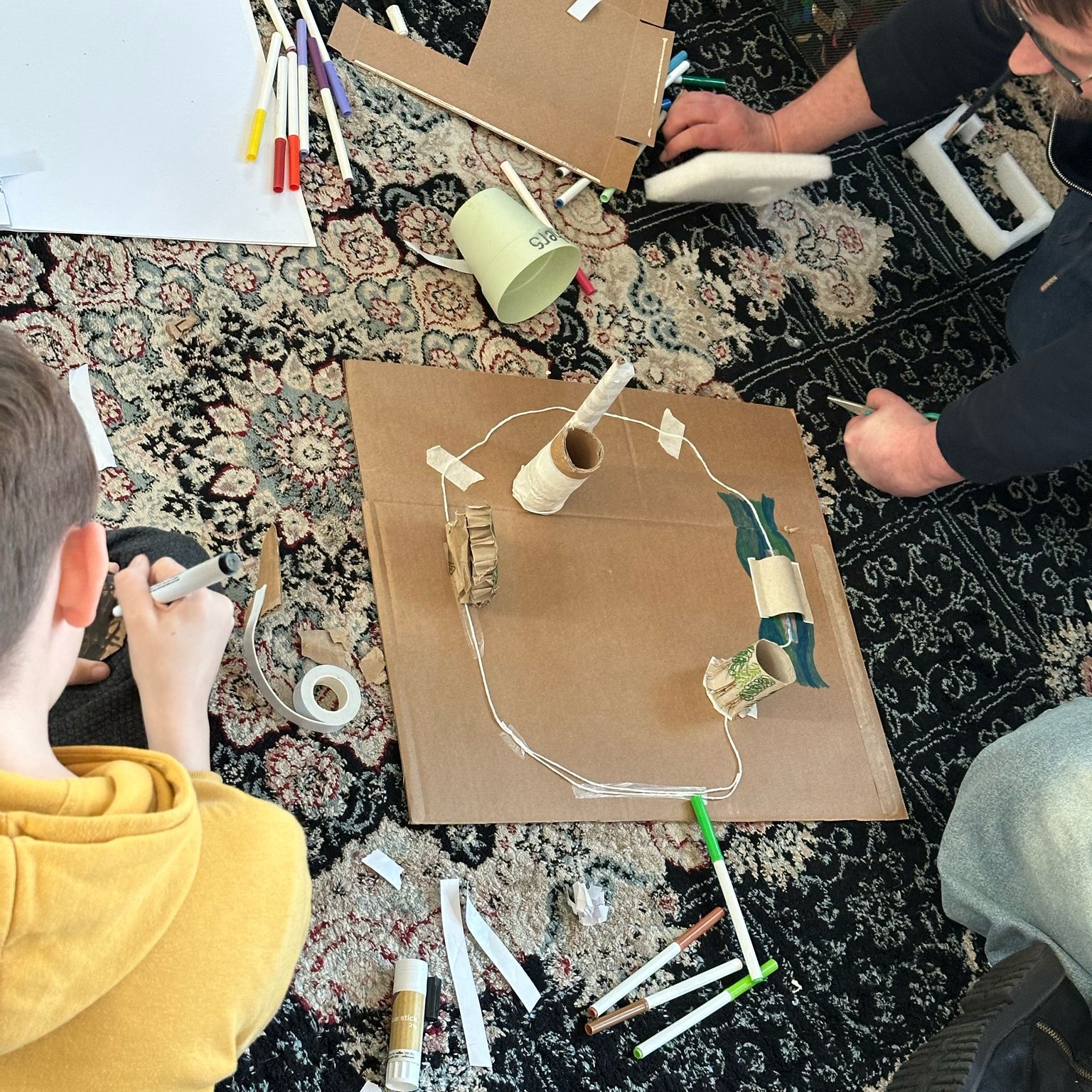
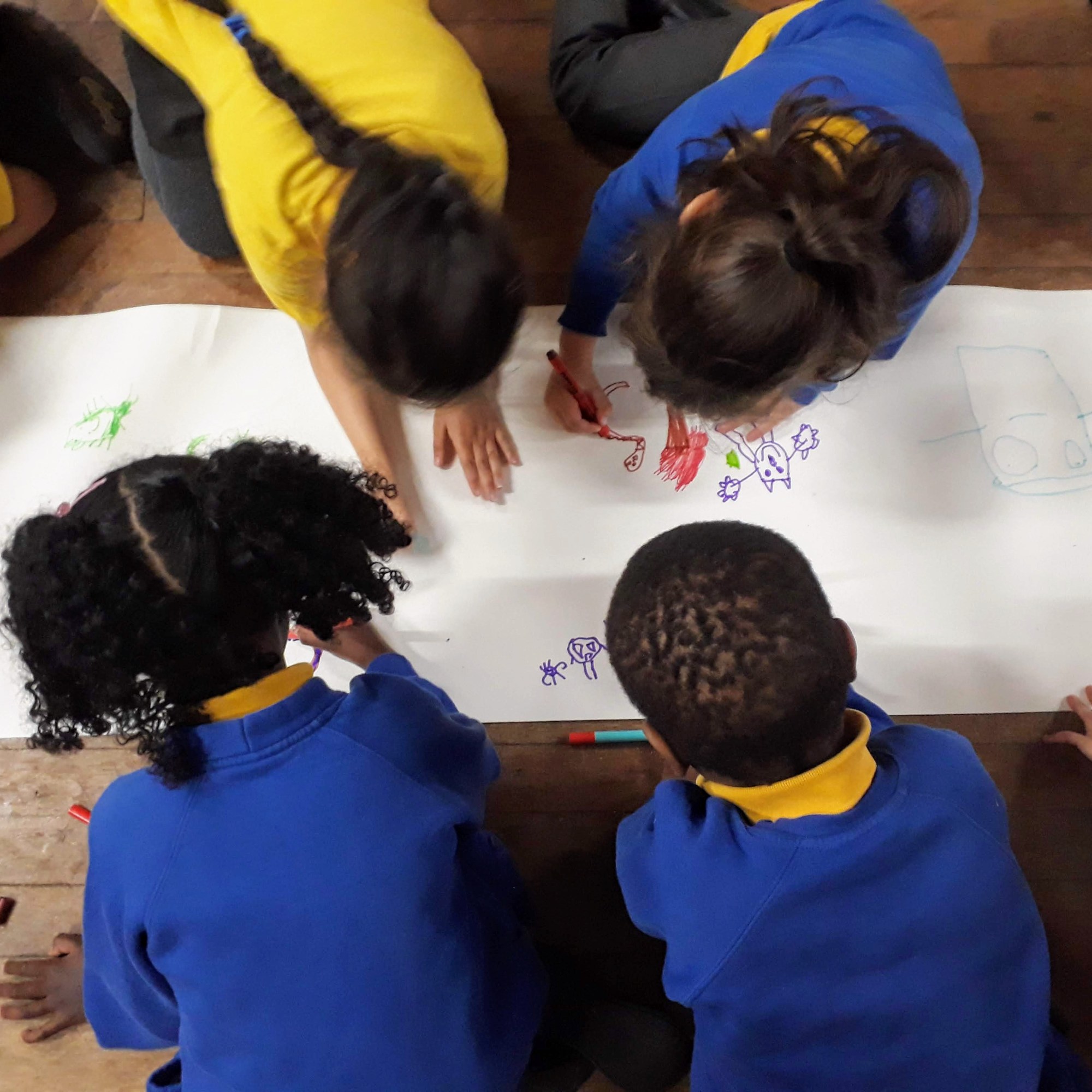
Tell and create stories together
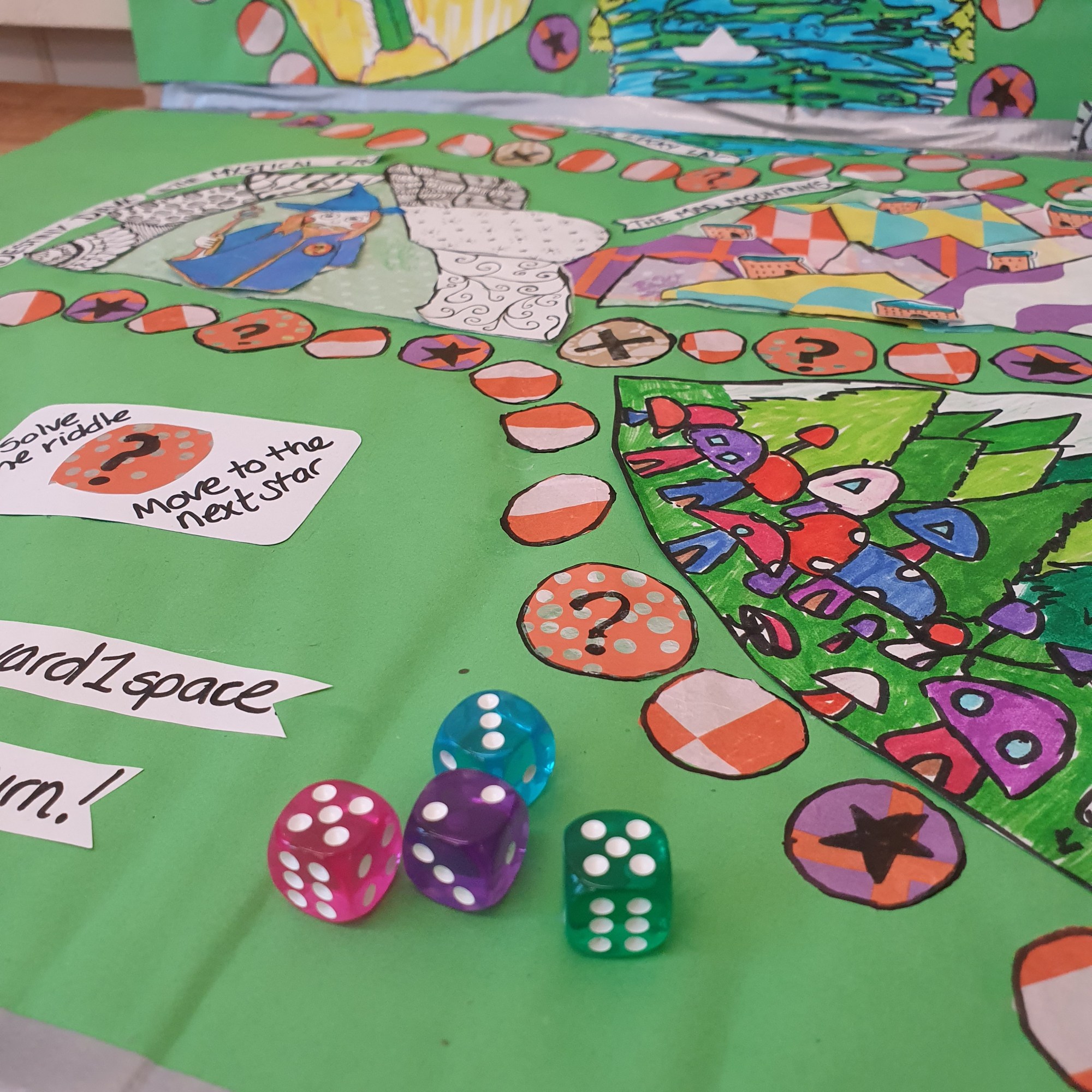
Play games with words and imagination
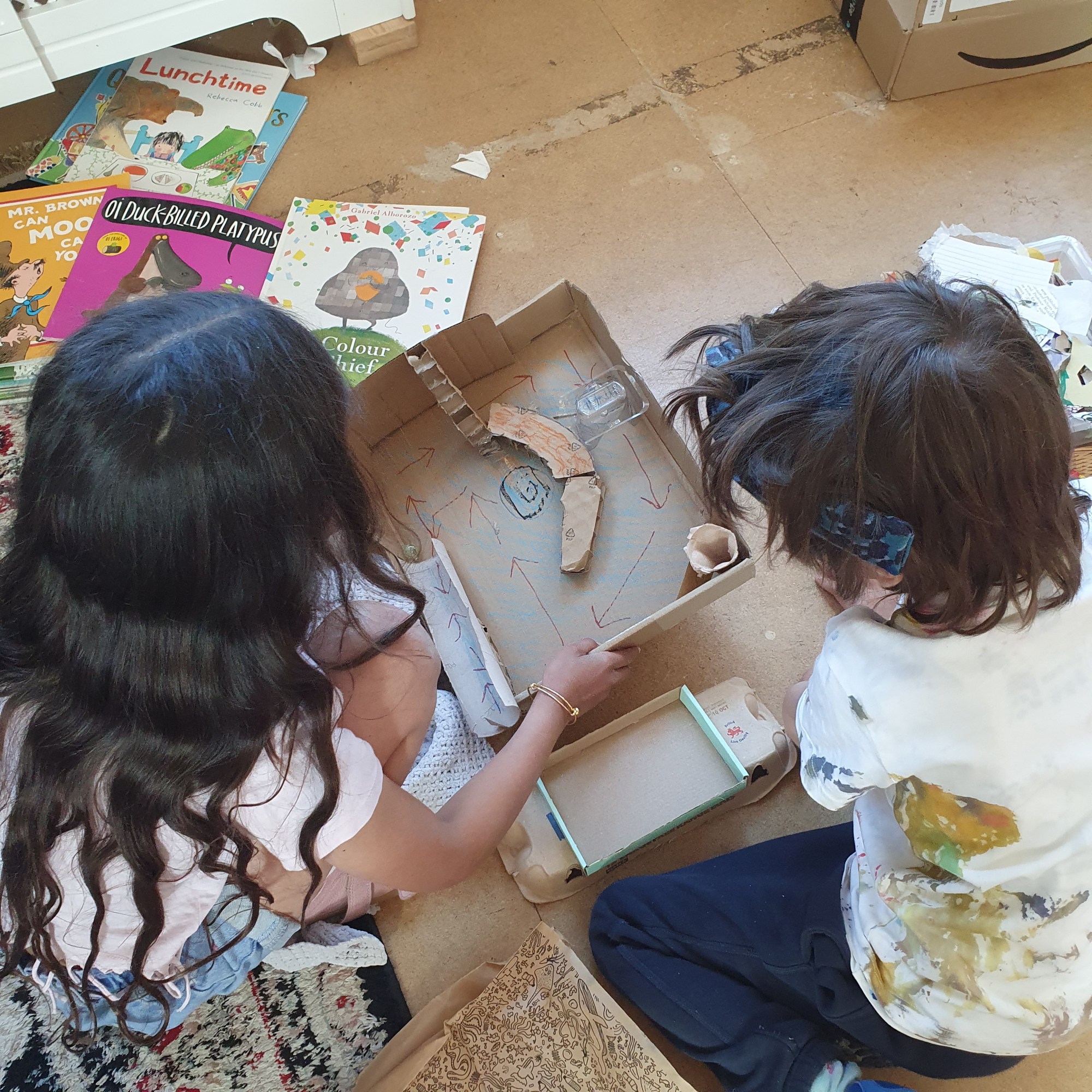
Make art and crafts inspired by stories
Learn English in a fun, friendly way
Celebrate Multicultural Warrington
Details
Day & Time: Tuesdays 4.00-5.30, from 13th January 2026
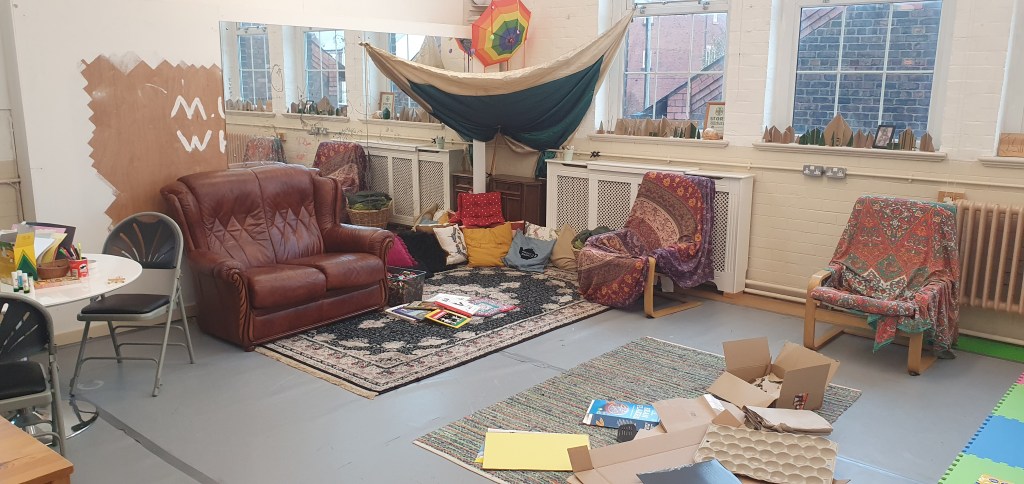
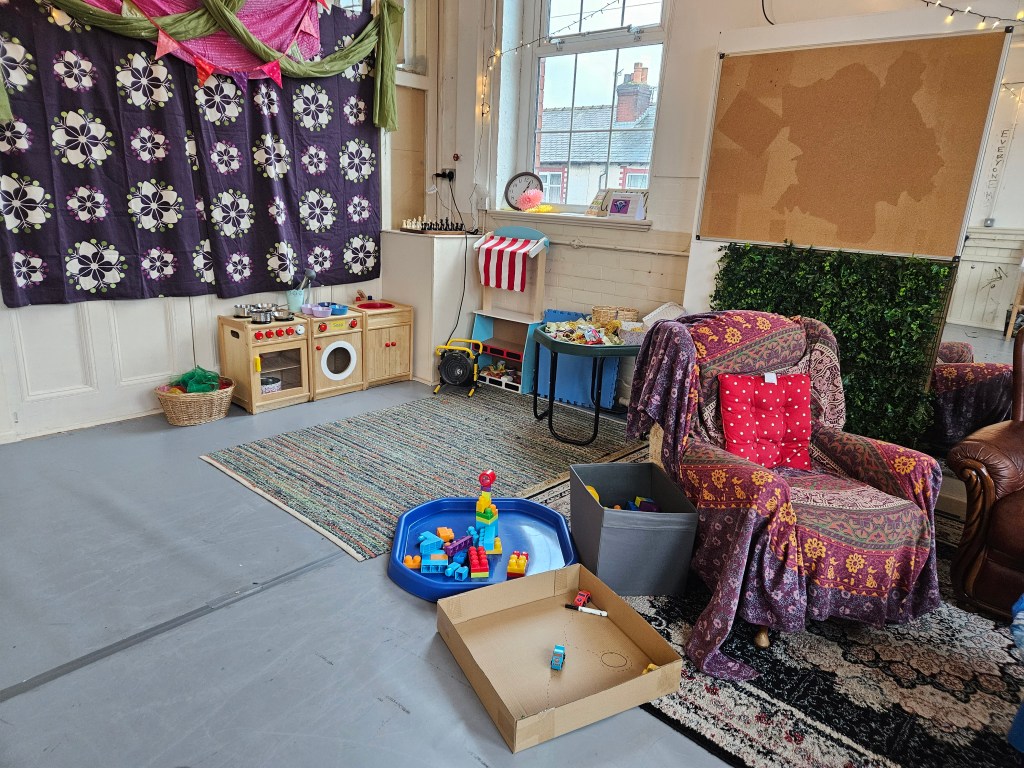
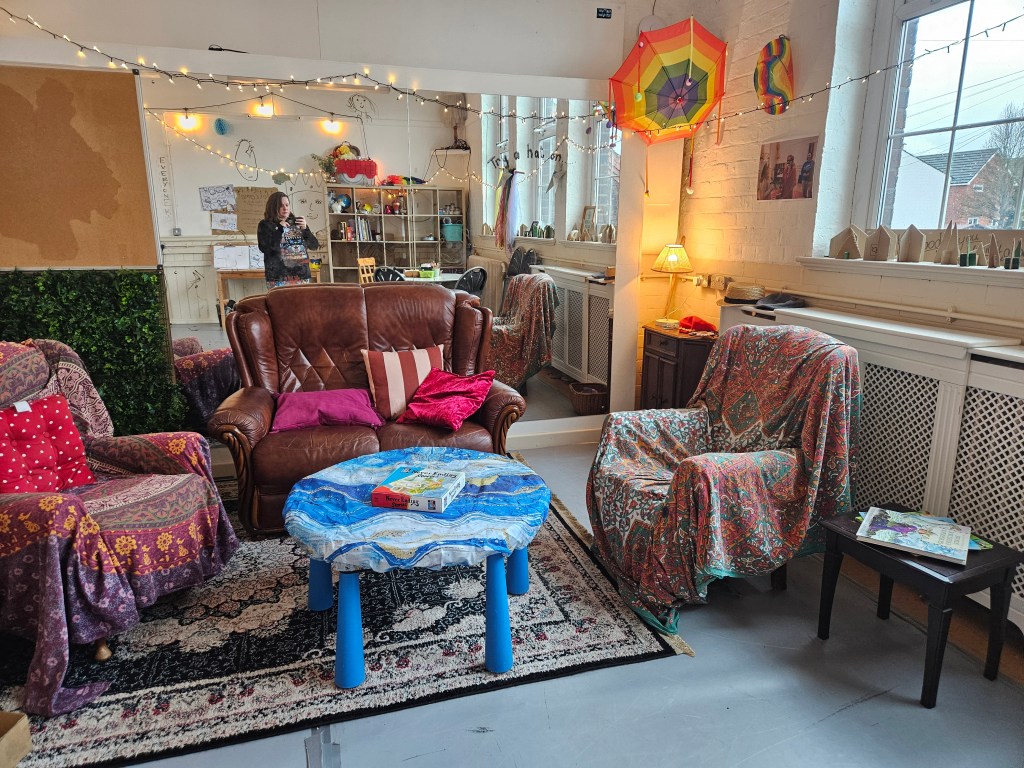
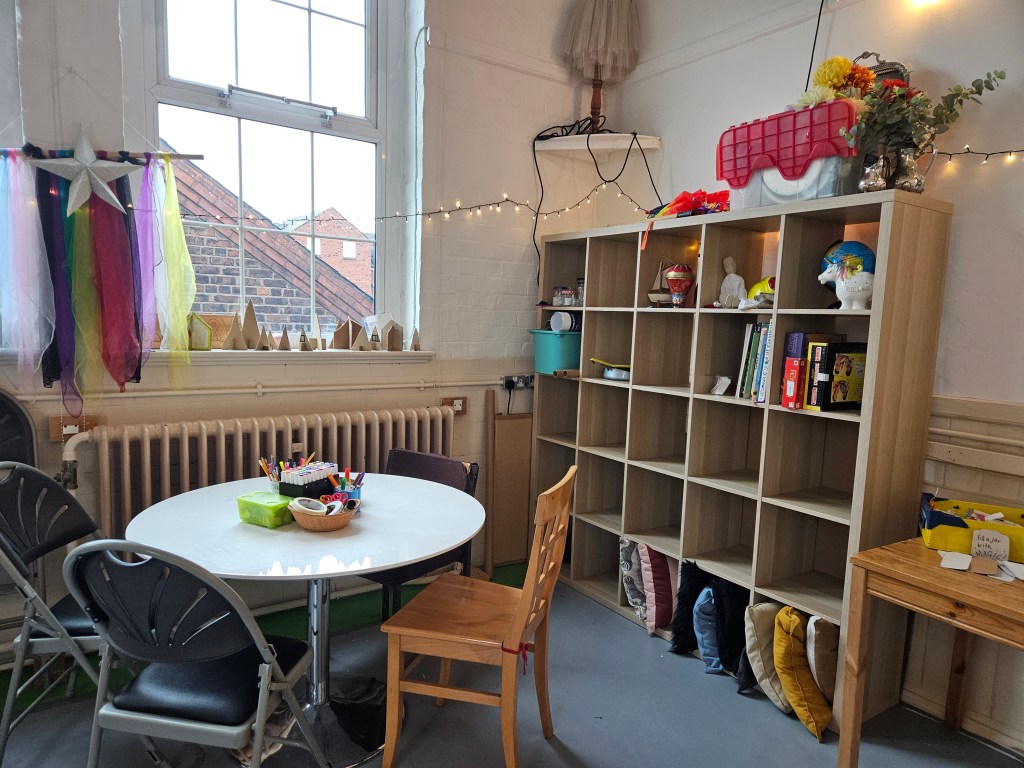
Location: The Old School, Warrington, WA1 3AJ
Email: hello@storystitchers.co.uk to book your place or find out more
We have secured funding to run this group until June 2026. At the end of the project we may produce some kind of creative outcome like an exhibition or a book. This will be decided by the group in a process of co production.
Easy Read Guide for our Group
Who is this group for?
Families who have come to Warrington driven by circumstances
People learning English (ESOL)
Grandparents, parents and children to spend time together
What do we do?
Creative activities – arts, crafts, creative writing, storytelling and imaginative play
Learn new words and talk
Meet new people
Have fun
Do I need to be good at speaking English?
No. You can join even if you only speak a little English. We help each other. We use pictures, words, and art to communicate.
Why join the group?
To make friends
To feel part of the community
To relax
To learn English in a friendly way
To enjoy being creative with your family
What do I need to bring?
Your family. All art materials are provided
How much does it cost?
It is free. These sessions are funded by The National Lottery Community Fund.
When and where is it?
Tuesdays, 4 – 5.30pm, upstairs at The Old School, Warrington, WA1 3AJ
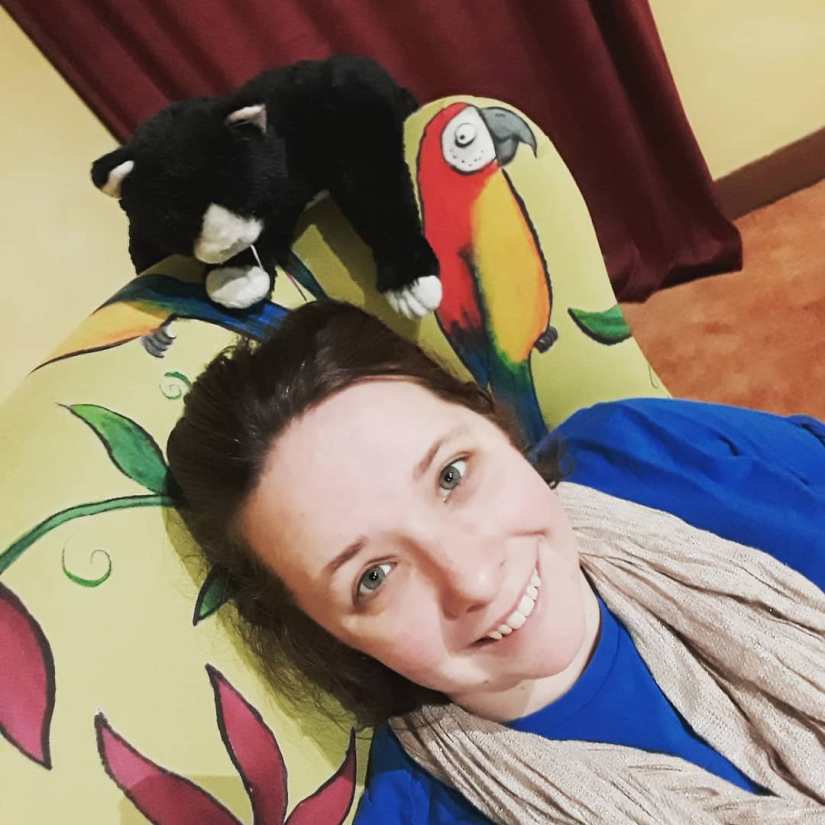
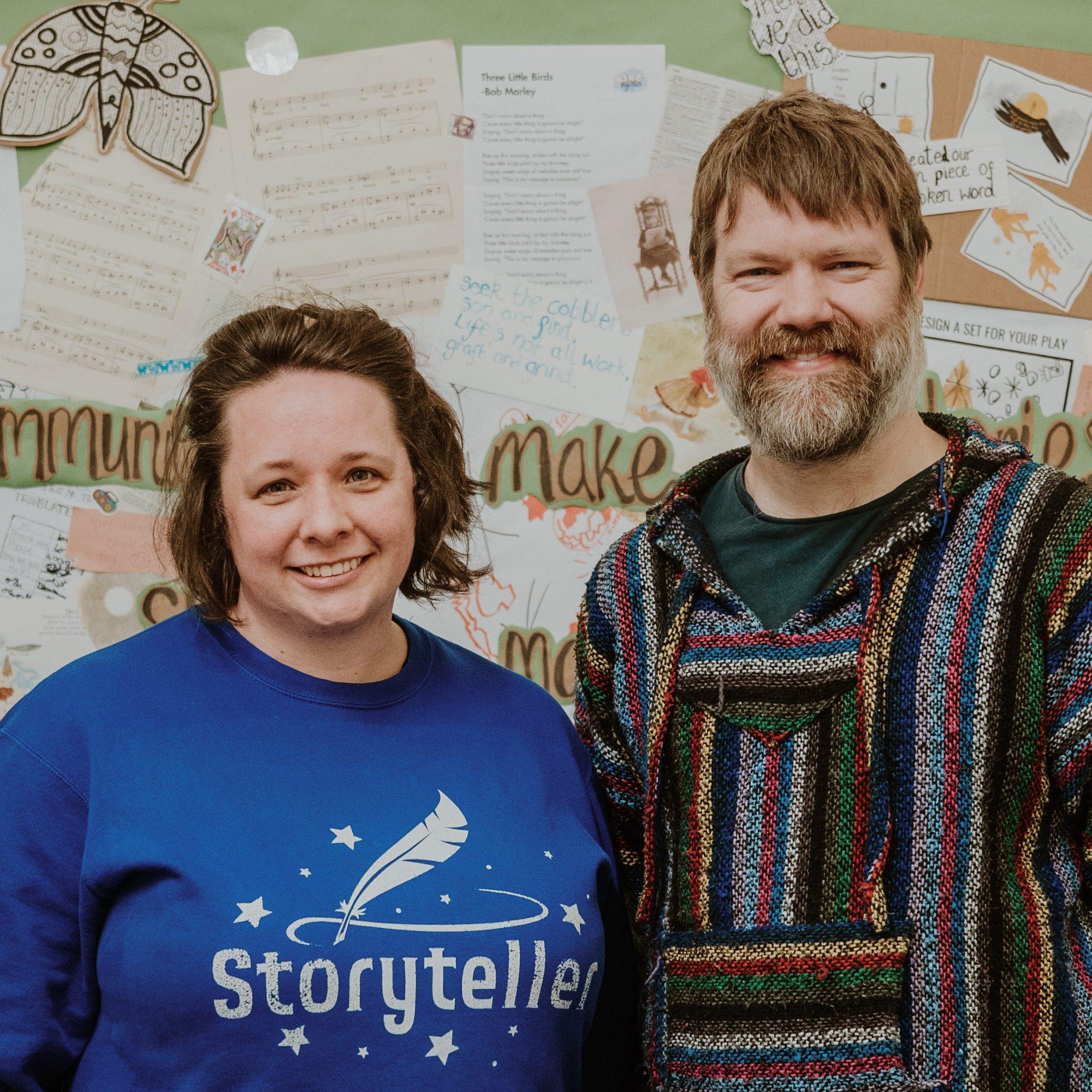
Flick Barry is a CELTA qualified ESOL teacher and has been a community artist for 20 years. She is experienced at storytelling work with all ages, including working with ESOL students and refugee families. She is British born and throughout her life is lucky to have worked and travelled around the world. Flick is supported by friendly staff and volunteers to ensure that your experience is a positive one.
How do I find out more or sign my family up?
Please send an email to hello@storystitchers.co.uk to sign up or find out more.
Please feel free to download and share our poster with anyone who you think might be interested in coming.
Fee: £50 per 90-minute session (+ 30 minutes setup/pack down)
Location: The Old School, Warrington
Discipline: Open to all art forms (Storytelling, visual arts, music, movement, writing, performance, etc.)
Commitment: Regular sessions over the project period (November to June)- afternoons, evening and weekends (schedule TBC)
Requirements: Public Liability Insurance, DBS Check, and two references
Deadline for applications: 5th November
Workshop Interview: 11th November, 1.30-4.30
About the Project
We are looking for an Apprentice to support a creative community space in Warrington, engaging three community groups:
Older adults, once a week
Families seeking Sanctuary, once a week
Neurodivergent (ND) primary-aged children and families, once a month
Building on the success of a pilot project with ND families, this new initiative funded by Lotteries Community Fund, will expand our Story Stitchers approach to foster confidence, creativity and connection through regular arts-based sessions.
Our listening-led, storytelling and co-creation method helps participants express themselves, share stories and build a sense of identity, belonging and wellbeing in a safe, inclusive environment. You can read more about what this looks like in practice here.
Role Description
As an Apprentice Facilitator, you will work alongside an experienced lead artist to:
Support participants during creative sessions
Help set up and pack down materials and equipment
Assist with gathering participant feedback and reflections
Contribute to a positive, inclusive, and welcoming atmosphere
This is an opportunity for an emerging artist interested in developing community facilitation skills and working with diverse groups. You will gain hands-on experience in socially engaged practice and learn how to deliver inclusive, participant-led creative sessions.
Who We’re Looking For
We welcome applications from emerging artists working in any creative discipline who:
Are passionate about community arts and creative inclusion
Are reliable, adaptable, and supportive in group settings
Have or are willing to obtain Public Liability Insurance and a DBS check
Can provide two references
We are particularly keen to hear from artists who have cultural understanding relevant to the communities we are engaging with.
Workshop Interview
Date: 11th November
Time: 1.30-4.30
Location: The Old School, Warrington
We will host a workshop interview in the afternoon. In this workshop we will share more about the project and invite you to lead a 15 minute activity relevant to your creative discipline. Applicants will need to be available for the duration of the workshop and expected to join in the session.
How to Apply
Please email your application to hello@storystitchers.co.uk by 9am, 5th November including the following:
A short statement (up to 500 words) about your practice and why you’re interested in this role
Like stories, beginnings are important. We are often asked
“How do we start a project? What approaches do we have? What attitudes do we foster?”
So this is how we unpack the beginning of things, how we establish relationships and cultivate joy and wonder.
Joy Seeking
If we support folk to discover joy and curiosity, they are more likely to connect with meaningful creative activity. The word glimmer entered our vocabulary from the trauma informed community. For those who don’t know, a glimmer is considered to be the opposite of a trigger. While a trigger may cause trauma, stress or anxiety to surface, a glimmer is considered to be micro moments that induce happiness. Once we become aware of those glimmers, we can start to build upon them and make more time in our life to do the things that generate those glimmers.
However, some of our participants are not ready for glimmer hunting. They are so bogged down in the stresses of life that even a glimmer is beyond them. So we will look for a Spark. If a glimmer is a micro moment, a Spark is a nano second. A flashing twinkle that may fizzle out before the participant has even recognised that jot of joy in their body. As facilitators, it is our job to seek the Spark in our participants and build upon it.
This is a very watchful practice. These Sparks might be a widening of the eyes, a satisfied sigh, a flicker of a smile or a leaning into the work. It cannot be achieved if we are too busy teaching a refined artistic skill or aiming for an explicit finished piece of work. In this stage this is how we establish a relationship, we want to connect to the human before we connect to the artist. This early stage of creative collaboration is built around accessibility and appropriateness for the participant. We call this Scrapbook Storytelling.
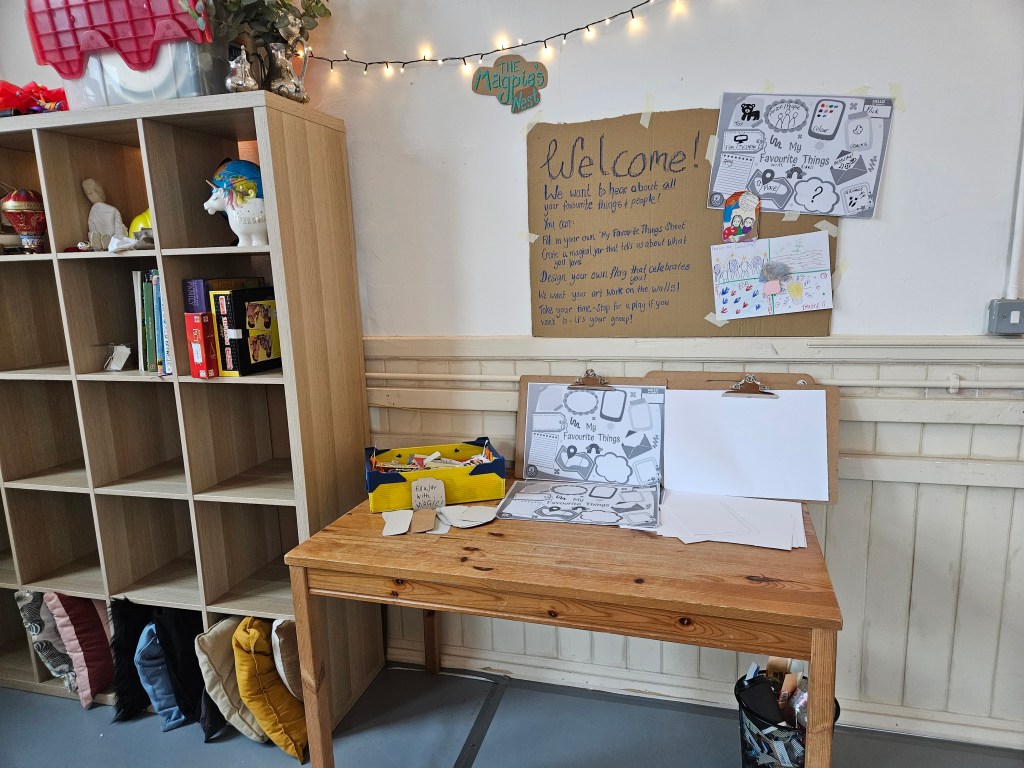
This could be a prompt sheet to encourage words or drawing their favourite things or telling us about their favourite character from a film, TV or book or collaging an object that they use everyday. From this moment we can really start to tailor the creative offer to match the common interests of the group. This is where the glimmers emerge and the participants begin to recognise the joy they are discovering in their creative practice. With our encouragement, we as a group start to seek the joy out.
This is done authentically. We, as artists, are also seeking joy. Instead of commenting on whether someone’s outcome is ‘Good ‘ or not, we give feedback on the approach: “I can see how you have made those dots using the pencil” or “You look happy. Is it the colours that you have used that are making you so happy?”
Wondering
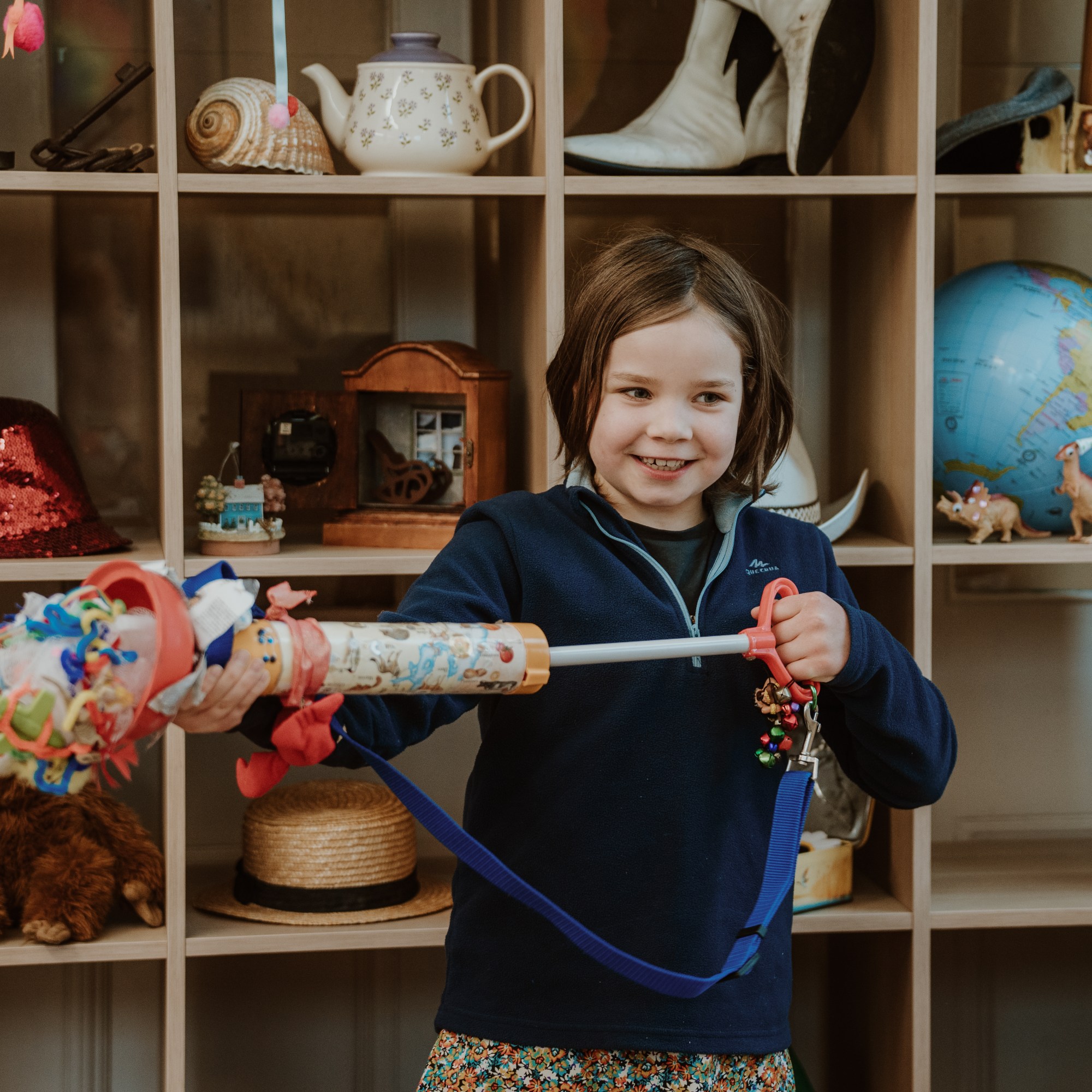
Once there is a collective feeling of joy seeking amongst the group, we are ready to access the next level of an artistic practice – Wondering. Wondering is our way of describing a creative curiosity that is born out of an artistic practice and exploration of an idea. It is not just about the participant wondering, it is also about the facilitator providing high quality artistic stimulus to provoke wonder. It often begins with a Wonder Box. A Wonder Box is a vessel filled with objects to provoke conversation. The box should reflect the conversations and interests that have been discovered in the previous sessions, curated to provoke a more in depth decision. This may evolve into something more specific like the inside of a carriage clock that houses clues to a secret character or a piece of audio that invites inspiration.
The Wondering stage is also there to encourage and cultivate creative skills. In this stage of the process the facilitator should begin sharing techniques to enhance the participant’s creative practice. In the previous stage, we may have used materials that are available at home – lots of recycled card, scrap paper, colouring pencils and pens. In the Wondering stage we will begin to elevate the materials on offer, Aqua markers instead of felt tips, Fineliners over pencils and introducing clay or acrylic paint pens. There is also some creative risk taking that comes with this practice. So we will scaffold this to reduce risk. If making a mark is too overwhelming for fear of getting it wrong, we will incorporate time and materials to practice.
As we work through the group’s Wondering era, the artist starts to see what the outcome could be. This is gently fed back to the group and feedback gathered about whether this idea is exciting to them as a collective.
Inspired by the rich history of social movements in the UK, our Revolt Artivism Workshops aim to empower Key stage 2 and 3 students to create change through drama, storytelling, songwriting and poetry. Below you can read about some of those movements that shaped our nation when ordinary people asked for change.
Peterloo
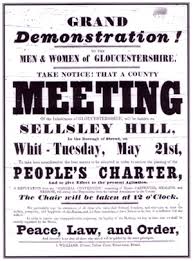
On 16th August 1819, around 80,000 people gathered on St Peter’s Field in central Manchester to demand democratic representation.
Most of them were industrial workers from Manchester and its surrounding towns, who had suffered from an economic depression and left without support from the government.. They peacefully came together to demand the right to make their lives better.
Under colourful banners hand stitched with slogans like “Unity and Strength” ,and “Liberty and Fraternity”, they listened to radicals like Henry Hunt speak up for their rights and democratic reform.
It ended with the government cavalry – instructed to keep the ‘peace’ – armed with swords, charged the crowd of men, women and children. 18 people were killed and 700 people were injured.
Masque of Anarchy
Percy Bysshe Shelley (1792-1822) wrote this in the aftermath of Peterloo. Due to government censorship and fear that the poem would lead to greater civil unrest, the poem wasn’t published for another 13 years. It was never actually published in Shelley’s lifetime.
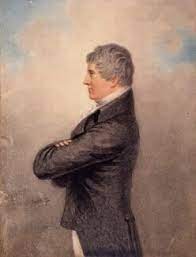
Henry Hunt
1773 -1835
Henry “Orator” Hunt was a British radical speaker and pioneer of working-class radicalism and an important influence on the later Chartist Movement. He campaigned for parliamentary reform. He was the first member of parliament to advocate for women’s right to vote.
Hunt, encouraged people to attend a meeting at Peterloo on the 16 August ‘armed with NO OTHER WEAPON but that of a self-approving conscience’.
After the massacre at Peterloo, Hunt and nine others were charged with ‘unlawful and seditious assembling for the purpose of exciting discontent .’
Hunt was found guilty in March 1820 and sentenced to two and a half years in Ilchester Gaol. In prison, he wrote his autobiography and two book titled “To the Radical Reformers, Male and Female of England, Ireland and Scotland”.
‘I am determined the Working Classes shall have the reform they want.’
Henry Hunt
In 1830 he became a member of Parliament for Preston. As a consistent champion of the working classes, He gave speeches addressed to the urging them to press for full equal rights and hold politicians to account.
The Chartists
The Chartist movement was the first mass movement driven by the working classes. It grew following the 1832 Reform Act which didn’t offer voting rights to people unless they owned property.
In 1838 a People’s Charter was written, it had 6 demands:
All men to have the vote
Voting should take place by secret ballot
Parliamentary elections every year
Constituencies should be of equal size
Members of Parliament should be paid
You shouldn’t have to own property to be become a Member of Parliament
Chartist Anthem
Here’s Flick singing the Chartist Anthem (1847) by Ben Boucher which dates from the Chartist struggles of the 1840s. Ben Boucher (1769-1851) was a miner who turned to making a living by selling his poems at a penny each in the streets. He died in Dudley workhouse.
You can read all about the different creative Revolt workshops that we offer here
Here we are on the last day of 100 days of our quest to seek joy. Over the last 100 days we have had over 10,000 interactions with audiences through social media. But what about us? How did we feel seeing those prompts coming in every day?
You see we played along too. We prepared these 100 days ahead over summer. Flick colour coded 100 lines in a spreadsheet. Tom scheduled the posts. A handful were spur of the moment when the scheduling failed. But while we want to encourage others to find joy, we need to seek it too.
When we started we could sense that society was feeling a pressure, and we knew that people were feeling the stress. We never saw these 100 days as a way to fix that, but we did think that it might bring a small moment of reflection, a small moment of happiness in what can sometimes feel like a marathon. And now we are at the end. And discontentment and worry is as vivid as that crunchy ice underfoot that this viscous cold snap is preserving. It did lift us, even for a small moment and when we logged in and saw the discussion that the Joy Seeking had provoked between others, people of different ages and sometimes living on different continents, it filled us up even more.
“Art can be a refuge.”
Our home is not untouched by the stresses of the wider world, we don’t live in a vacuum. Our work has us reaching out and lending an ear and finding ways for you to feel that your stories matter. That you matter. However, we see the burn out, the underfunding, the staff shortages, the stretched services and the low morale. We see that both within and without our sector. From our friends in Education and the NHS to our friends who look to bring a smile to your family’s faces as they spend these late winter nights wandering under winter lanterns, invoking wonder in the people they entertain. We know for many people Art can be a refuge.
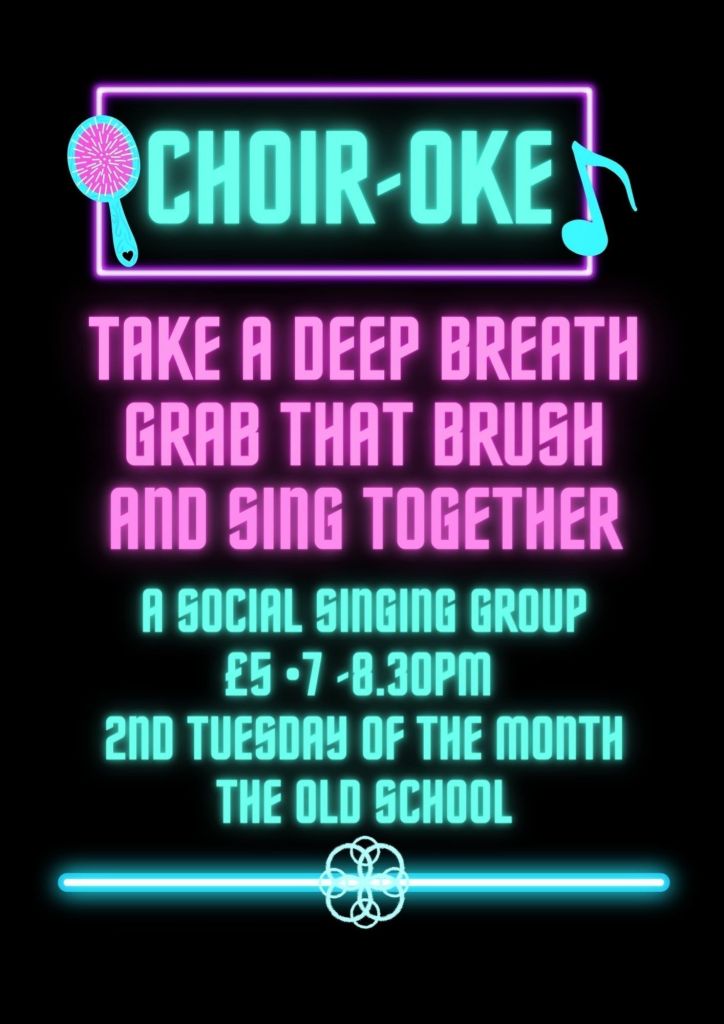
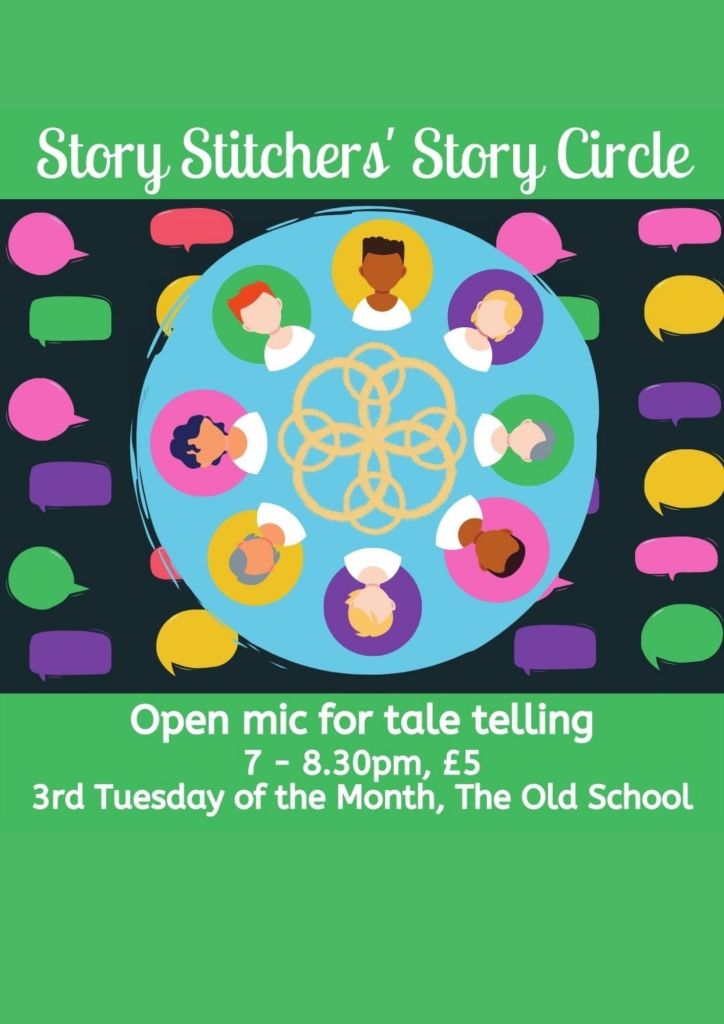
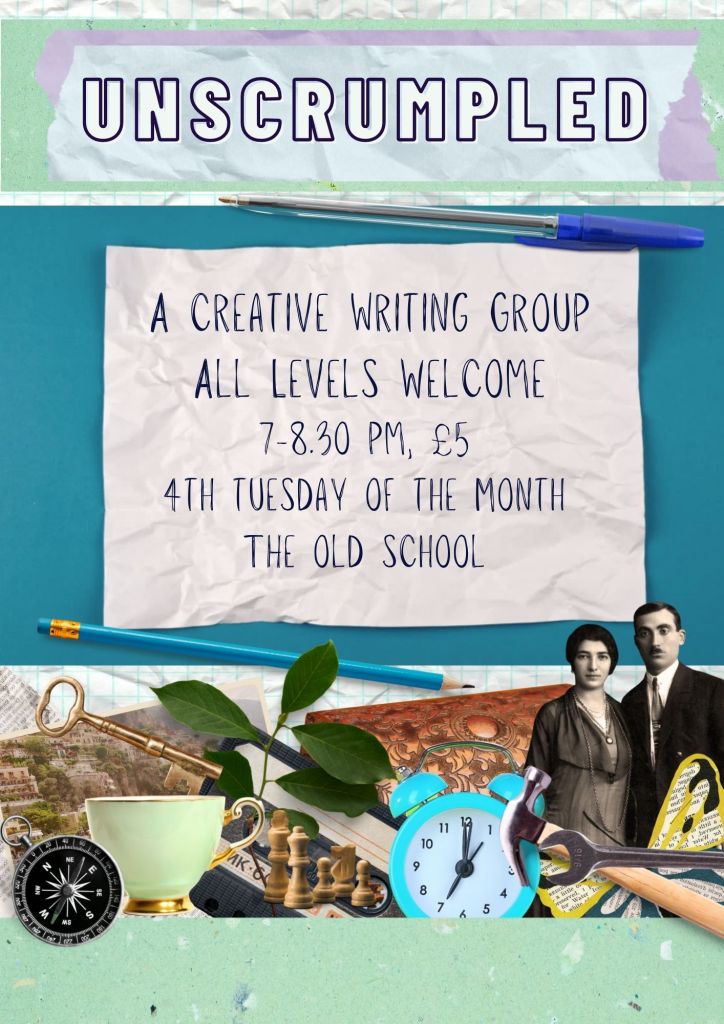
So come January 10th we will be launching our Get Together Tuesdays at The Old School. Each Tuesday there will be a different group on offer. From social singing with Choir-Oke to an evening of play with Game On. We will still be hosting our Story Circle and we will run a creative writing group, Unscrumpled, for you to catch a story and put it on the page. We’re keeping these classes low cost at £5 a session and all these groups will run 7pm -8.30pm. We provide these sessions in the spirit of these last 100 days. Not because we think it will fix everything, but for 90 minutes every Tuesday, you can come and find refuge as the storm rages outside.
Get Together Tuesdays
Game On!
1st Tuesday of the Month
7th Feb, 7th March, 4th April
Roll the dice, find the joy, play the game! An up on your feet social Games night for adults. Roll the dice, find the joy, play the game! An up on your feet social Games night for adults. Somewhere between Parlour Games at your Aunty Pat’s and an improvisation class.
Choir-Oke
2nd Tuesday of the Month
10th Jan, 14th Feb, 14th March
This social singing group has everyone belting out the bangers all together into a hairbrush. We have different rounds to get you laughing and the chance to win some fabulous prizes such as ornamental plates or a pack or Parma Violets.
Story Circle
3rd Tuesday of the Month
17th Jan, 21st Feb, 21st March
Open Mic for Storytelling. Our relaxed Story Circle invites you to either share a short tale or sit back and listen. From poetry to prose, songs to stories about holidays with your Nan, we welcome all kinds of tellers and their tales to add their voice to the evening.
Unscrumpled
4th Tuesday of the Month
24th Jan, 28th Feb, 28th March
A social creative writing group. This practical class will help you to create a database of ideas and develop your tool kit as a writer. Relaxed, social and open to everyone interested in creative writing
Your voice reminds me
That I do not know all things.
Thank you for that gift.
The biggest gift we can give someone is recognition. We can thank them for their hard work, commend them for their talents, celebrate their victories. We can tell them that we can see their suffering, their challenges and their obstacles. Recognition can be eye contact, a hand on the arm, a laugh. It can be a pay rise, a gold medal or a qualification.
When I think of the stories I have heard or the books I have read, the tales that have truly resonated with me are the ones where I see something of myself. Mostly this recognition is there through a shared inner conflict but sometimes it is about circumstances. Some stories get under my skin and I carry them endlessly for days, weeks, months or even years. Other stories pass though my ears to my voice and I move onwards leaving that story behind.
When it comes to the books, I want to read a similar type. They tell tales of some far off, often imagined land or time, where characters contend with something other worldly. Everything about these books have been considered, scrutinised, maximised to telling the best story. These stories are everywhere, packaged for all ages and stages.
When I think of the stories that stay with me, they often came at a moment that I had no idea I was going to hear them. These stories are not ones I would pick up off a book shelf or are stories where I recognise myself. They are often tales of injustice. They catch at my heart, holding it still and squeezing it tight at the unfairness of a situation. These stories are told in ways that are unedited. The way they are told is not considered in the same way that the books above have been. They are told, because the person telling them wants recognition. Even though, I do not see myself in these stories, I see the person talking.
In the whispered worries of participants in community settings, underneath the ‘what if I am not good enough’, there is a thought that has come loose. Its untethered to what has gone before. Its raw an it speaks amongst the scrunched up paper in the bin. It says ‘No one wants to hear my story.’
I love books and could spend hour after hour reading. However I often wonder are we representing everyone or are we only representing some? If you feel like you don’t belong in a book, you probably think you don’t belong in a story. If you feel like you don’t have the circumstances to write a book, you probably feel like you don’t have anything interesting to say.
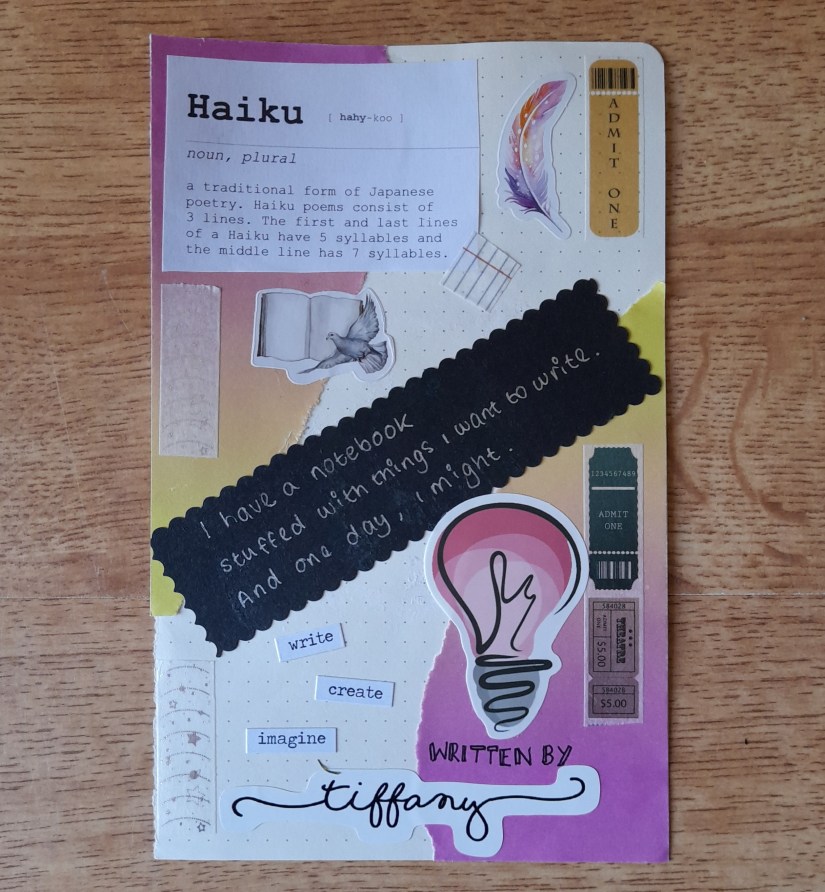
‘I have a notebook stuffed with things I want to write and one day I might’
Not only does the story disappear from you lips but it disappears from the ears of the listener. Its gone to some far off corner of lost property and we all loose an opportunity to share an experience or a connection. Reflecting on the last few years, we have lost so much. So many chance encounters and moments shared with others. So many voices that have been behind closed doors.
So let’s open more doors. Let’s gather together. Let’s share our stories. Let’s Listen to each other and in doing so let’s raise each other higher.
The recent passing of Thicht Naht Hanh has been felt across the world by so many, including those who knew him as ‘Teacher’. Those who leave such a legacy also open a door to many with their passing. I have to admit to only recently looking more into his teachings and this week at Story Stitchers we have begun that journey by listening. Listening to podcasts and audiobooks, reading and sharing.
We believe that true, unconditional and active listening are in many ways as vital to our very survival and happiness as the air we breathe.
When you make the effort to listen and hear the other side of the story, your understanding increases and your hurt diminishes. – Thicht Naht Hanh
First impressions
As a child I was always taught the value of a smile, a firm handshake, looking people in the eye etc.
Recent years have challenged the importance, relevance and appropriateness of some of these ‘good first impression’ staples. The pandemic has made the handshake an endangered species and masks have converted the smile into sparkly eyes and waves.
The biggest thing I have taken from these shifts is that while still valuable, maybe first impressions shouldn’t carry the weight they sometimes do. Someone might be late because they are the most generous person in the room, not because they are unreliable or don’t care. Someone might have scruffy shoes because they spend their time thinking how to be better at their job, or how to be a better person, rather than worrying about their shoes. Maybe eye contact is a battle that this person just can’t take on, but they are actually very comfortable in themselves and therefore a huge asset to any team or room. If we take time to listen to them and the information they give us, then we have already moved past so many obstacles.
Listening to your own curiosity
Sometimes the person we find the hardest to listen to is ourselves, for example: the impact or effect of our presence, or when our presence isn’t there. The world can be a busy place where we may feel judged or under constant pressure to be useful. We need to be on time, we need to provide, we need to be organised, motivated and driven. We need to help out the team, be there for our partner and family, keep in touch with friends, do our bit for our community, country or planet. Then we hopefully reach somewhere near the end of our task list, we eat and stop, just in time to go to bed before it all carries on tomorrow. There are many who talk about the need to stop, switch off, take time and escape. With our work we find that we also need the space to listen and be listened to. This can be going along to a class or workshop and having some new people in your life asking you about you and then you listen to others and are genuinely curious to know more about them. Or maybe it’s at work with colleagues who are sharing an idea or information that takes you by surprise or reminds you there is plenty you don’t know about them. Listening is often talked about in situations of major conflict and violence or in politics. But there are so many of us who just don’t get to be around others in a space where everyone listens to each other. A chance to express ourselves, to share in similar or very different views. The chance to go back into the rest of our lives and take in more from it. To listen. To actively listen. It may begin with those closest to us and then we find we are curious about other fascinating and wonderful people that we come into contact with during our lives. As we learn more about them, we learn more about ourselves.
And the great thing about listening is that we can do it straight away, right now. It is also a tool that never runs out and has infinite uses and benefits.
We’re playing Pooh sticks. We are on a bridge, each armed with a stick of one size or another. All waiting in anticipation to let go. All wishing that our sticks won’t get caught in the reeds on the river bank on the way through. All hoping that we have picked a good stick. All holding our breath to see who’s stick will appear first on the other side of the bridge. Its a quiet nervousness mixed with bubbles of excitement.
The bridge we are stood on remains a constant. A solid structure from one side to the next. It is our place to play. It is over a hundred years old, this stone bridge. So many feet have passed over it. Bricks laid by hands that history forgot. Time marching onwards and the river flows below. Endless water washing down the mountain streams to a rapid river, under our bridge and out to sea.
My story of playing Pooh sticks with my children is linked to playing Pooh sticks with my cousins in the stream near my Grandpa’s house under the watchful eye of our mother’s who played Pooh sticks with their own cousins.
My story of playing Pooh sticks on this bridge is linked to all the feet who came before me, all the water that has flowed under it, the two opposing banks and the division that was healed through the foundations of the bridge. My story can only happen because of all those other stories that have come before. My story can be told in many ways with many connections and conflicts and characters.
The most magical thing about my story is that it has no doubt triggered other stories in you. Your childhood games, bridges you have crossed, gone and much loved grandparents. Tales of meandering rivers, hiding amongst the bull rushes and splashing in streams in moonlit dips.
In telling one story, we trigger more. In triggering more stories, we create a space for other stories to exist. We let the words of others fill our heads with images. We sit inside each others lives and worlds and loves and hates. We build bridges were there were none and discover hidden paths to memories and places that maybe we have forgotten. In telling one story, we tell many. We listen to a story, we connect. We remind each other to look up, to play, to explore, to take risks. We see ourselves in each other and we marvel with joy in sharing. We tell our stories together.
Stories can build bridges
Between people, places and ideas.
They are a circle.
They never really end,
But seed new beginnings and possibilities.
They help us make sense of chaos,
Overcome conflict,
Change the way we breath.
For who has not gasped
Or held their breath
Or sighed, or sobbed or giggled
At the wonder of it all.
Let's Gather Together
In any way we can.
Whether we are collectors or a collective
We could be powerful.
Let's Gather Together
And discover the joy
That fills each of us.
We could be curious
Let's gather together
And listen with open ears.
For such an act of kindness
Is the grassroots of change and growth.
We are gathering in the soft glow if our screens, our virtual circle looks like a series of square windows. Perfectly aligned. We can see each others homes. Our plants, our pets, our pictures. Sometimes a child drifts in to say good night. We are a jumble sale of people. The colours of each small window vary. We are not all the same. We have different tastes, different drive, different experiences, but we all here to listen. To lean in and be taken by poem, prose or song to a world away from our perfectly aligned windows or the hum of our computers working, or our plants, our pets and our pictures. Our minds are filled with images of family roof tops dinners in India or a photography studio in Conwy or a a vibrant wedding party outside a registry office.
Flash forward to another gathering. We are in the room with parents and toddlers. There has been hushed moment with a book, a lively togetherness in song and now there is the gentle hub bub of noise as parents swap tales of the weekly challenges and children scrawl pens across pages mark making and mapping their wonder at how it works.
Flash forward to a group of teenage girls, stretching out on a quiet gallery floor. They are drafting poems about changing the world. They whisper ideas to each other. Every now and then their eyes light up at a great idea and an a smile unfilds hidden under their face masks.
Flash forward to the entrance to a community hall, 3 generations of a family arrive at the same time. The youngest aged 3 and 7 and filling a postcard with drawings and words and commitments of kind acts tomorrow. Granny is writing a message of thanks to the NHS and the parents are sharing what they love about where they live. They all hang their creating in a christmas tree amongst twinkling yellow lights. The children walk away with a chocolate coin and a sparkling wish bag that has come all the way from the North Pole. A thank you gift from Father Christmas for spreading Christmas cheer.
No one in any of these experiences was undeserving of the opportunity to express themselves. All were welcome to share something of themselves and a connection tonothers. All left, feeling a little brighter and a little comforted.
In a world if division , don’t minimise connection. In a world of suffering, stop minimising joy. In a world that can be cruel, stop minimising kindness.
Moments of connection, joy and kindness may be fleeting, but they should be celebrated. They are the ground work of curiousity, strength and resilience. That is our work as community artists, to generate a space to gather together.