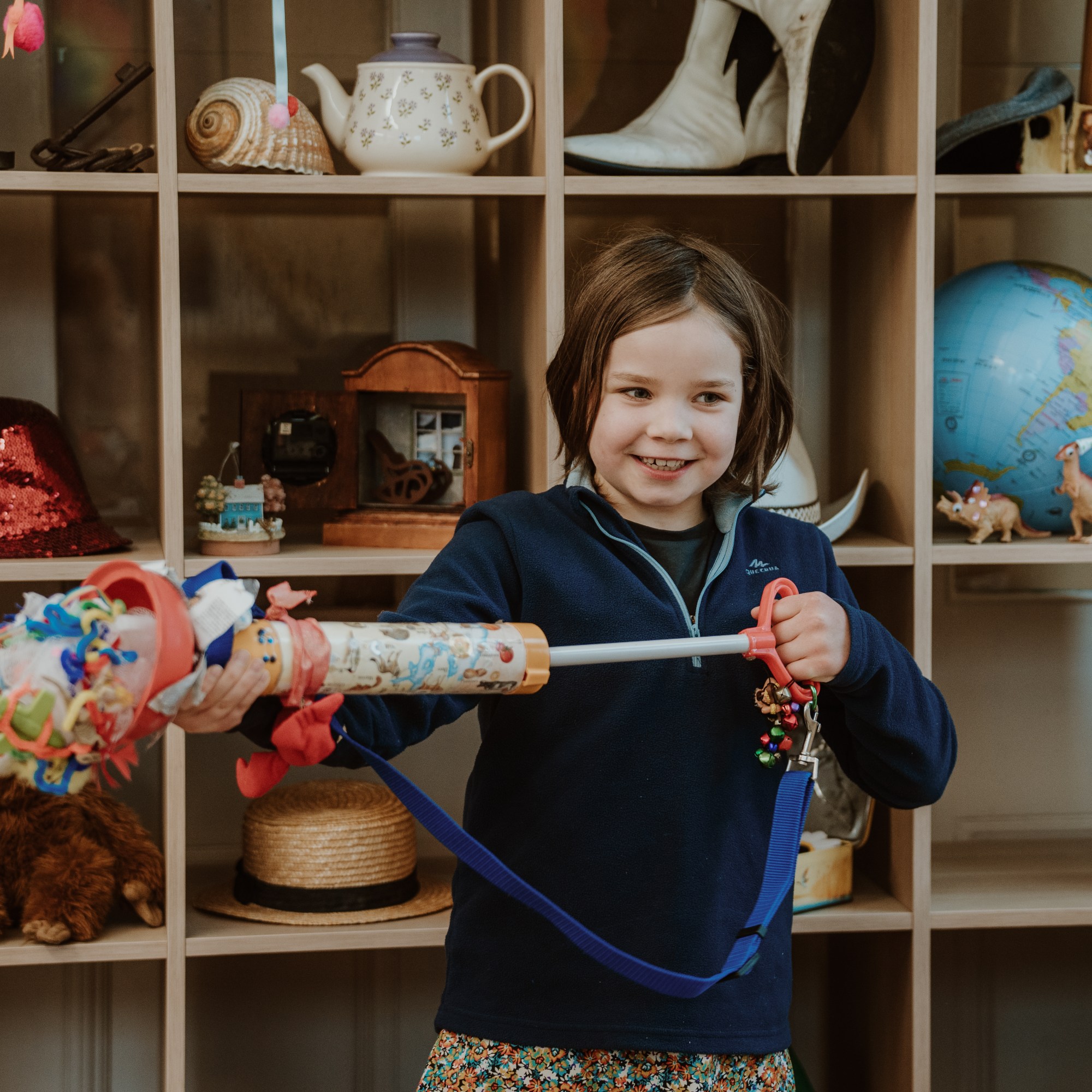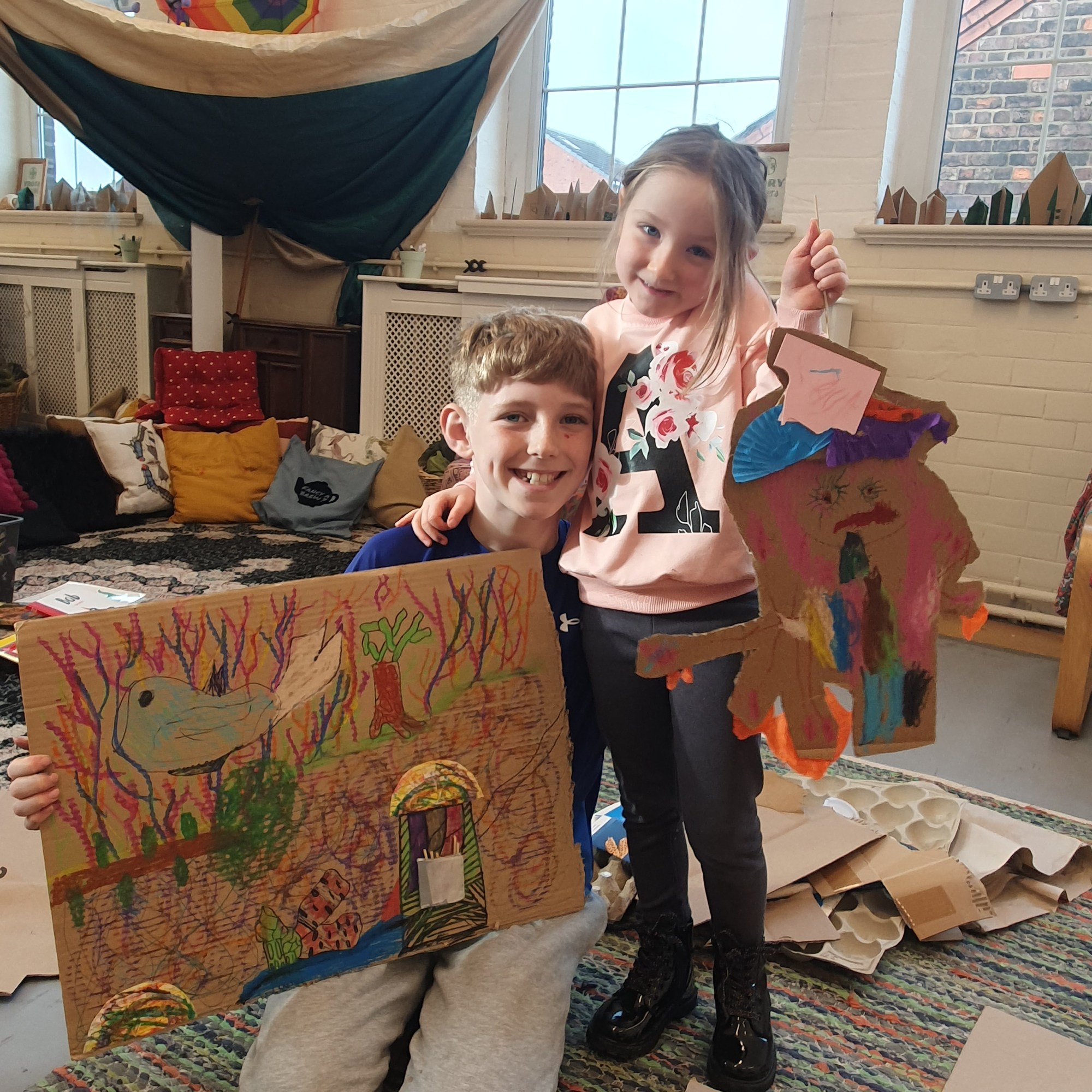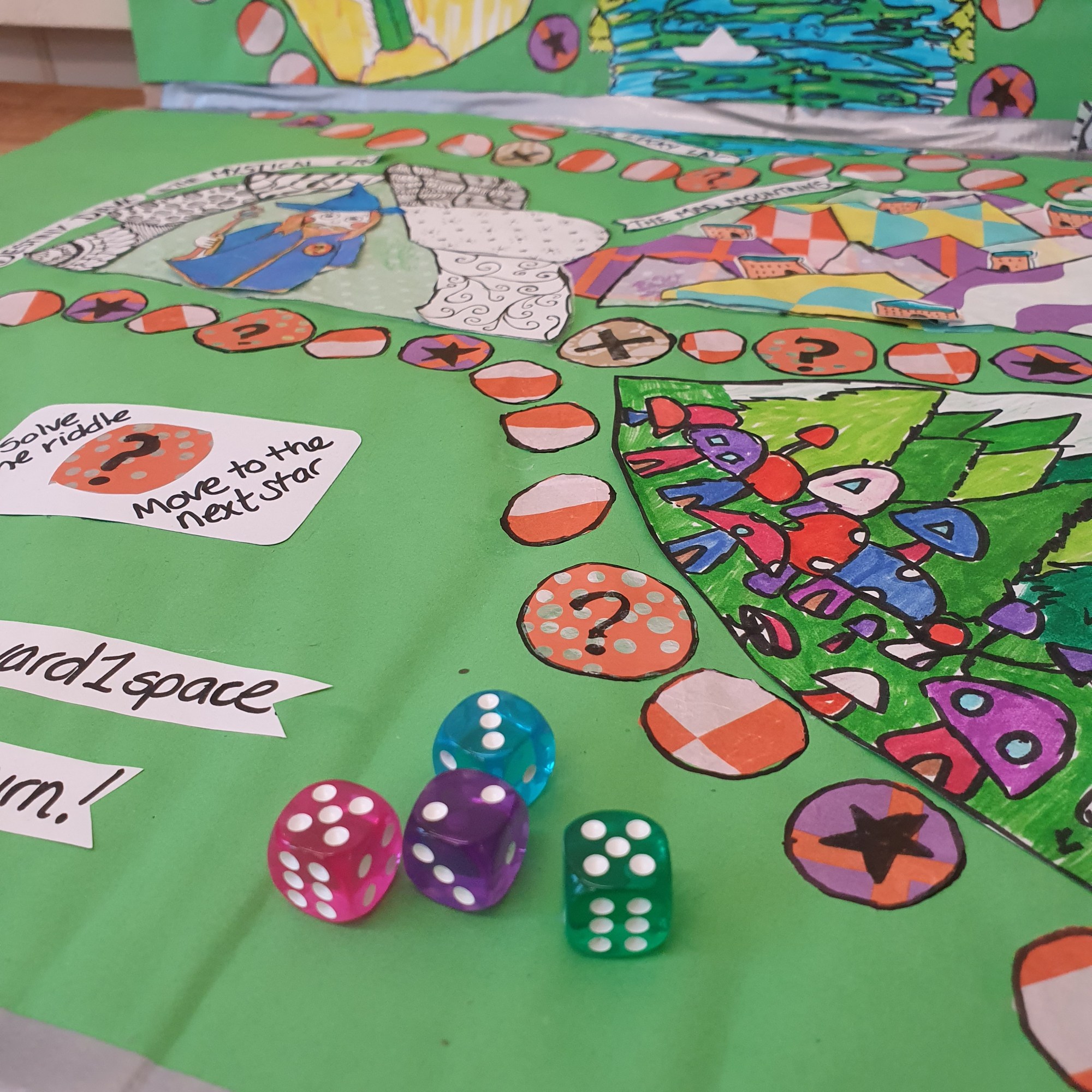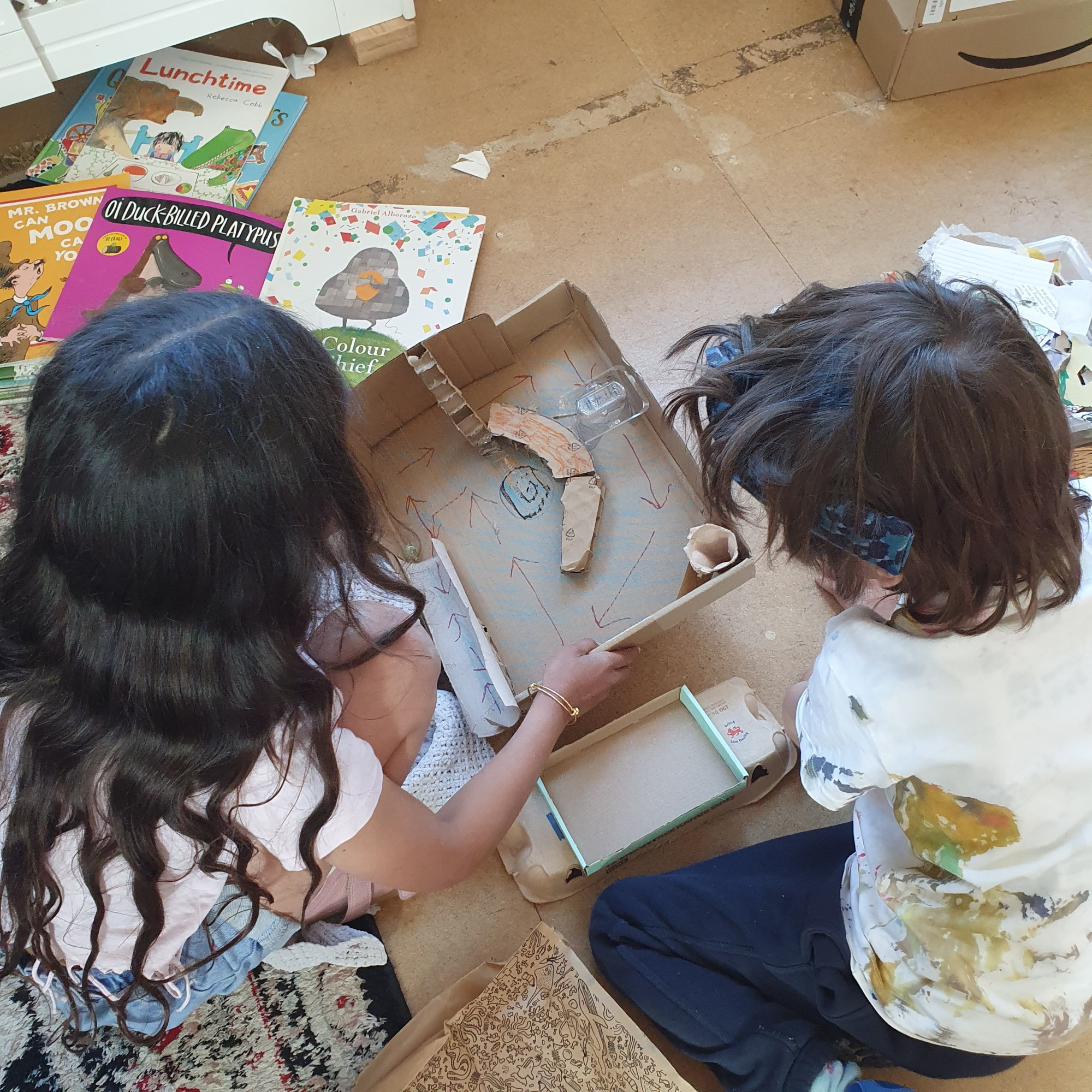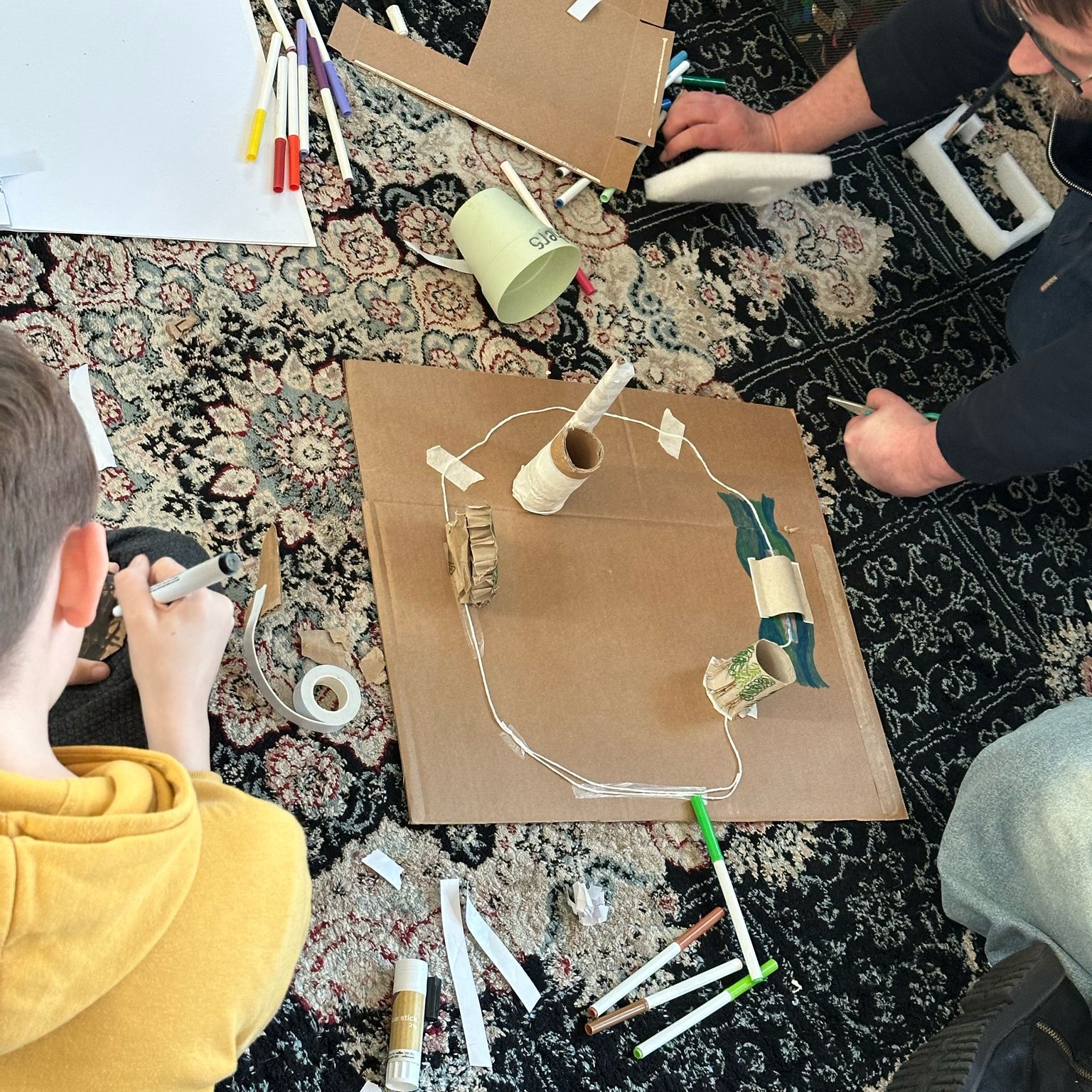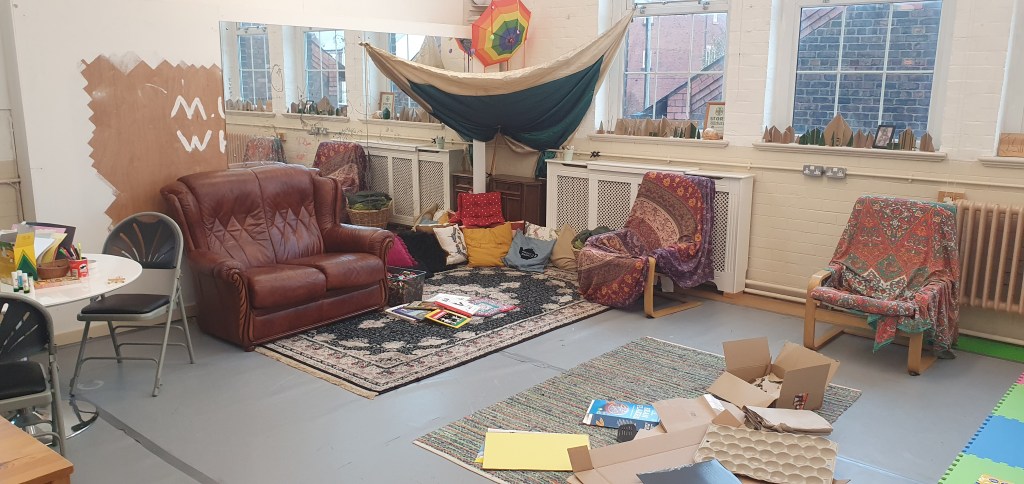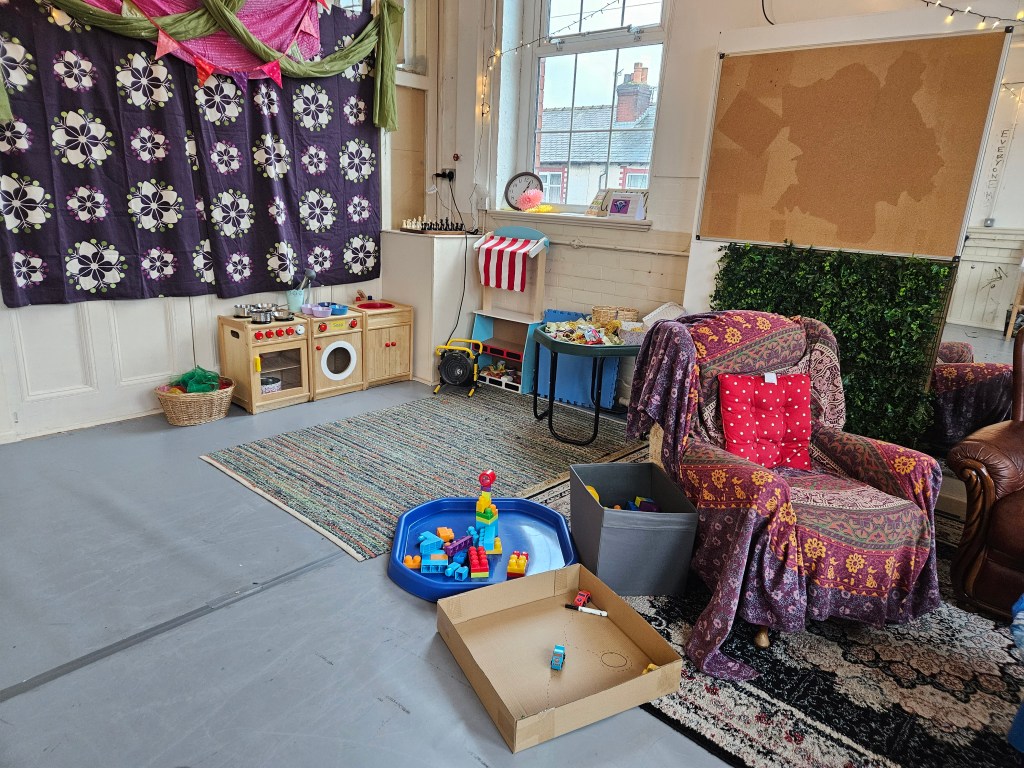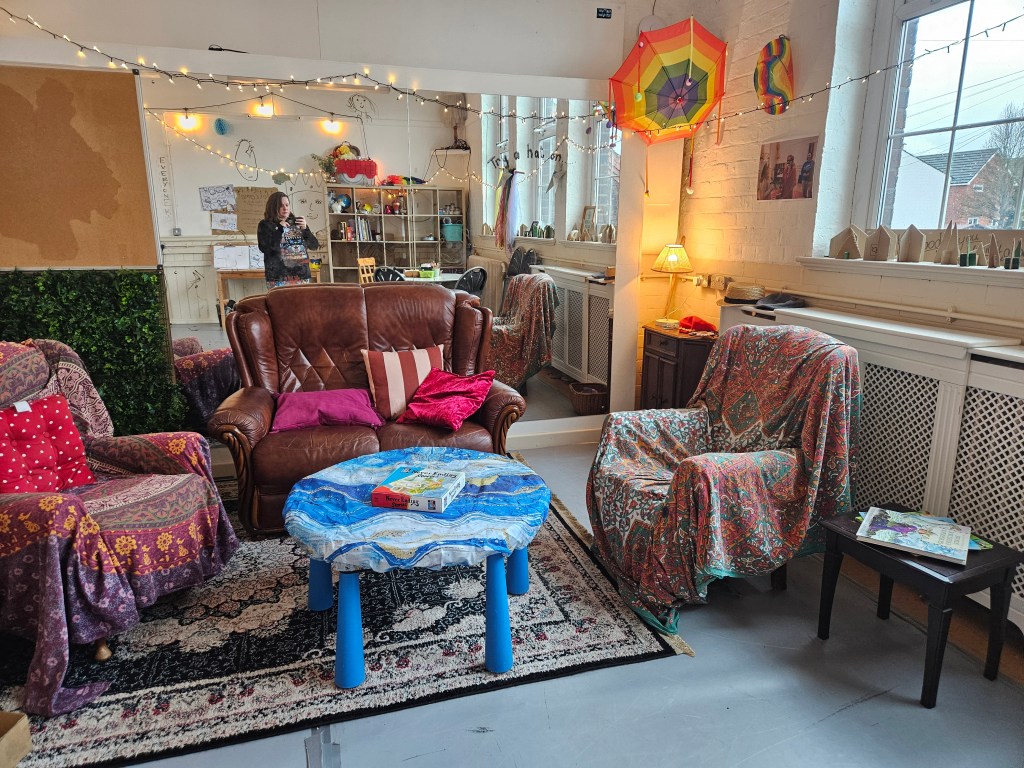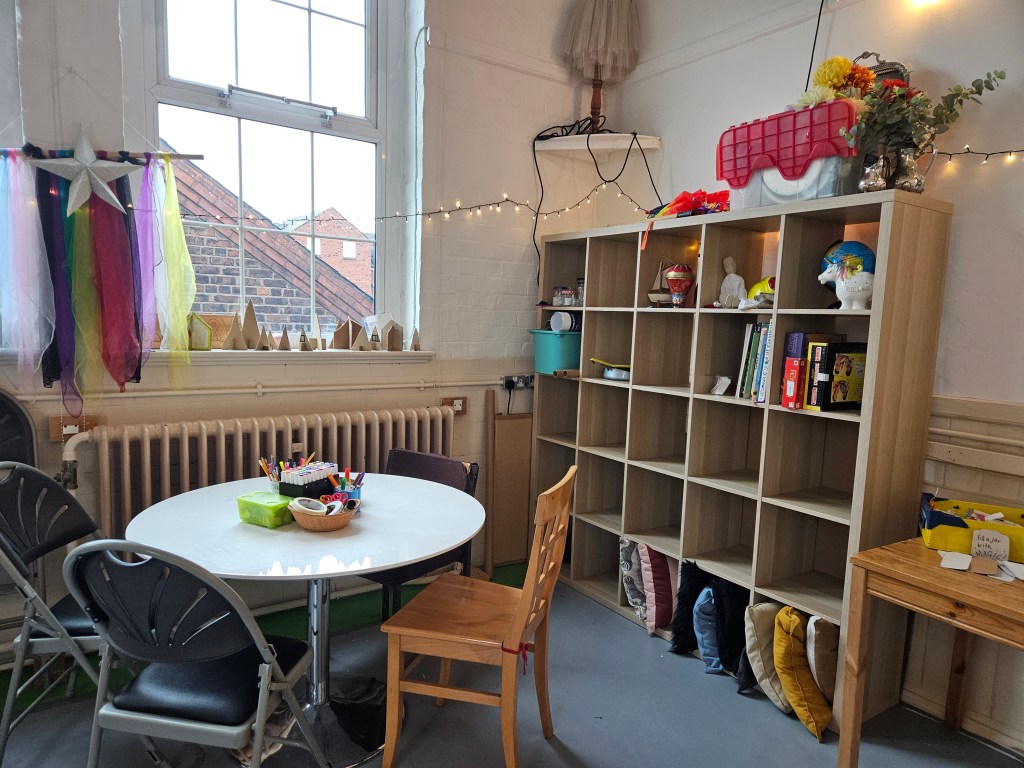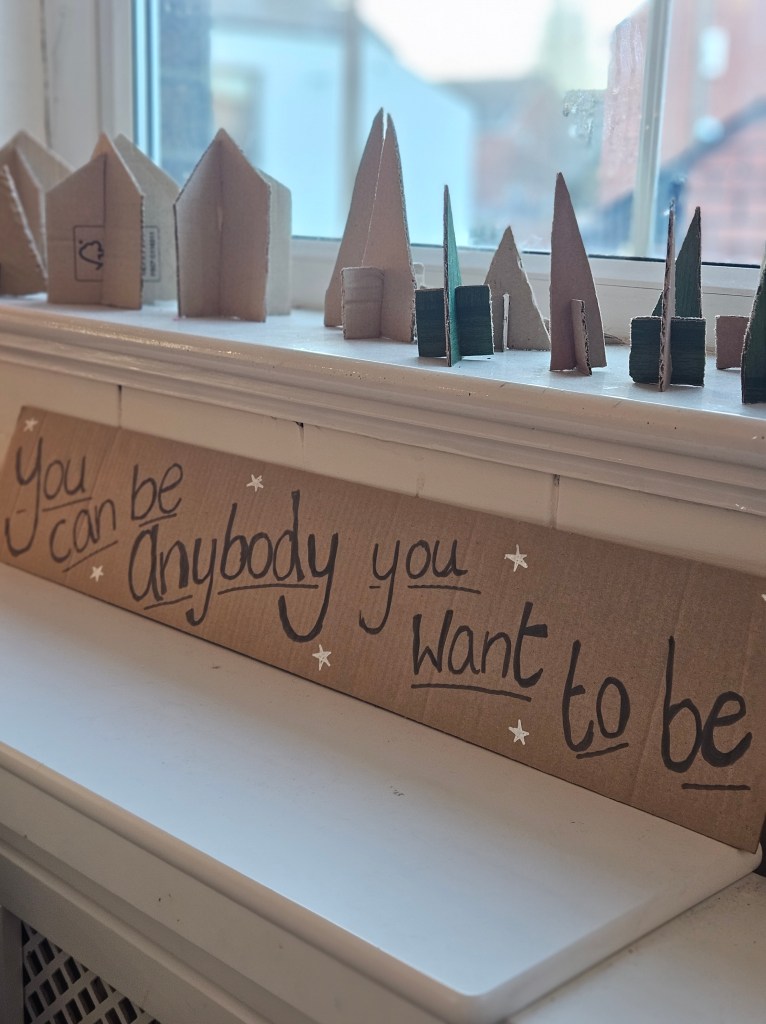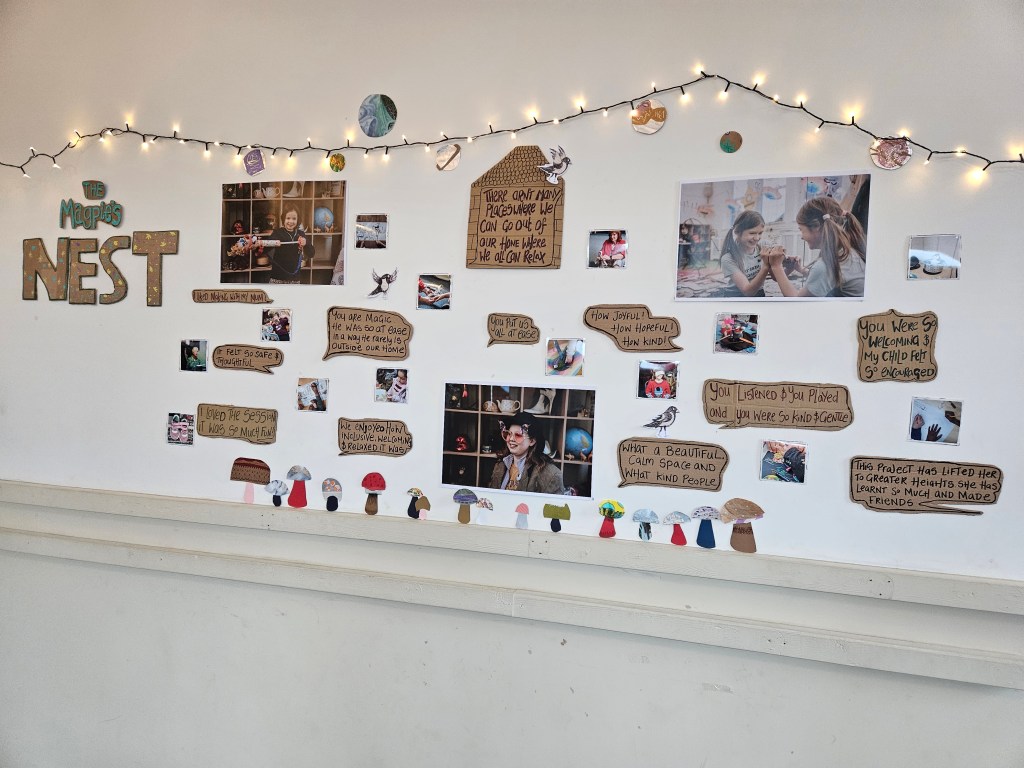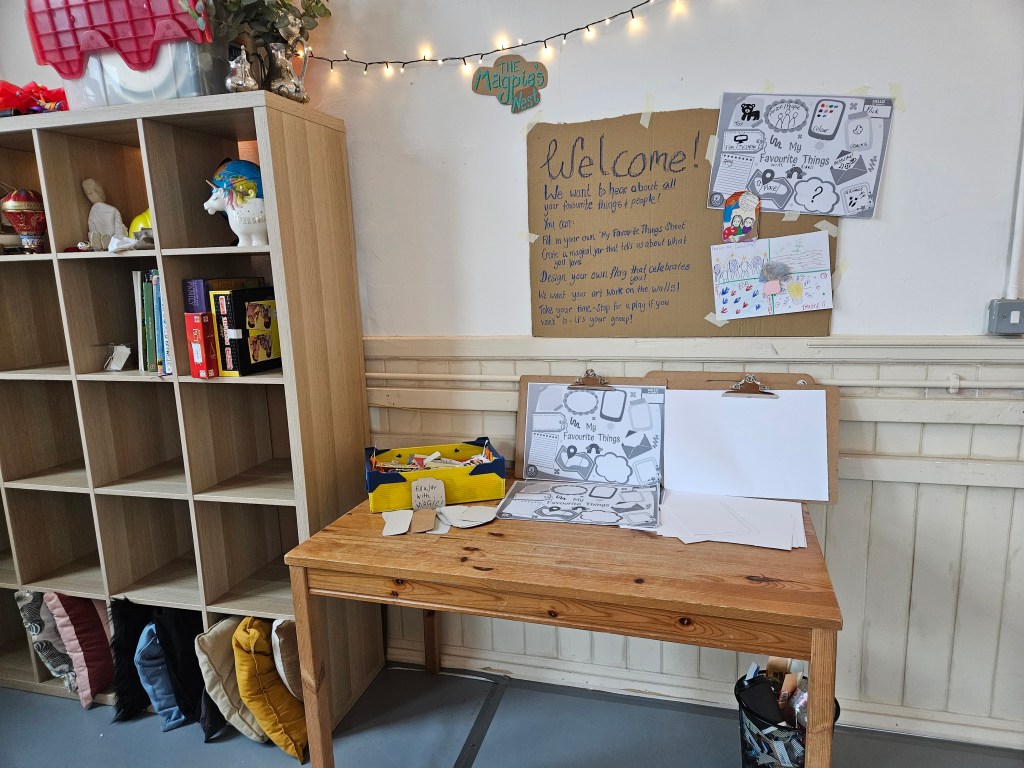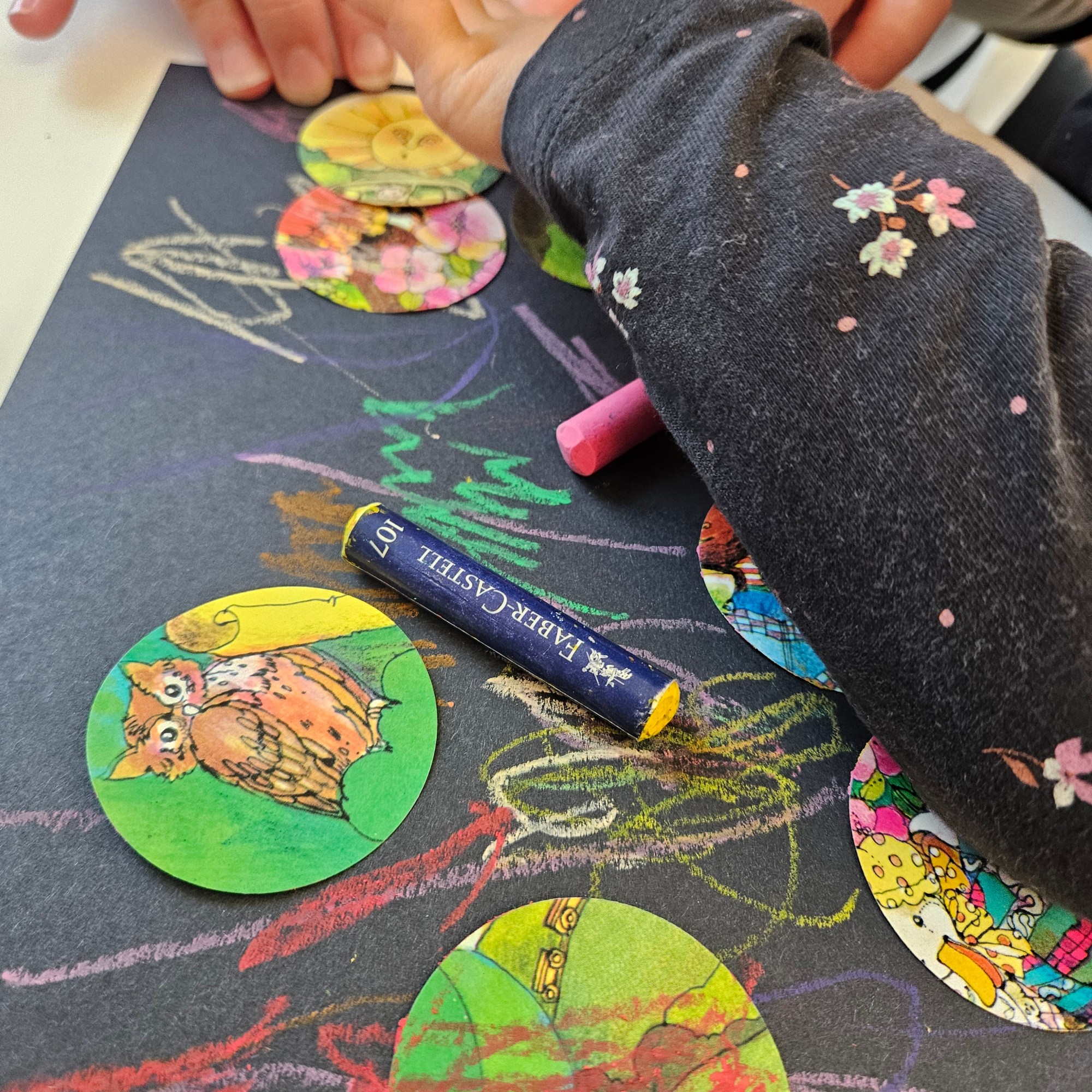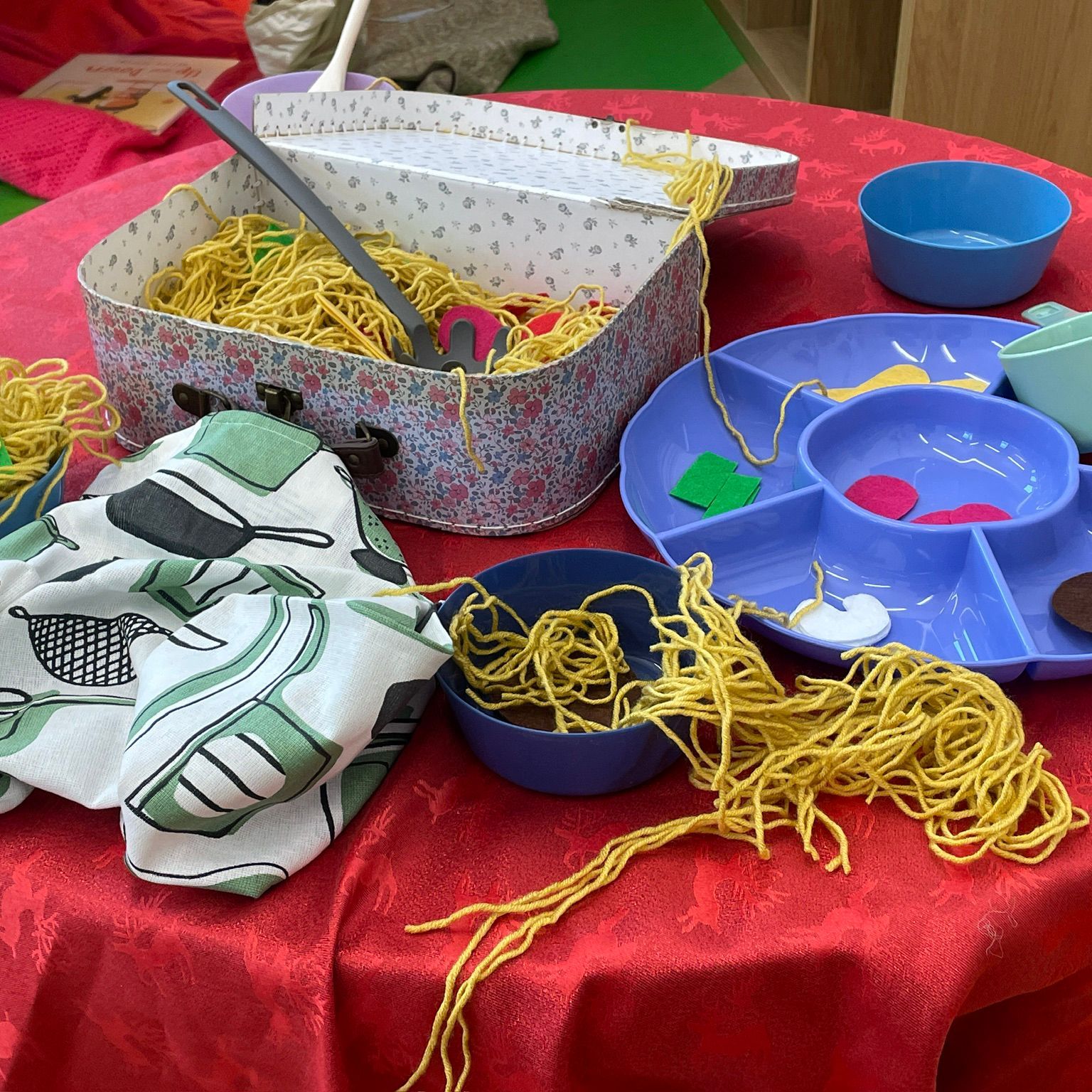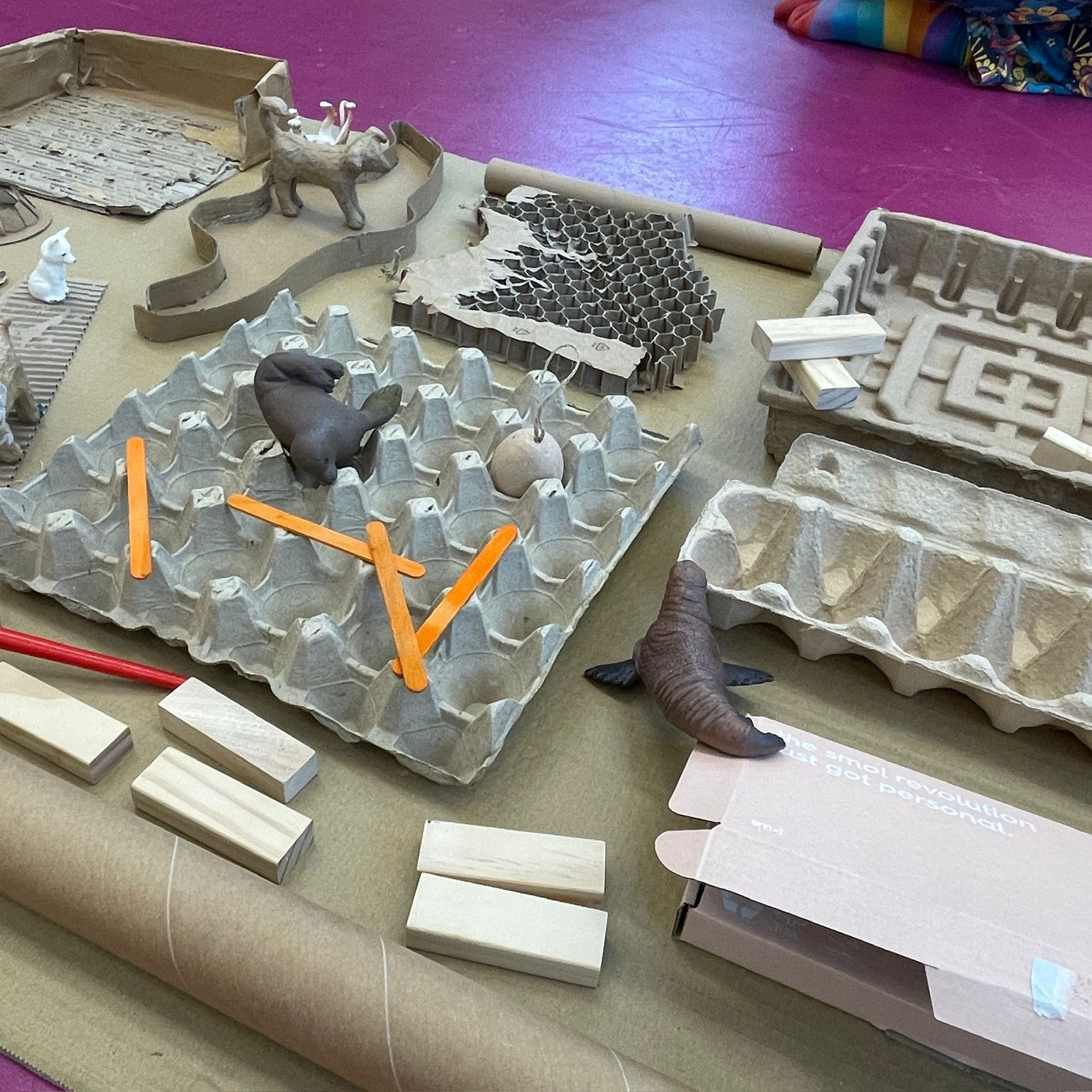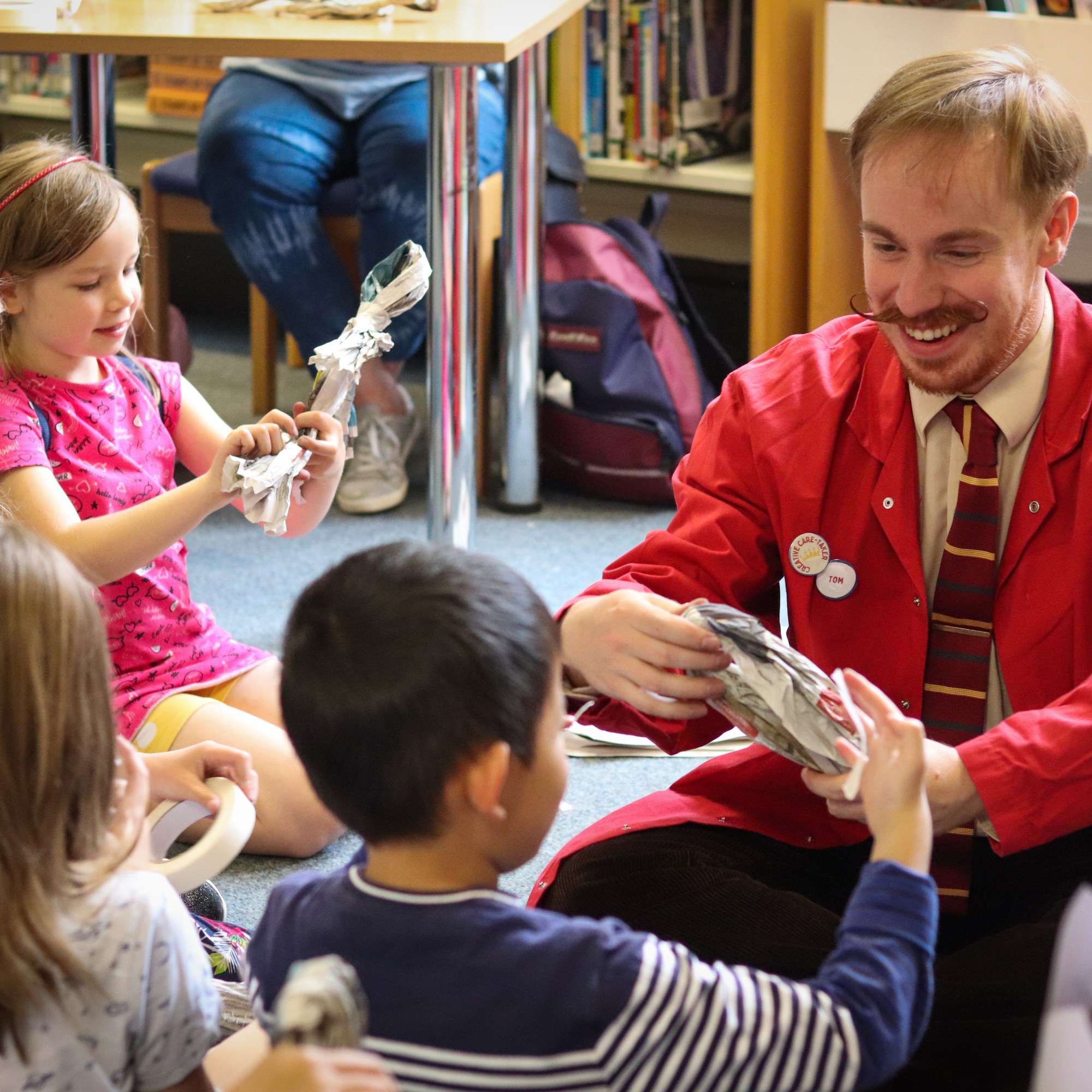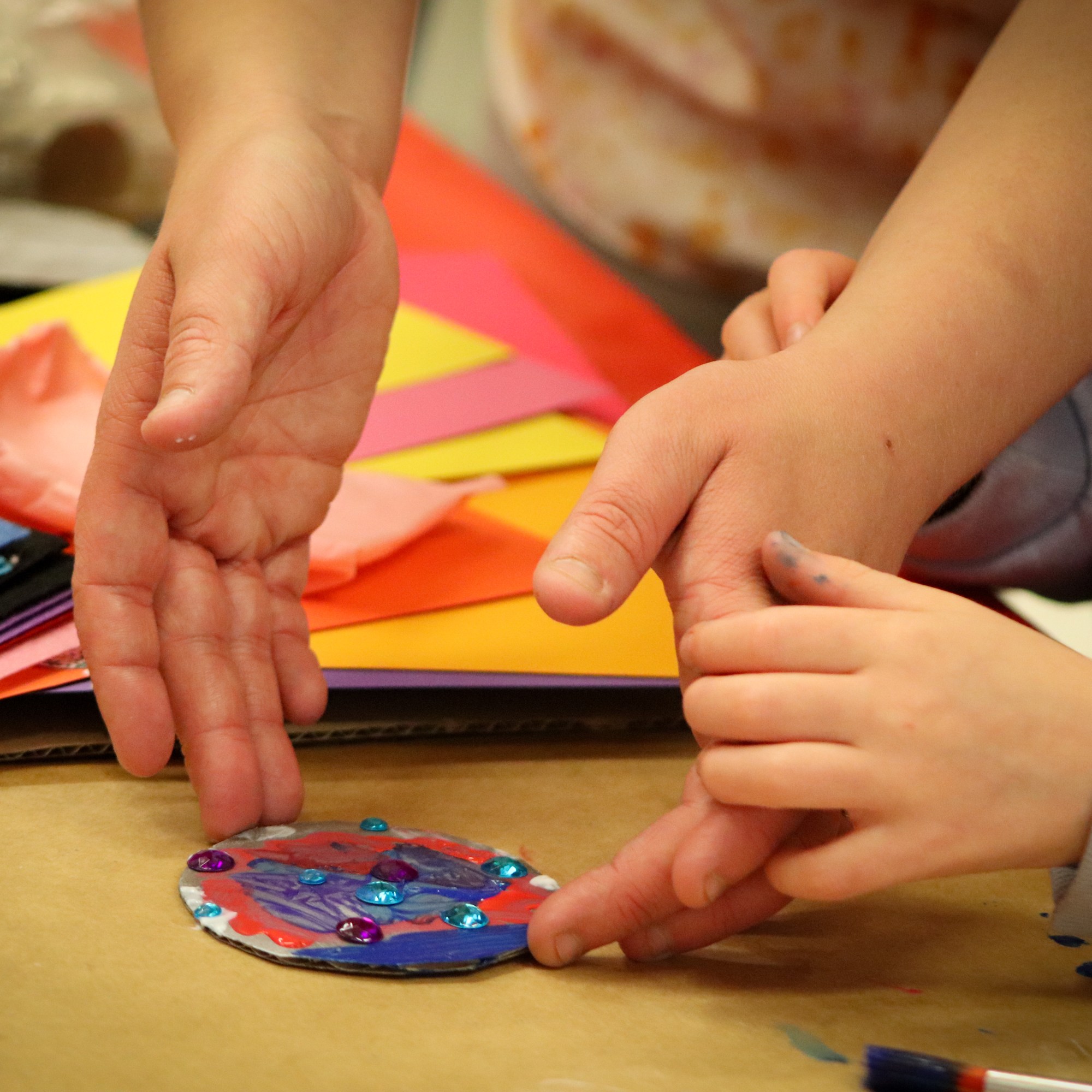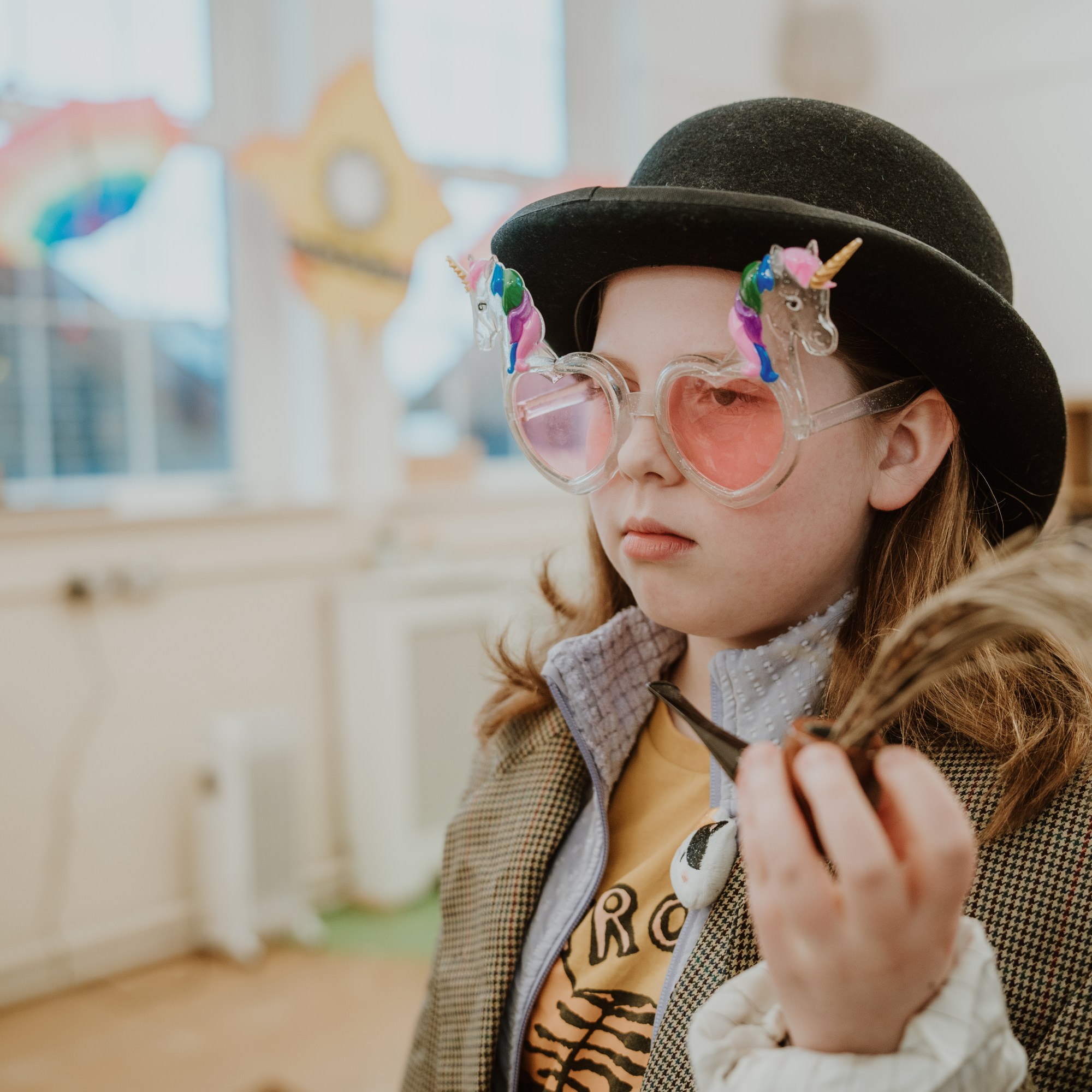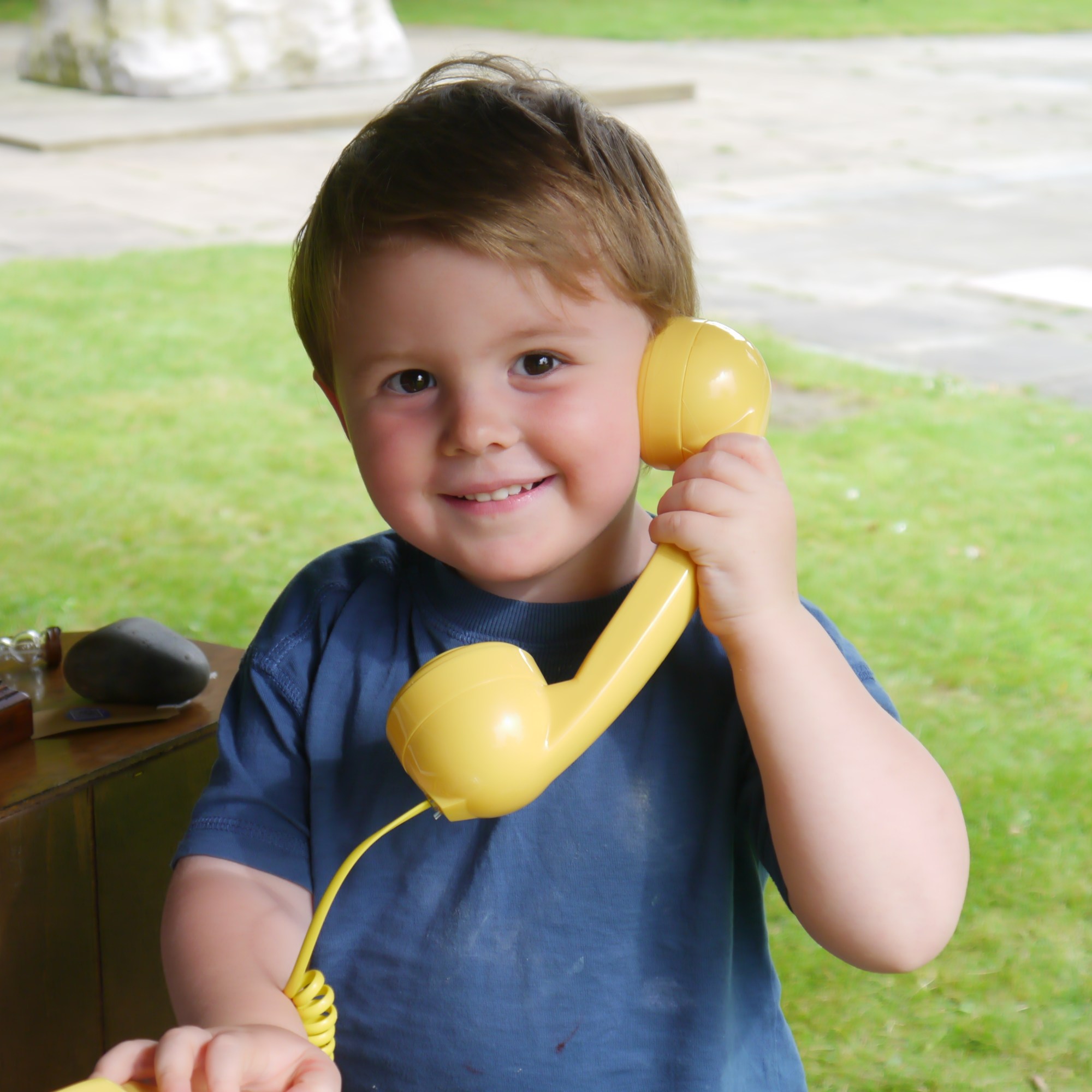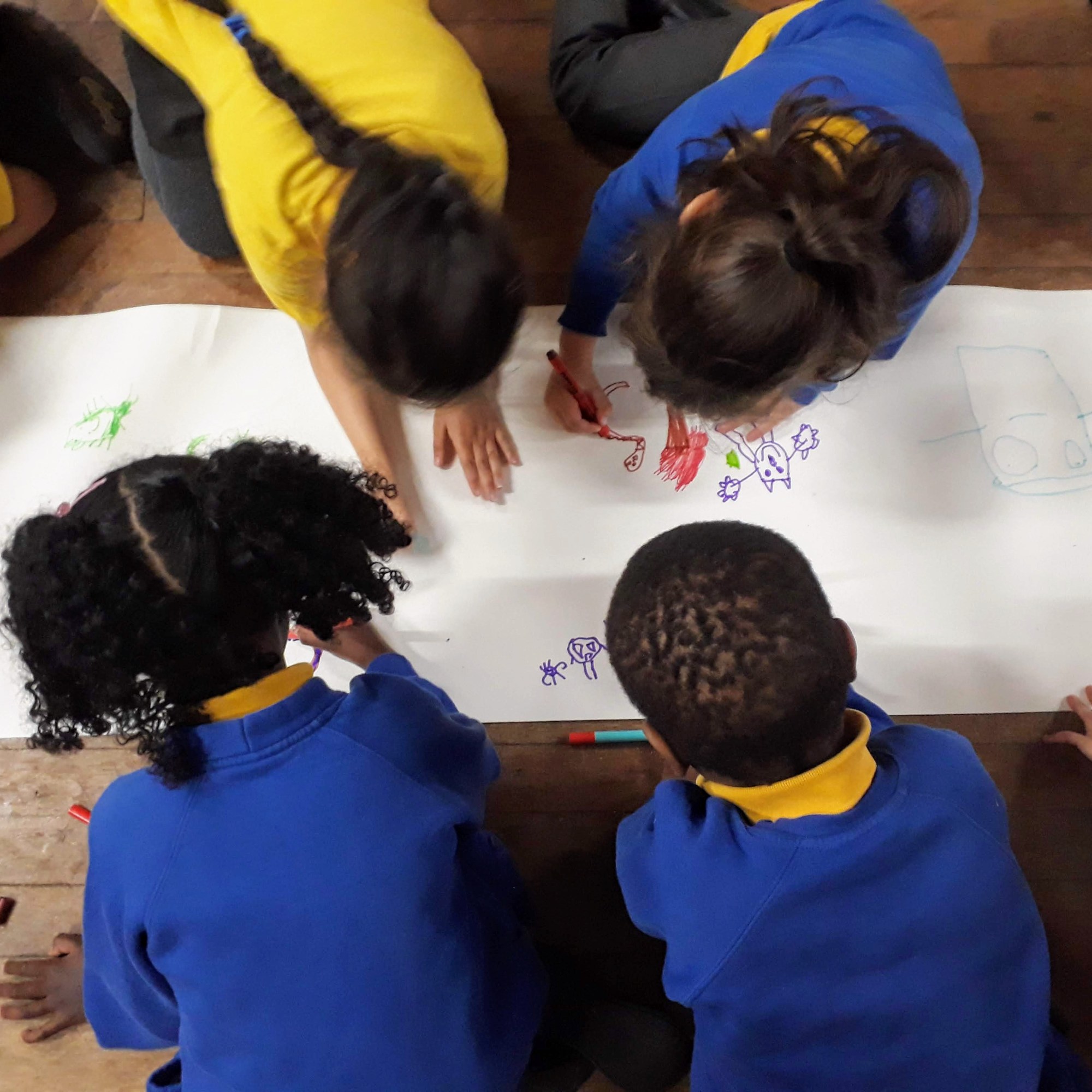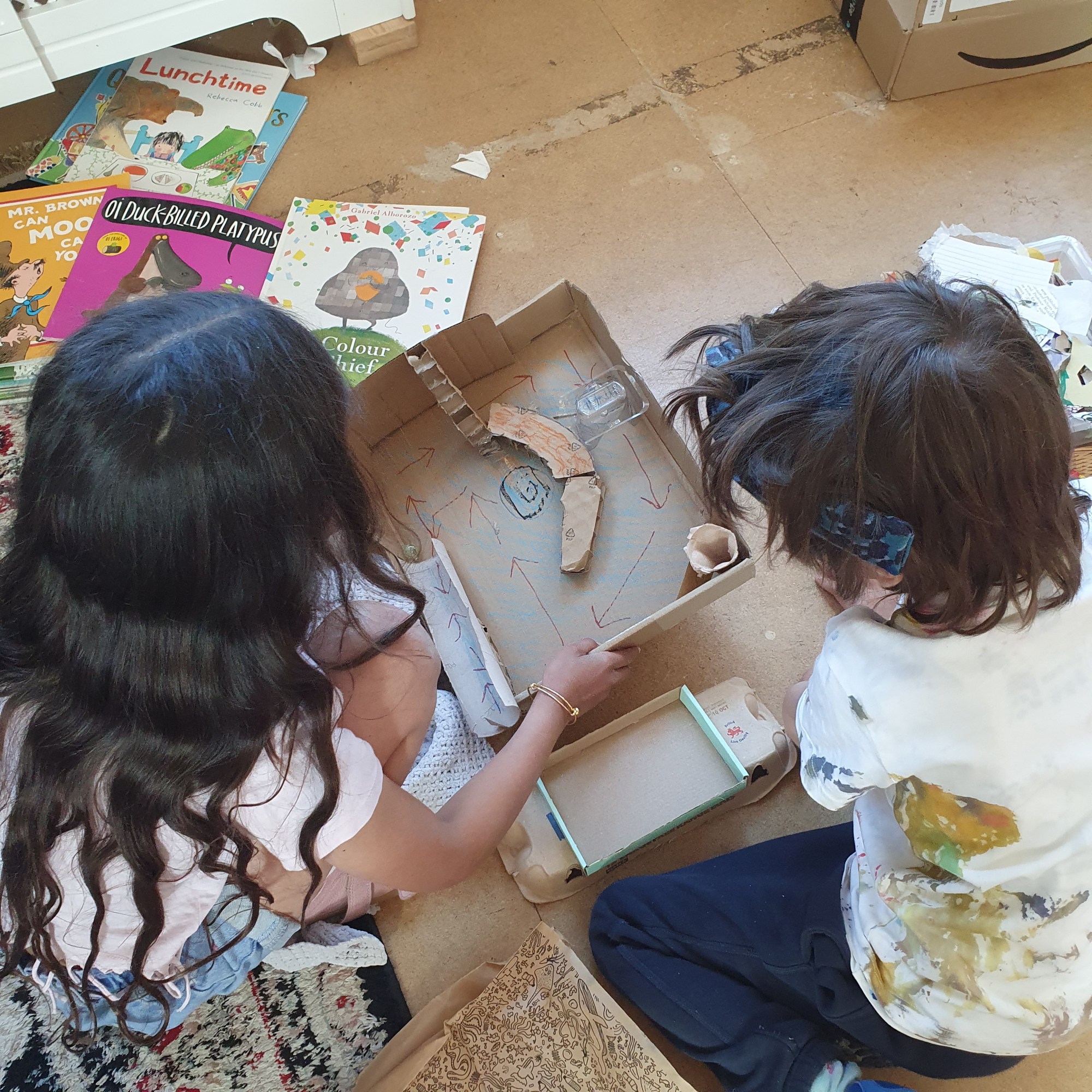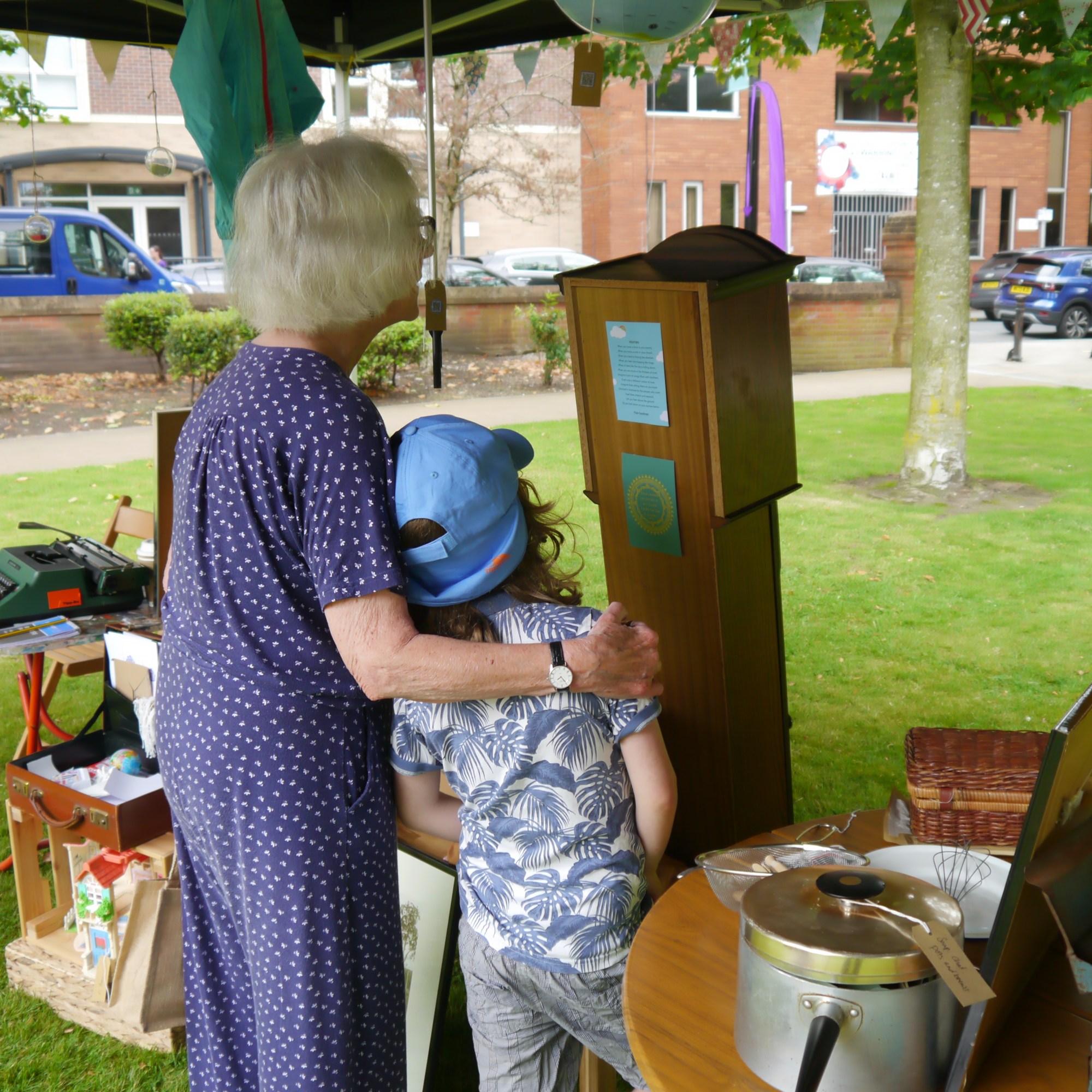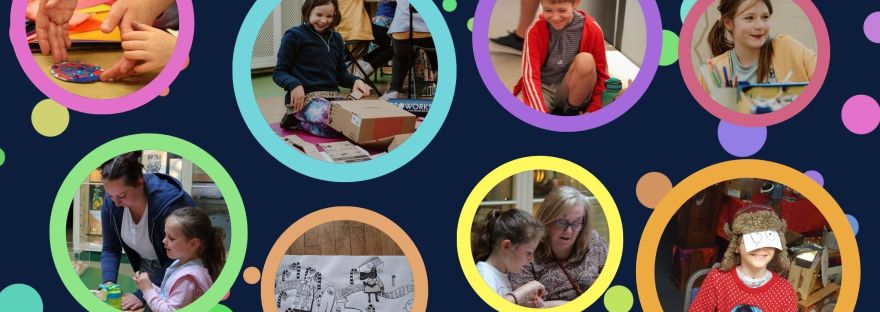
Following 8 weeks of Story and Play sessions for under 5s at the Old School in Warrington, we have created a Parenting Playbook to support Parents and Carers with establishing play at home.
Thanks to funding from Cheshire Community Foundation, you can download your own copy to support play with the little ones in your life.
Fee: £50 per 90-minute session (+ 30 minutes setup/pack down)
Location: The Old School, Warrington
Discipline: Open to all art forms (Storytelling, visual arts, music, movement, writing, performance, etc.)
Commitment: Regular sessions over the project period (November to June)- afternoons, evening and weekends (schedule TBC)
Requirements: Public Liability Insurance, DBS Check, and two references
Deadline for applications: 5th November
Workshop Interview: 11th November, 1.30-4.30
About the Project
We are looking for an Apprentice to support a creative community space in Warrington, engaging three community groups:
Older adults, once a week
Families seeking Sanctuary, once a week
Neurodivergent (ND) primary-aged children and families, once a month
Building on the success of a pilot project with ND families, this new initiative funded by Lotteries Community Fund, will expand our Story Stitchers approach to foster confidence, creativity and connection through regular arts-based sessions.
Our listening-led, storytelling and co-creation method helps participants express themselves, share stories and build a sense of identity, belonging and wellbeing in a safe, inclusive environment. You can read more about what this looks like in practice here.
Role Description
As an Apprentice Facilitator, you will work alongside an experienced lead artist to:
Support participants during creative sessions
Help set up and pack down materials and equipment
Assist with gathering participant feedback and reflections
Contribute to a positive, inclusive, and welcoming atmosphere
This is an opportunity for an emerging artist interested in developing community facilitation skills and working with diverse groups. You will gain hands-on experience in socially engaged practice and learn how to deliver inclusive, participant-led creative sessions.
Who We’re Looking For
We welcome applications from emerging artists working in any creative discipline who:
Are passionate about community arts and creative inclusion
Are reliable, adaptable, and supportive in group settings
Have or are willing to obtain Public Liability Insurance and a DBS check
Can provide two references
We are particularly keen to hear from artists who have cultural understanding relevant to the communities we are engaging with.
Workshop Interview
Date: 11th November
Time: 1.30-4.30
Location: The Old School, Warrington
We will host a workshop interview in the afternoon. In this workshop we will share more about the project and invite you to lead a 15 minute activity relevant to your creative discipline. Applicants will need to be available for the duration of the workshop and expected to join in the session.
How to Apply
Please email your application to hello@storystitchers.co.uk by 9am, 5th November including the following:
A short statement (up to 500 words) about your practice and why you’re interested in this role
Like stories, beginnings are important. We are often asked
“How do we start a project? What approaches do we have? What attitudes do we foster?”
So this is how we unpack the beginning of things, how we establish relationships and cultivate joy and wonder.
Joy Seeking
If we support folk to discover joy and curiosity, they are more likely to connect with meaningful creative activity. The word glimmer entered our vocabulary from the trauma informed community. For those who don’t know, a glimmer is considered to be the opposite of a trigger. While a trigger may cause trauma, stress or anxiety to surface, a glimmer is considered to be micro moments that induce happiness. Once we become aware of those glimmers, we can start to build upon them and make more time in our life to do the things that generate those glimmers.
However, some of our participants are not ready for glimmer hunting. They are so bogged down in the stresses of life that even a glimmer is beyond them. So we will look for a Spark. If a glimmer is a micro moment, a Spark is a nano second. A flashing twinkle that may fizzle out before the participant has even recognised that jot of joy in their body. As facilitators, it is our job to seek the Spark in our participants and build upon it.
This is a very watchful practice. These Sparks might be a widening of the eyes, a satisfied sigh, a flicker of a smile or a leaning into the work. It cannot be achieved if we are too busy teaching a refined artistic skill or aiming for an explicit finished piece of work. In this stage this is how we establish a relationship, we want to connect to the human before we connect to the artist. This early stage of creative collaboration is built around accessibility and appropriateness for the participant. We call this Scrapbook Storytelling.
This could be a prompt sheet to encourage words or drawing their favourite things or telling us about their favourite character from a film, TV or book or collaging an object that they use everyday. From this moment we can really start to tailor the creative offer to match the common interests of the group. This is where the glimmers emerge and the participants begin to recognise the joy they are discovering in their creative practice. With our encouragement, we as a group start to seek the joy out.
This is done authentically. We, as artists, are also seeking joy. Instead of commenting on whether someone’s outcome is ‘Good ‘ or not, we give feedback on the approach: “I can see how you have made those dots using the pencil” or “You look happy. Is it the colours that you have used that are making you so happy?”
Wondering
Once there is a collective feeling of joy seeking amongst the group, we are ready to access the next level of an artistic practice – Wondering. Wondering is our way of describing a creative curiosity that is born out of an artistic practice and exploration of an idea. It is not just about the participant wondering, it is also about the facilitator providing high quality artistic stimulus to provoke wonder. It often begins with a Wonder Box. A Wonder Box is a vessel filled with objects to provoke conversation. The box should reflect the conversations and interests that have been discovered in the previous sessions, curated to provoke a more in depth decision. This may evolve into something more specific like the inside of a carriage clock that houses clues to a secret character or a piece of audio that invites inspiration.
The Wondering stage is also there to encourage and cultivate creative skills. In this stage of the process the facilitator should begin sharing techniques to enhance the participant’s creative practice. In the previous stage, we may have used materials that are available at home – lots of recycled card, scrap paper, colouring pencils and pens. In the Wondering stage we will begin to elevate the materials on offer, Aqua markers instead of felt tips, Fineliners over pencils and introducing clay or acrylic paint pens. There is also some creative risk taking that comes with this practice. So we will scaffold this to reduce risk. If making a mark is too overwhelming for fear of getting it wrong, we will incorporate time and materials to practice.
As we work through the group’s Wondering era, the artist starts to see what the outcome could be. This is gently fed back to the group and feedback gathered about whether this idea is exciting to them as a collective.
The recent passing of Thicht Naht Hanh has been felt across the world by so many, including those who knew him as ‘Teacher’. Those who leave such a legacy also open a door to many with their passing. I have to admit to only recently looking more into his teachings and this week at Story Stitchers we have begun that journey by listening. Listening to podcasts and audiobooks, reading and sharing.
We believe that true, unconditional and active listening are in many ways as vital to our very survival and happiness as the air we breathe.
When you make the effort to listen and hear the other side of the story, your understanding increases and your hurt diminishes. – Thicht Naht Hanh
First impressions
As a child I was always taught the value of a smile, a firm handshake, looking people in the eye etc.
Recent years have challenged the importance, relevance and appropriateness of some of these ‘good first impression’ staples. The pandemic has made the handshake an endangered species and masks have converted the smile into sparkly eyes and waves.
The biggest thing I have taken from these shifts is that while still valuable, maybe first impressions shouldn’t carry the weight they sometimes do. Someone might be late because they are the most generous person in the room, not because they are unreliable or don’t care. Someone might have scruffy shoes because they spend their time thinking how to be better at their job, or how to be a better person, rather than worrying about their shoes. Maybe eye contact is a battle that this person just can’t take on, but they are actually very comfortable in themselves and therefore a huge asset to any team or room. If we take time to listen to them and the information they give us, then we have already moved past so many obstacles.
Listening to your own curiosity
Sometimes the person we find the hardest to listen to is ourselves, for example: the impact or effect of our presence, or when our presence isn’t there. The world can be a busy place where we may feel judged or under constant pressure to be useful. We need to be on time, we need to provide, we need to be organised, motivated and driven. We need to help out the team, be there for our partner and family, keep in touch with friends, do our bit for our community, country or planet. Then we hopefully reach somewhere near the end of our task list, we eat and stop, just in time to go to bed before it all carries on tomorrow. There are many who talk about the need to stop, switch off, take time and escape. With our work we find that we also need the space to listen and be listened to. This can be going along to a class or workshop and having some new people in your life asking you about you and then you listen to others and are genuinely curious to know more about them. Or maybe it’s at work with colleagues who are sharing an idea or information that takes you by surprise or reminds you there is plenty you don’t know about them. Listening is often talked about in situations of major conflict and violence or in politics. But there are so many of us who just don’t get to be around others in a space where everyone listens to each other. A chance to express ourselves, to share in similar or very different views. The chance to go back into the rest of our lives and take in more from it. To listen. To actively listen. It may begin with those closest to us and then we find we are curious about other fascinating and wonderful people that we come into contact with during our lives. As we learn more about them, we learn more about ourselves.
And the great thing about listening is that we can do it straight away, right now. It is also a tool that never runs out and has infinite uses and benefits.
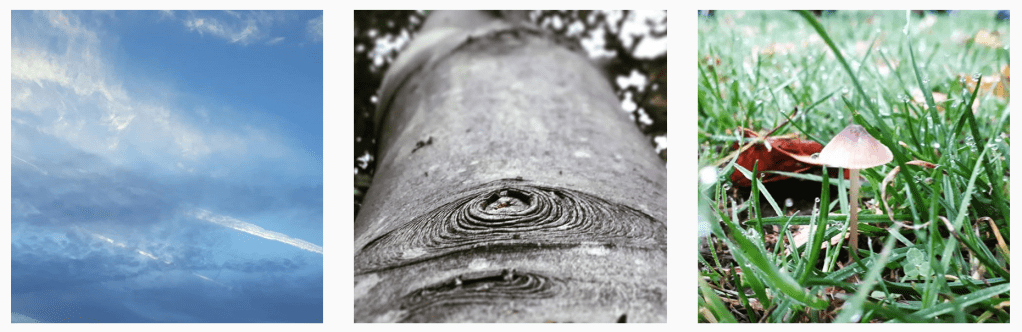
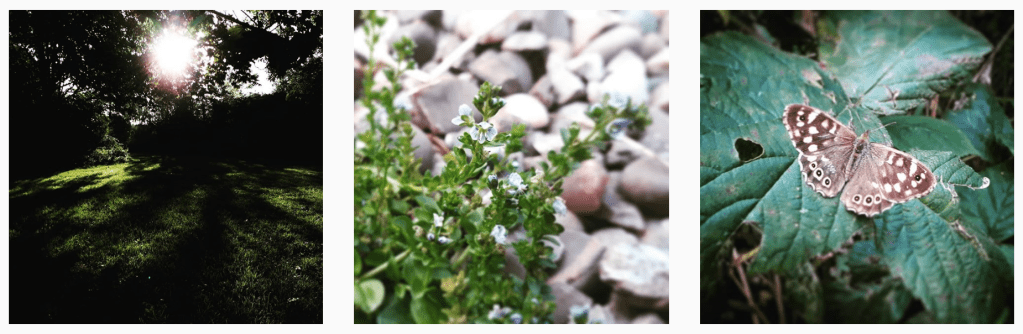
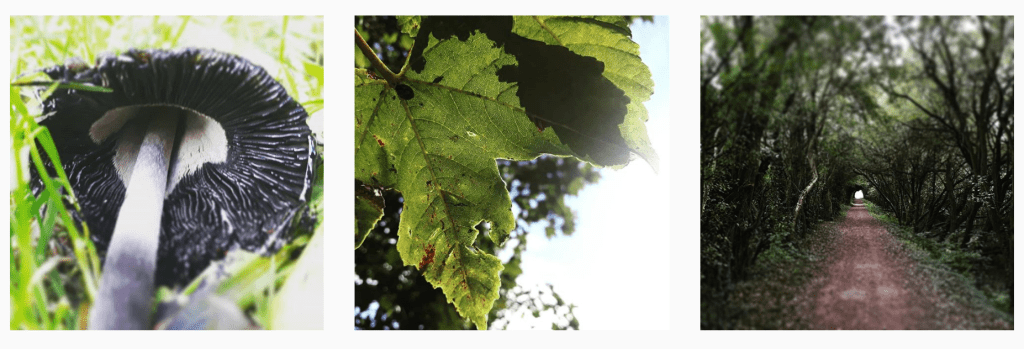
Wild Wonder is a podcast for families brought to you by Stitch. We explore the outdoors and share stories about what we discover. We curate the podcast involving our children as we believe that if children hear others speaking, it makes them feel powerful with their own voice.
Each episode includes a walk about with our children, followed by a story inspired by what we discovered on our walk. This current series of podcast is being made at a time when the UK is under lock down due to the Corona Virus. The conversations happen within walking distance of our house and were part of our daily outing. We found these conversations with our children allowed us to hit the reset button. We felt more connected to each other and the habitat that surrounds us (which maybe at a better time, we would have taken for granted.)
We hope this podcast and the supporting activities allows your families to connect to each other and the world just outside your front door.
Episode 4 – Woodlouse
Episode 3 – Jackdaw
Episode 2 – The Beech and the Oak
Episode 1 – Dandelion
Activities
You can find the most recent activities posted on Facebook or Instagram.
We have also created some activity sheets to accompany each story. These will be added below when a new episode drops.