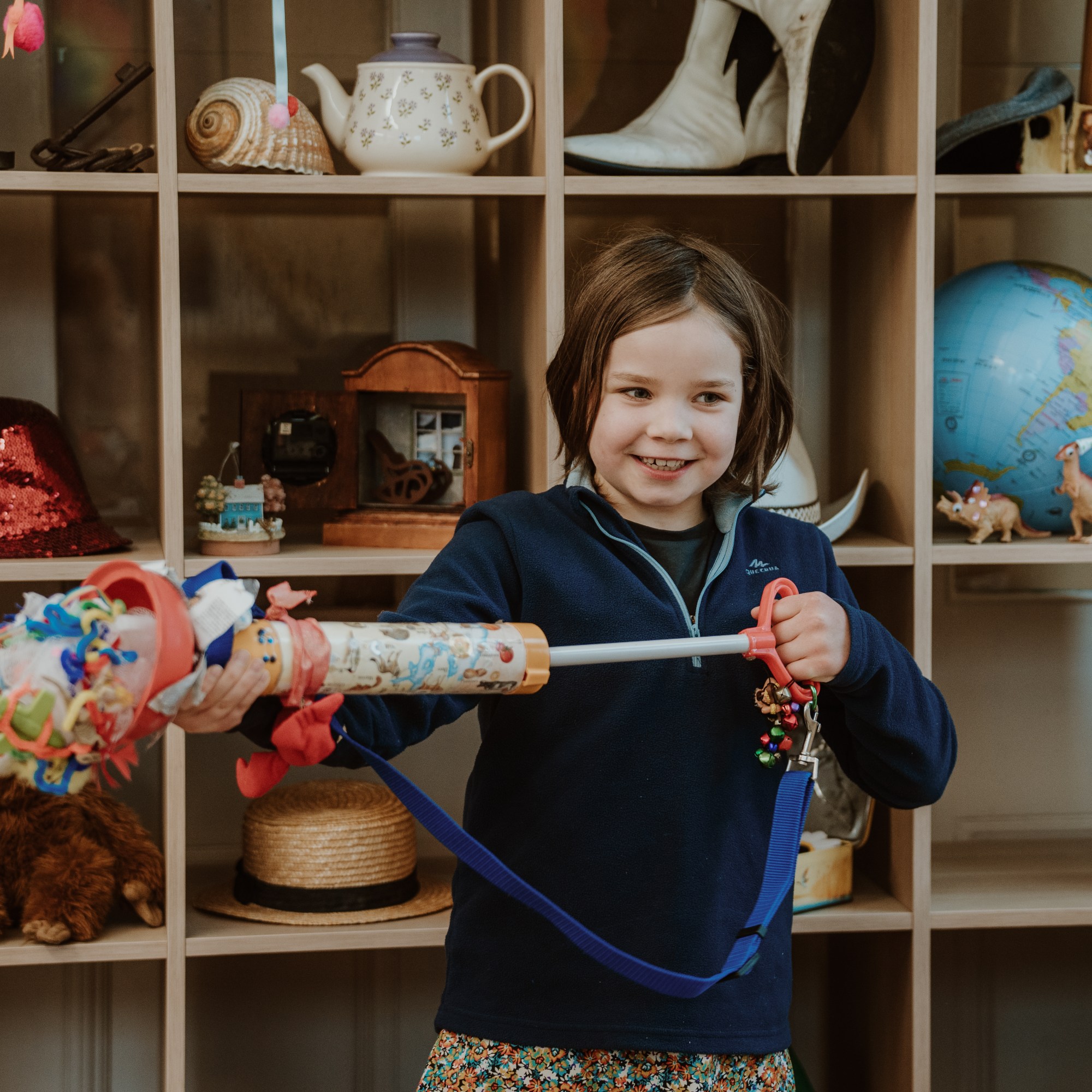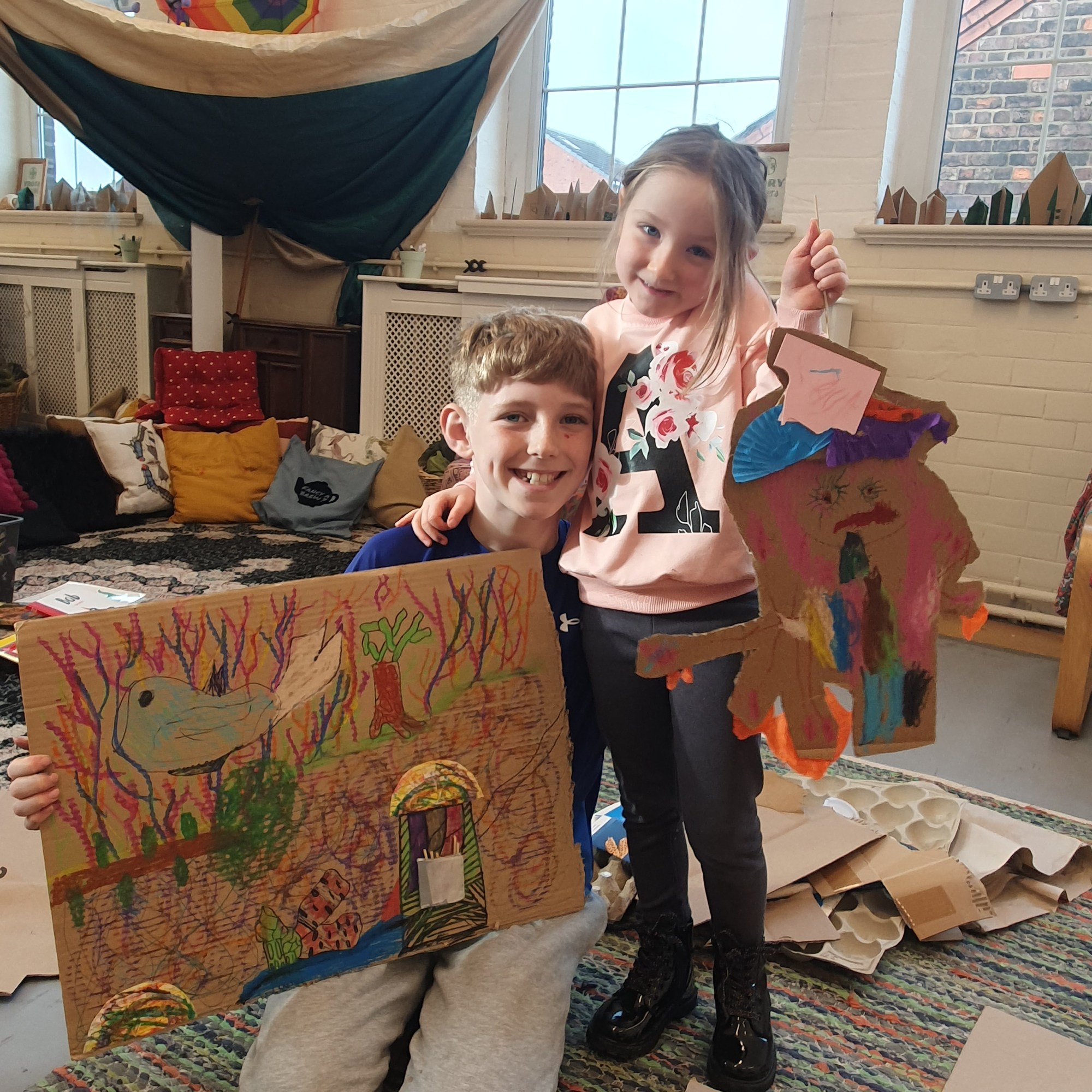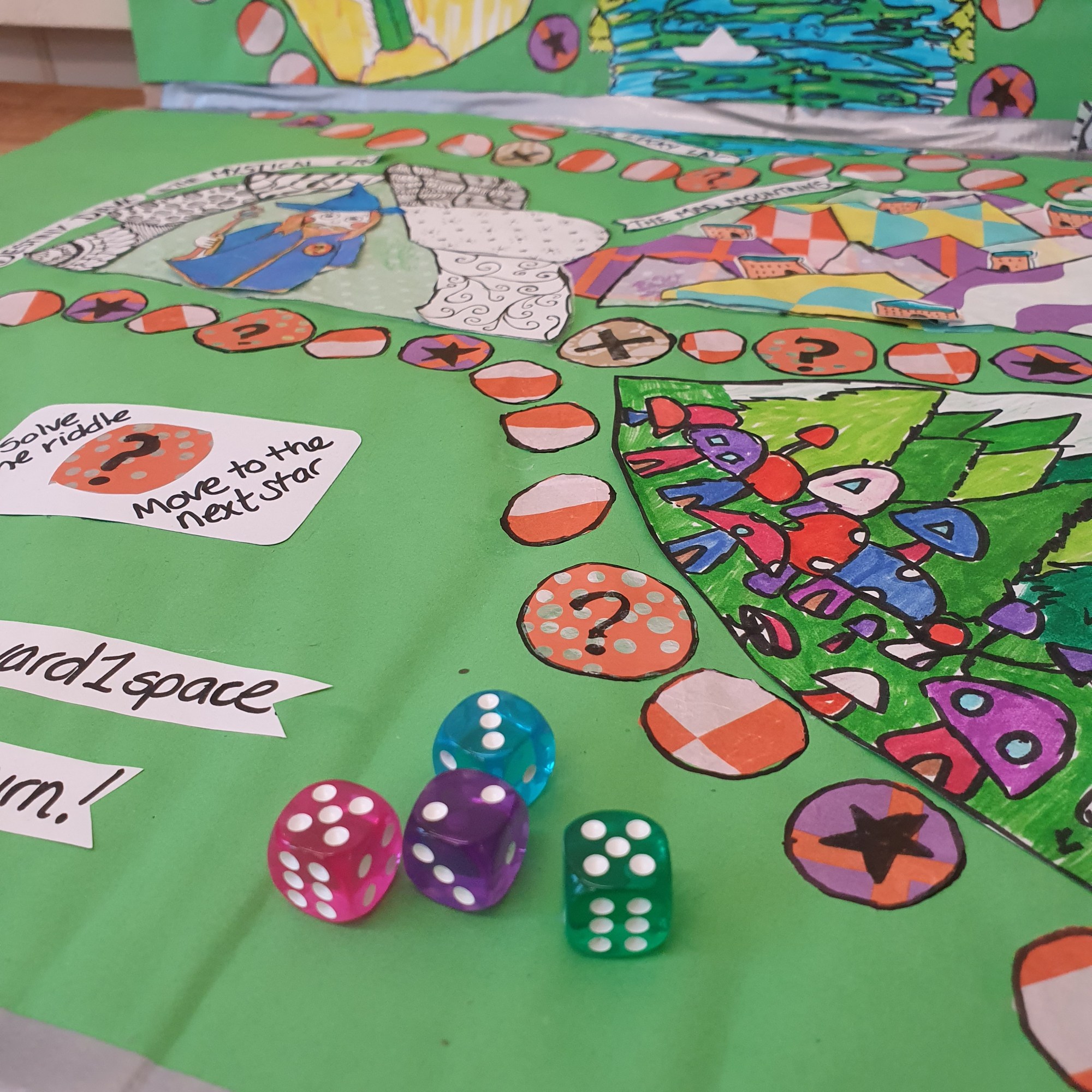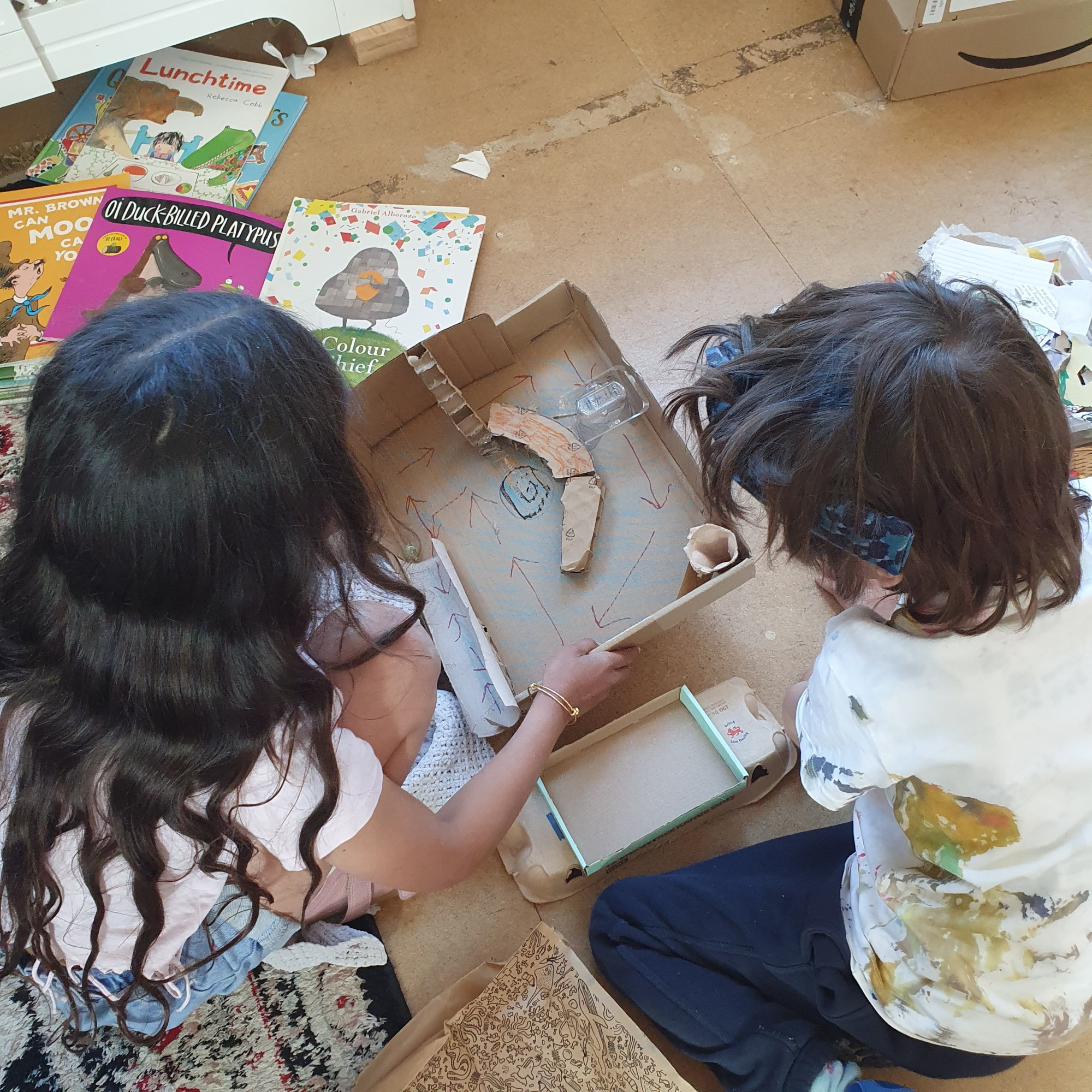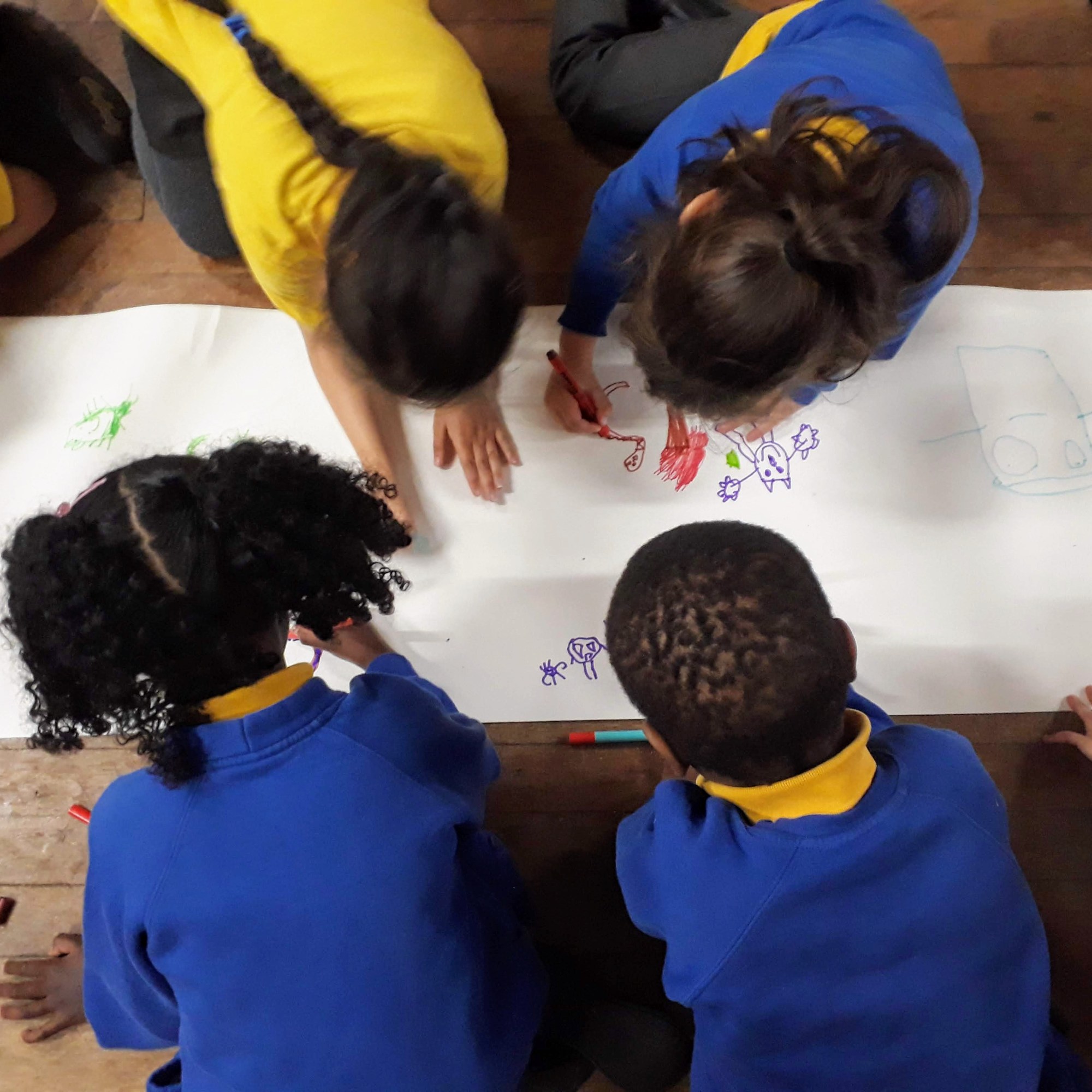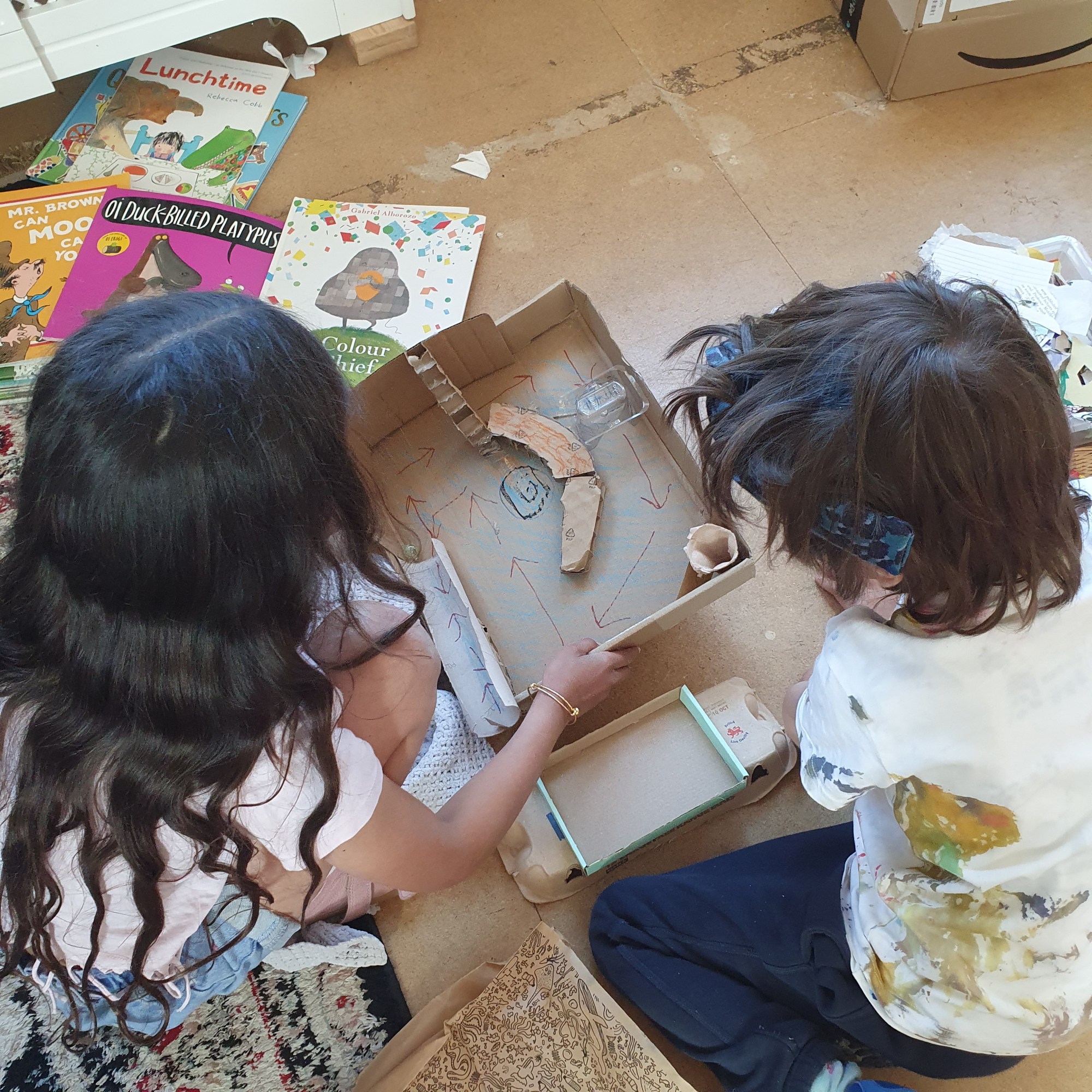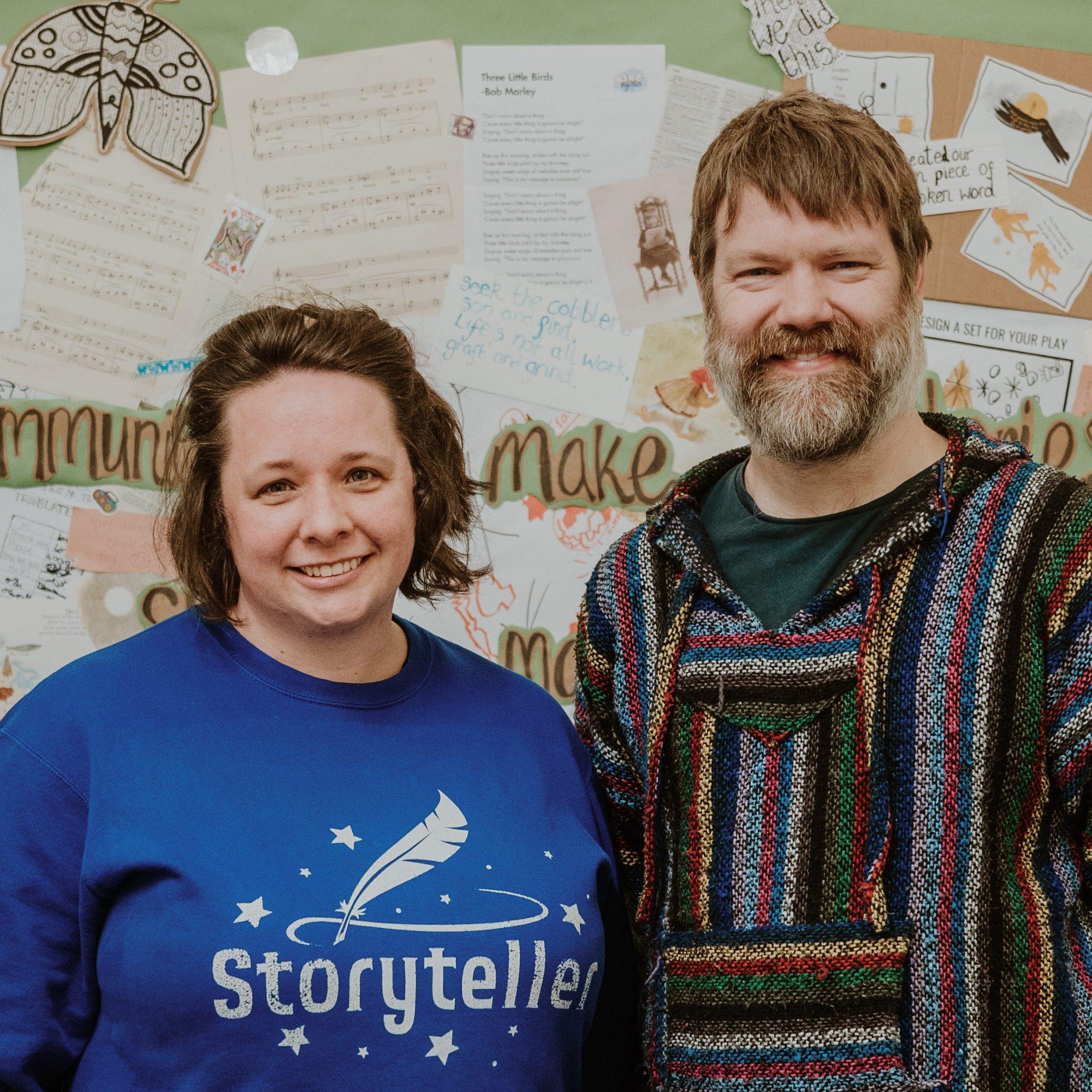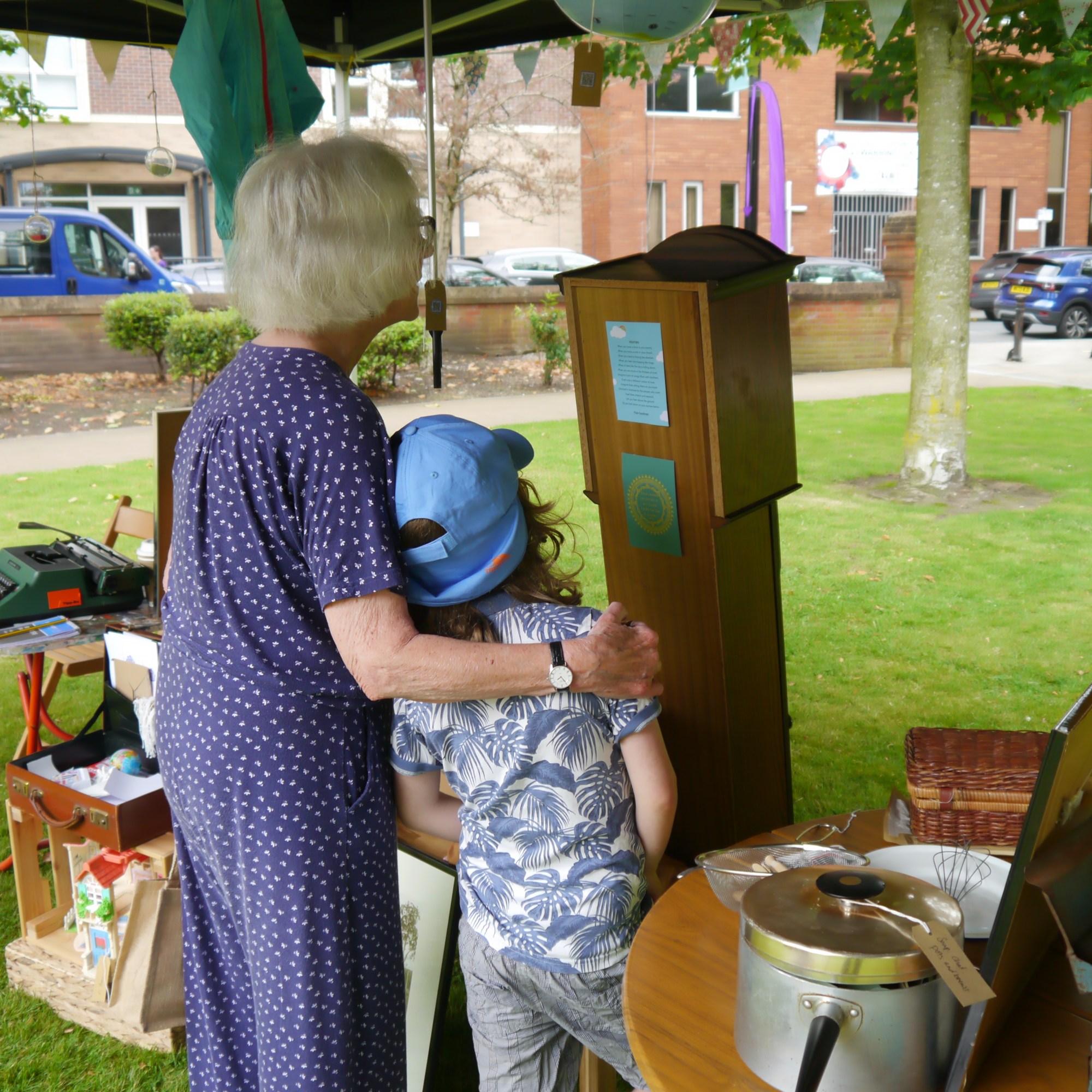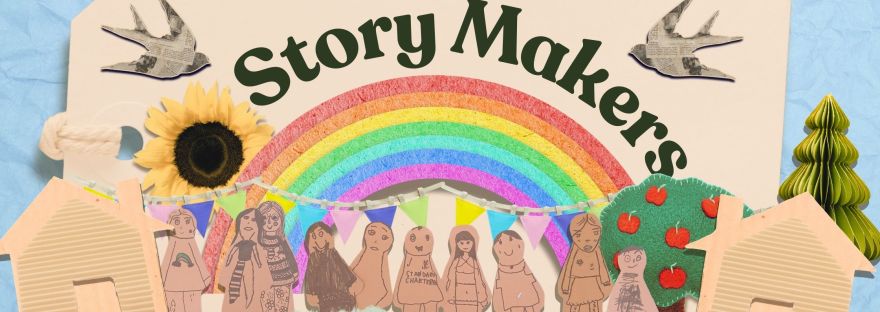
This half term we have been exploring mythical creatures in our Story Makers Session.
Listen to Flick tell the story below – How does the girl’s world change at the end of the story?
Activities
You can have a go at some of the activities below. We’d love to see what you get up to, so please share what you have created with us on social media or by emailing us.
Creature Feature: Create your own mythical creature with a roll of the dice. You’ll need a dice, some paper and pen or pencil Take turns rolling the dice and use this table to draw a feature of you creature
Animal inspiration: Many mythical creatures are a mixture of real life animals. Can you match the animal to the descriptive word?
Colour treasure hunt: Go for a walk around your neighbourhood and discover the different colours you can spot. You could use our image below to help name the different colours.
Treasured Wish Jar: create your own wish jar of somethings you would like to discover or see more of in the world
Celebrating Mythical Creatures in your Culture: The UK has a rich heritage of mythical creatures in our folk tales from dragons and unicorns to mermaids and giants. What mythical creatures are celebrated in your culture? Can you share a tale about one with your friends or family.
These activities are part of content developed for our Story Makers sessions. Story Makers is a creative group for families with English as a second language who have been driven to Warrington by circumstance.
We know that circumstances change and often families can be moved about the UK at very short notice. This digital program is here to encourage family activity and community connections across the UK. You can find more about the Story Makers group here.
Designed for families with Neurodiverent Children aged 7-11 (younger and older siblings welcome).
The club provides a friendly environment where families can explore different art forms, boost their confidence and enjoy quality time together.
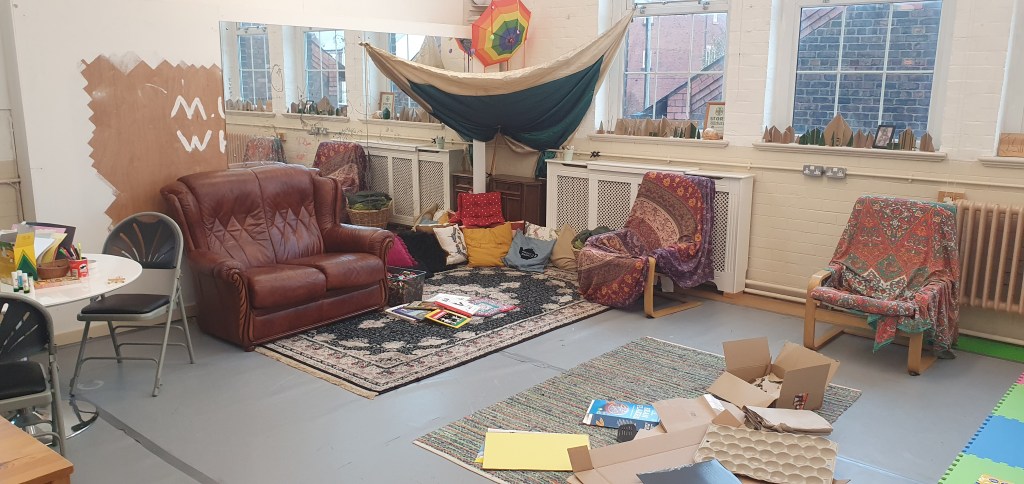
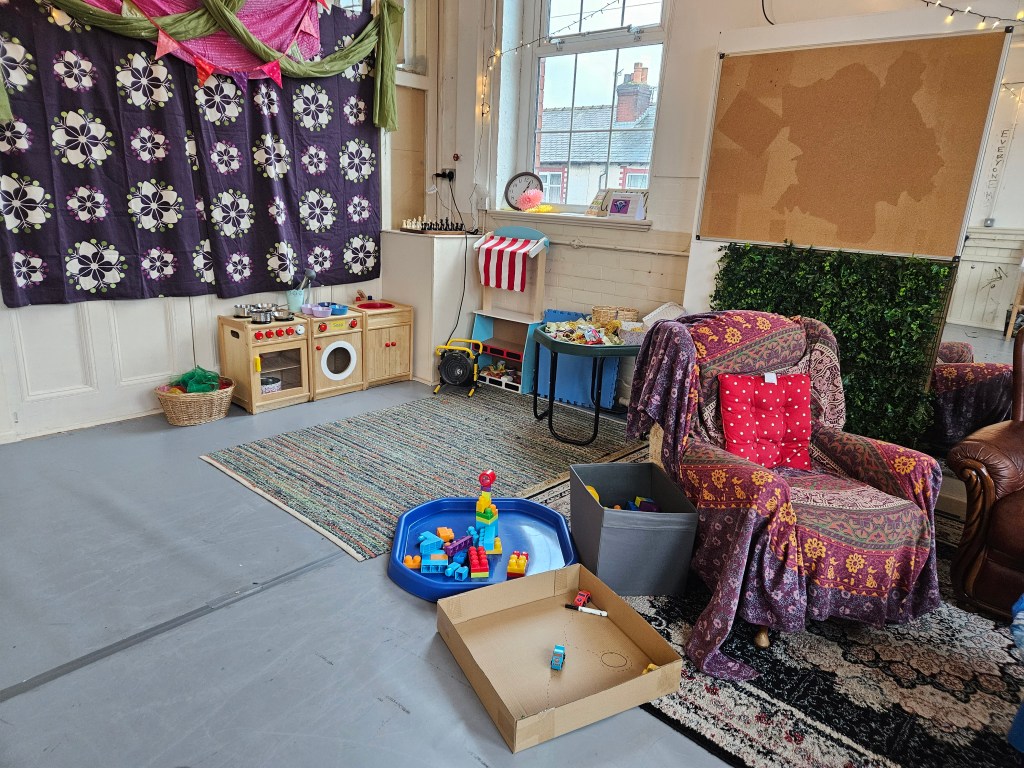
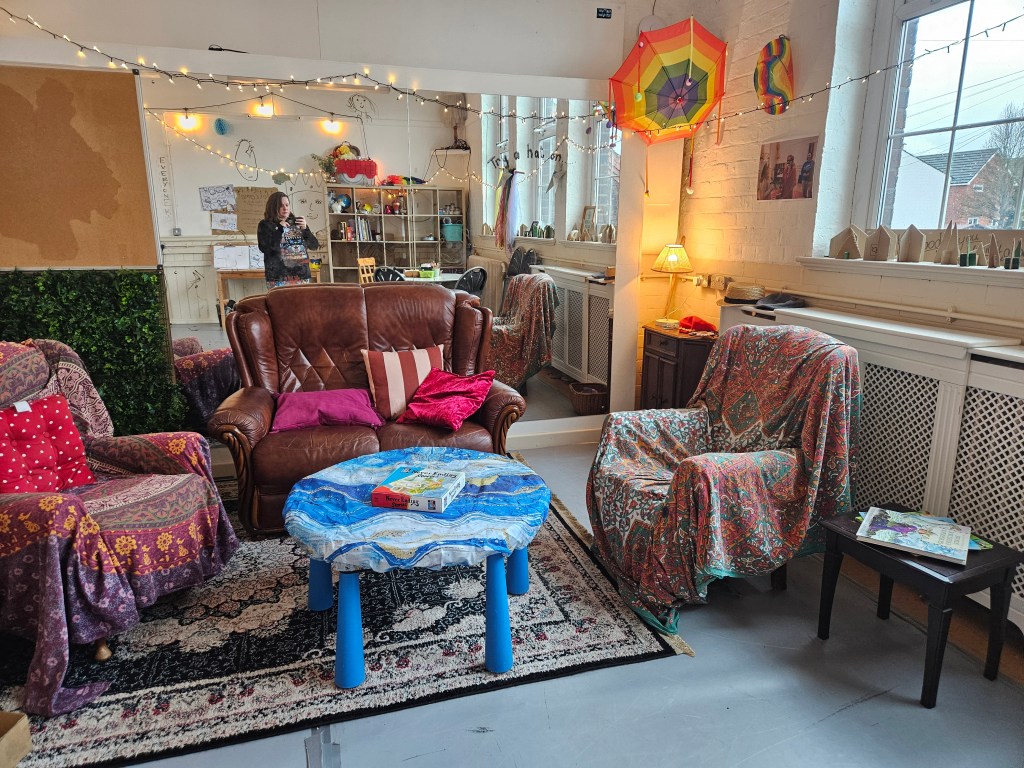
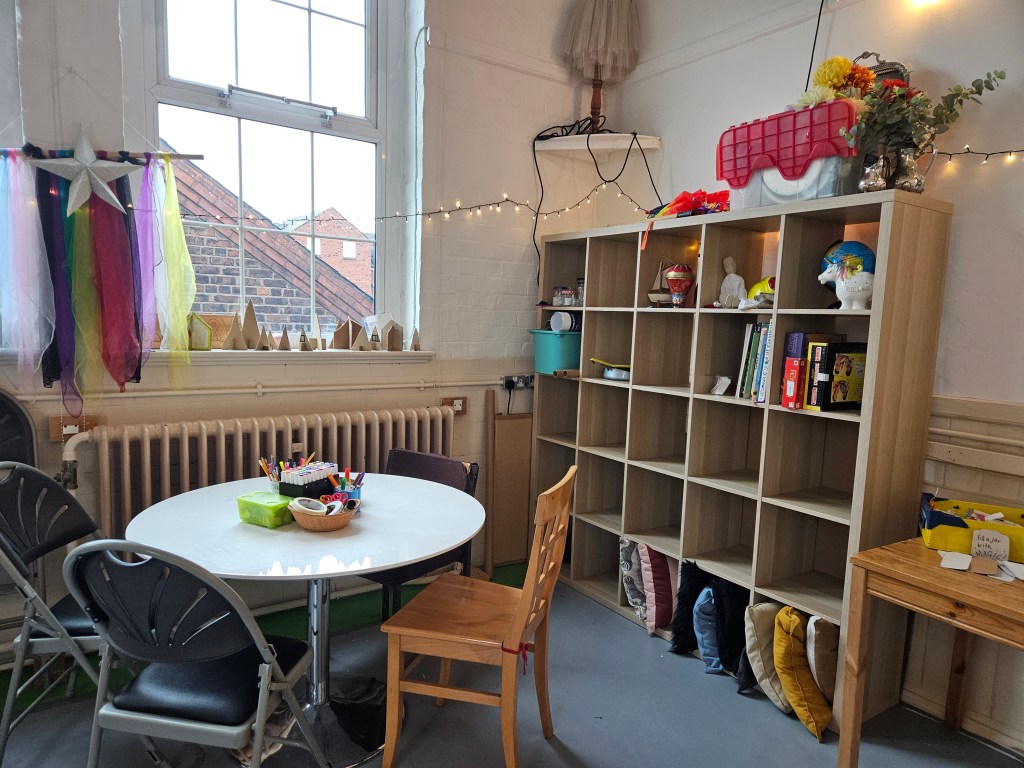
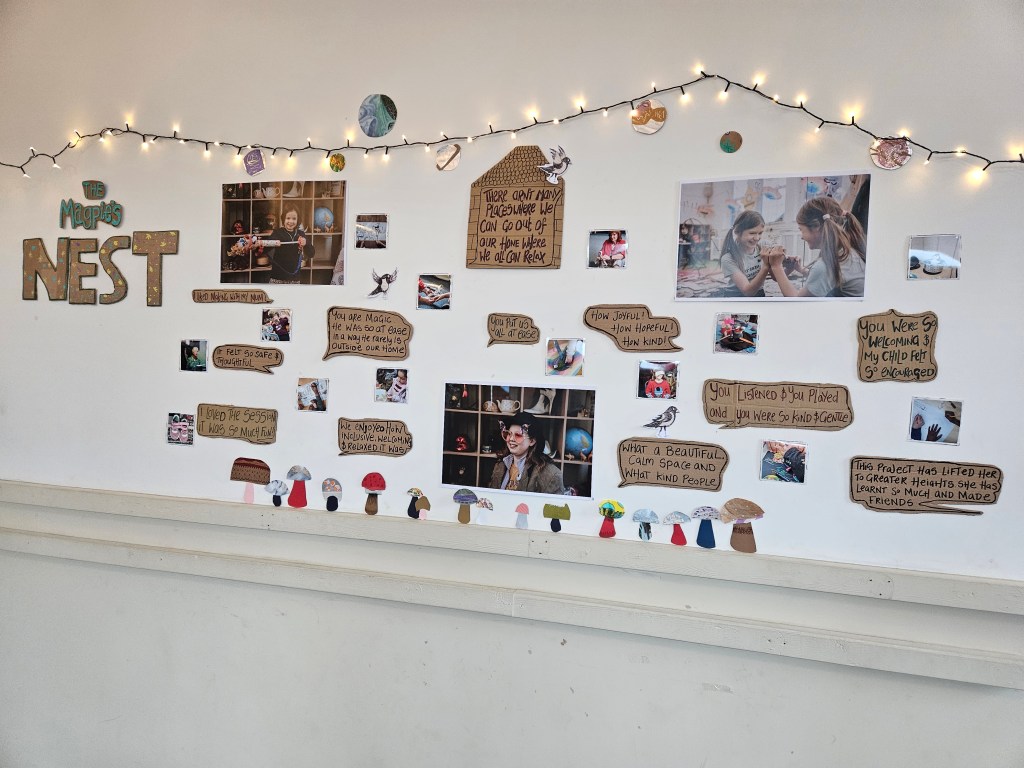
Families have expressed how welcoming, accepting and supportive our sessions are and the space we host them in. There is comfortable seating, different sizes of tables and chairs or cushions, rugs and mats that can be used.
You may be awaiting a diagnosis, find that other spaces don’t suit or want a different and more flexible approach. You don’t have to prove or justify anything to us, if our space and approach looks or sounds like a good fit, then it might be worth a go.
All sessions are free and take place at The Old School in Warrington.
These sessions were originally developed with support from Cheshire Community Foundation and have now been expanded with the support of The National Lottery Community Fund.
What We Do:
Create worlds and stories together
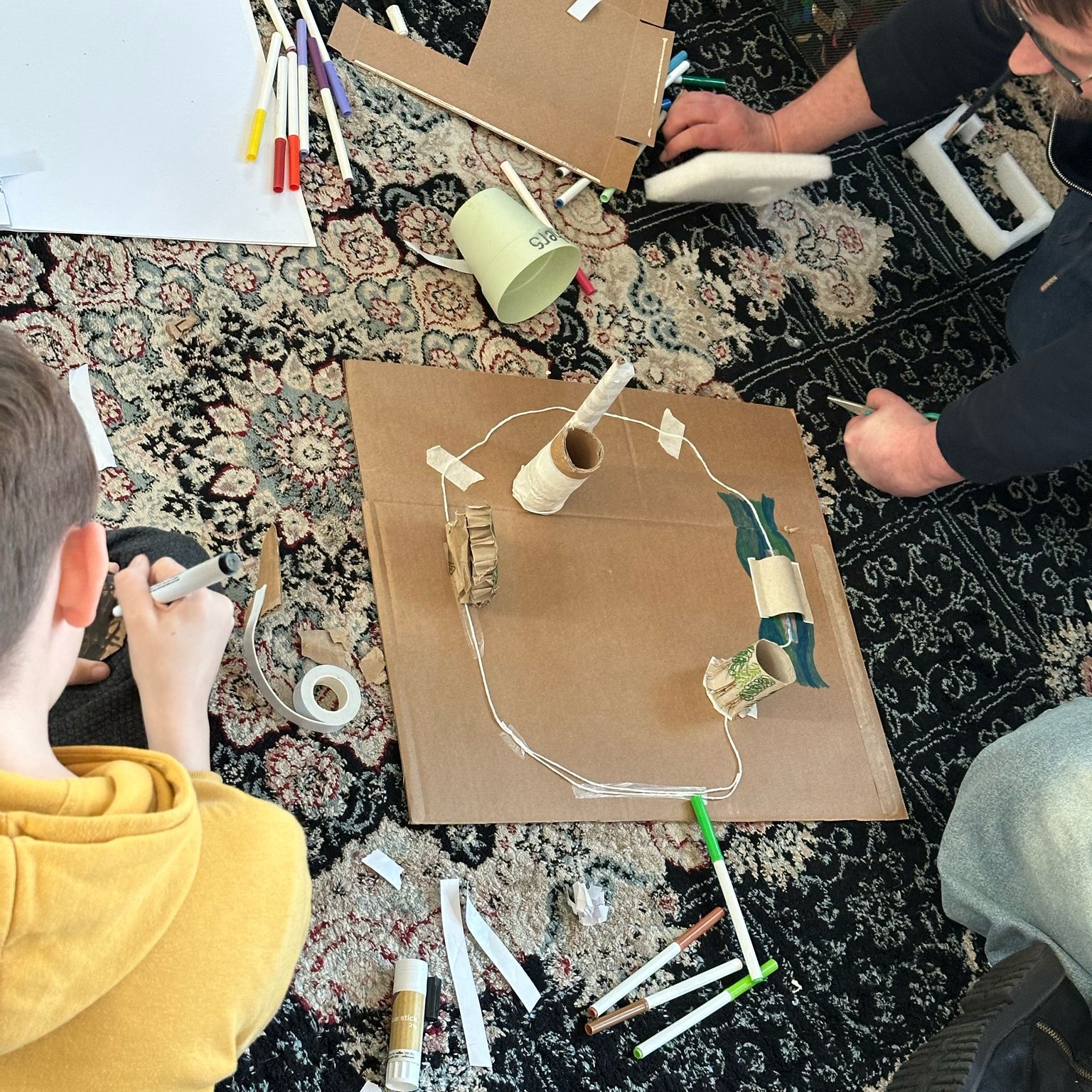
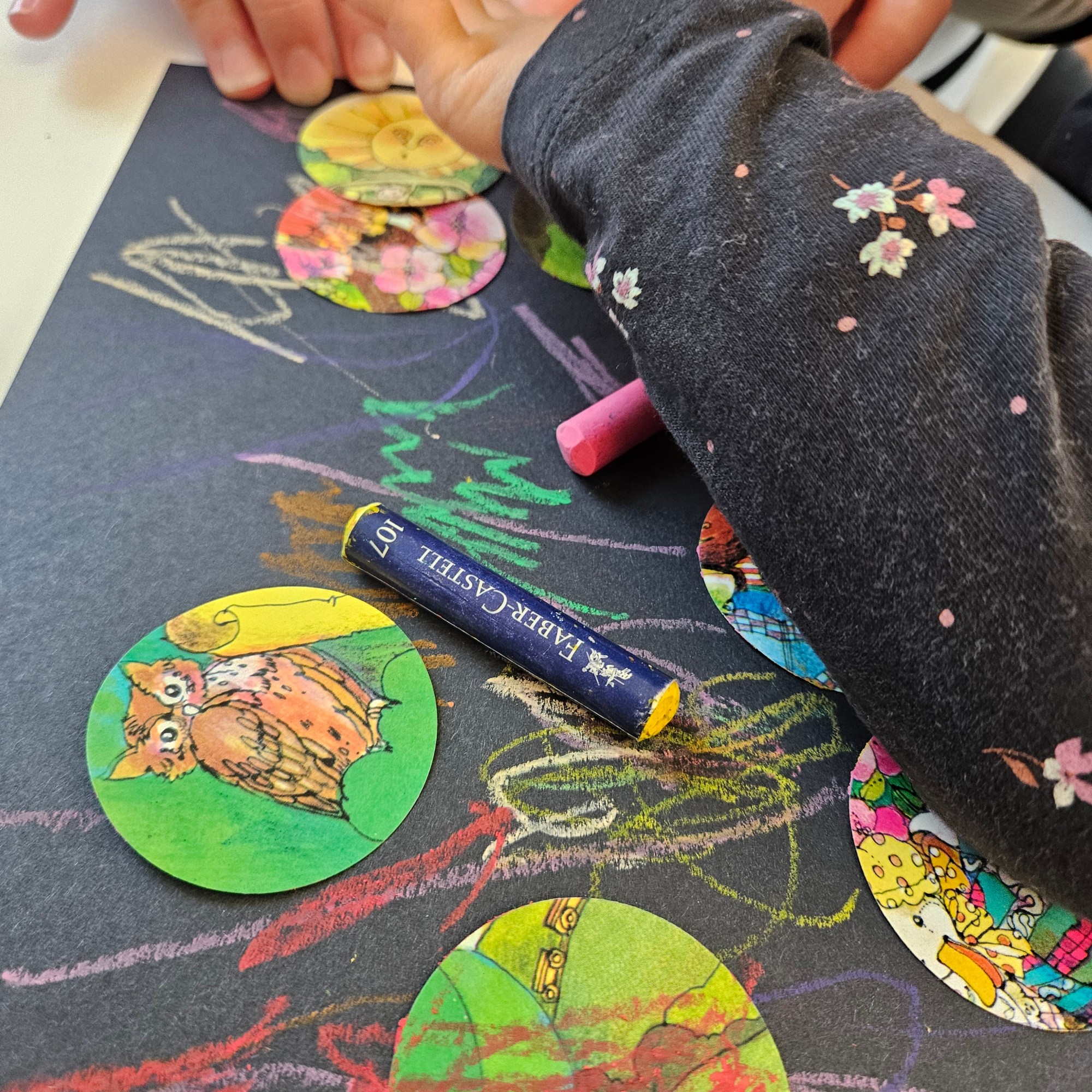
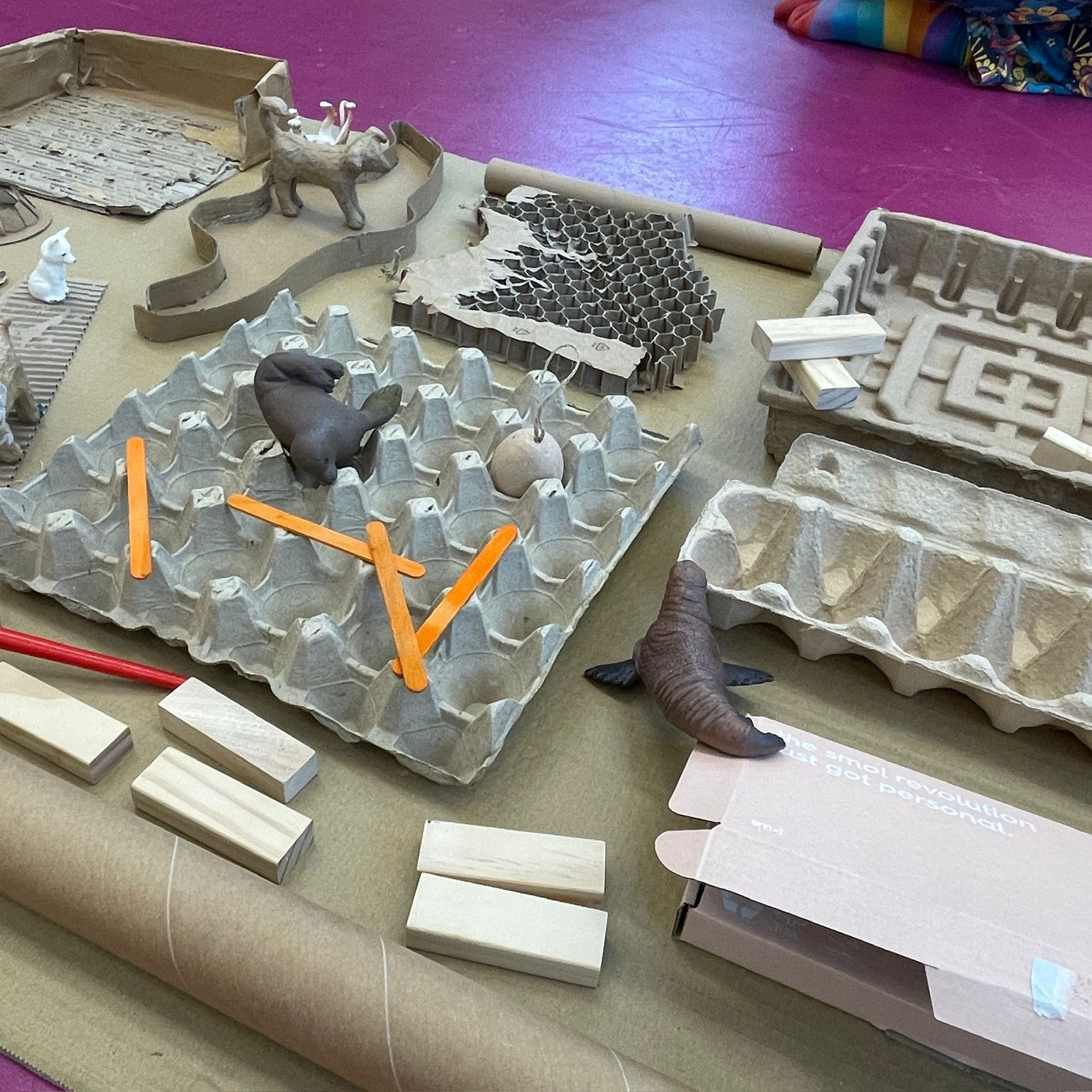
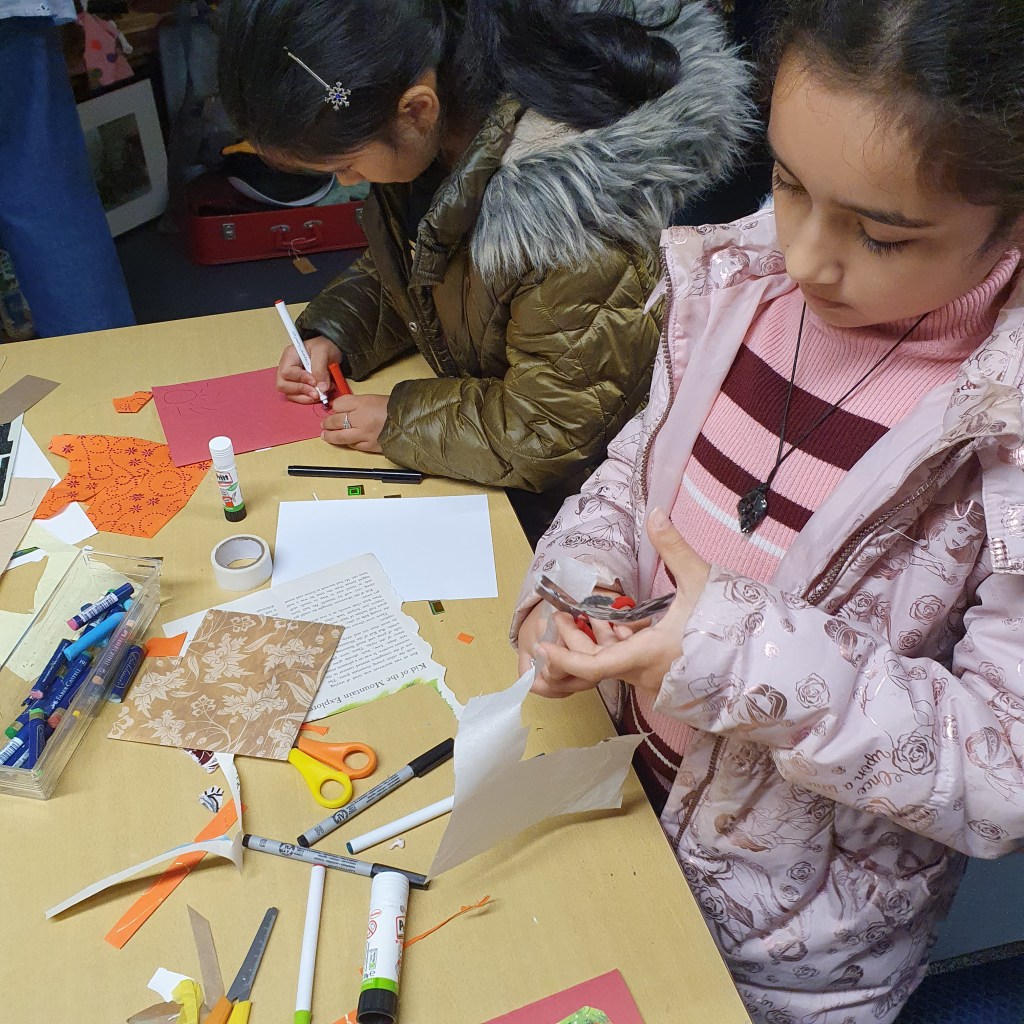
Use recycled materials and craft tools to make pictures, puppets and objects to tell stories with
Work together or alongside each other as a family
Feel accepted and celebrated for working in a way you enjoy working, without pressure of set targets
Enjoy being creative with family members while meeting new people too.
Details
Day & Time: 3rd Saturday of the month 10.30-12
Location: The Old School, Warrington, WA1 3AJ
To book your place or find out more, please fill in this form below.
Or scroll down for more details about the room we use, access and the people who run the sessions.
Families with neurodivergent children aged 7-11 and their siblings
Adults and children who find some public or education spaces overwhelming
Children, parents and carers who want an accessible space to be creative and spend quality tiime with their family
What do we do?
Creative activities – arts, crafts and imaginative play
Talk about ideas and things we enjoy doing
Meet new people
Have fun
Do I need a diagnosis or anything to show neurodivergence?
No. We will only ask if you have any access requirements. You may be on a pathway or a long way from that. Our environment and approach is here to help your children and you to be creative and feel accepted.
What does the room look like?
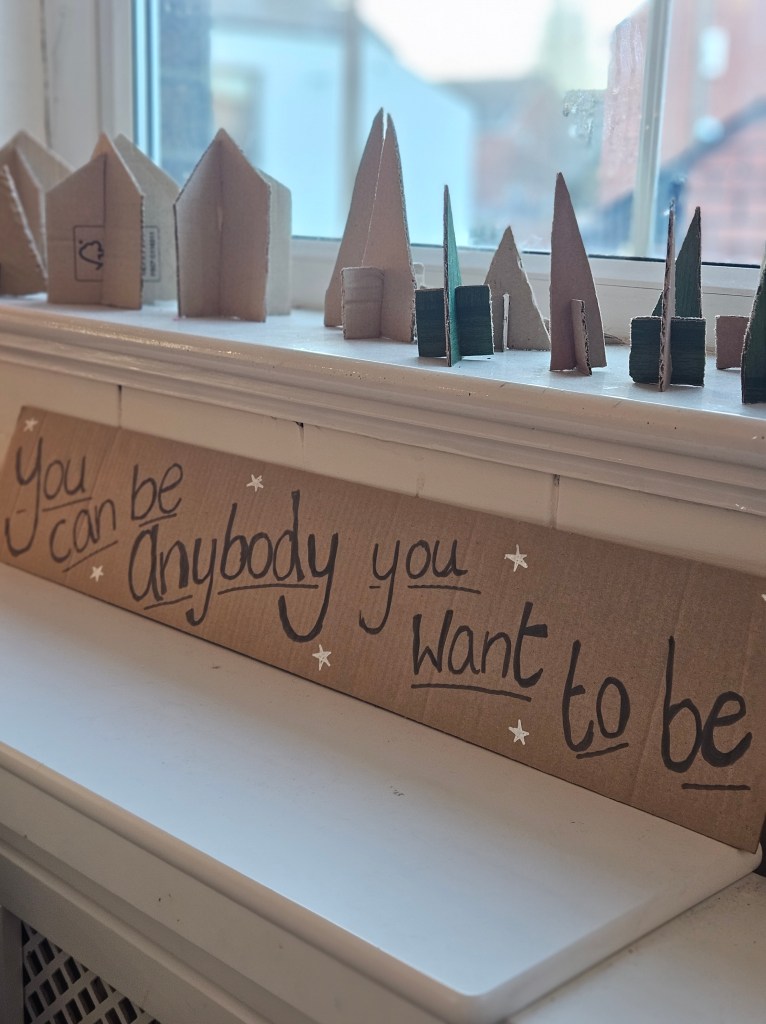
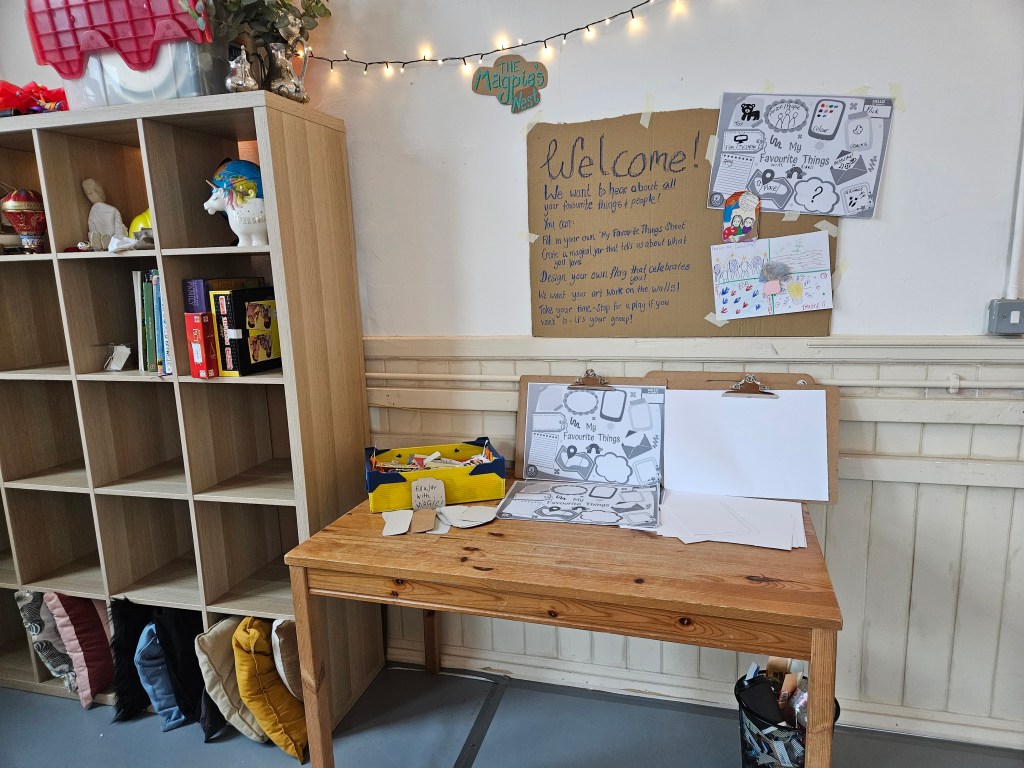
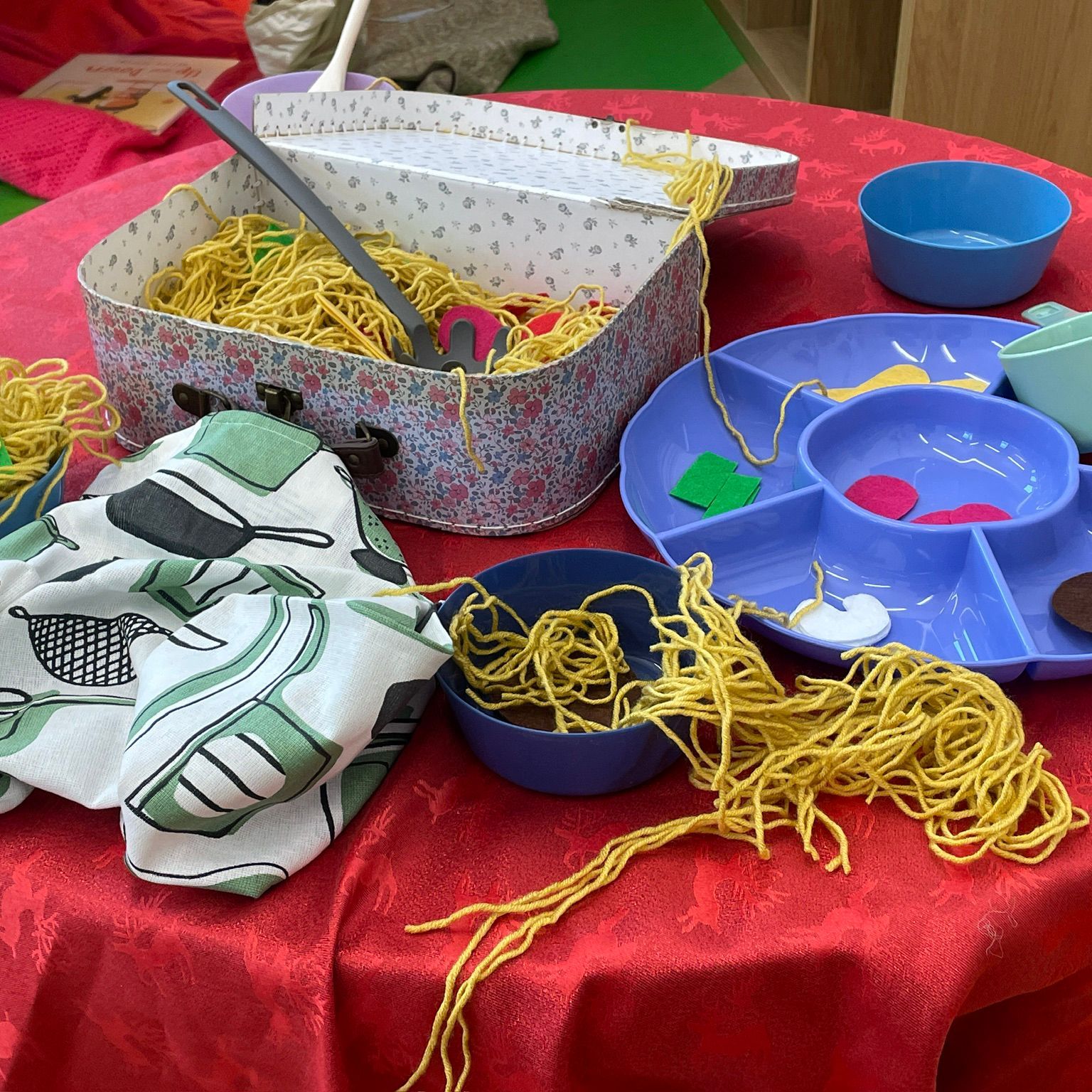
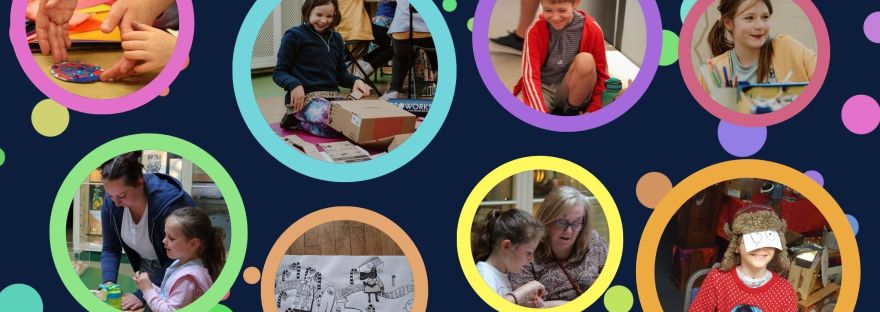
Here are some pictures of the room we use upstairs at The Old School. The building itself is a former Victorian style school. Our room is upstairs via a wide, curved set of stairs or a lift.
While we do make some changes to the layout for each group or session that we run, most furniture, colours and wall displays will be either the same or similar.
Who runs the sessions?
Tom Barry is a Storyteller and Community Artist with more than 20 years experience. He is from Winsford in Cheshire and has worked in many settings including: schools, children’s homes and historical sites. He recently qualified as a Celebrant.
He has been priviledged to work with all age groups from babies and toddlers all the way through to universities, parents and families and older adults.
He spent many years working with primary aged children as a storytelling viking warrior, is a very surprisingly good dancer and LOVES Hedgehogs, although rarely gets to see any.
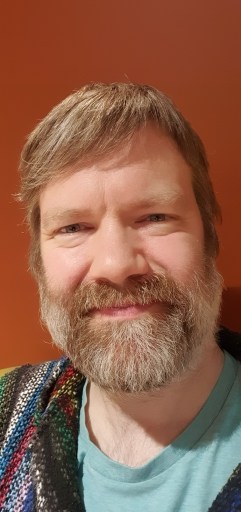
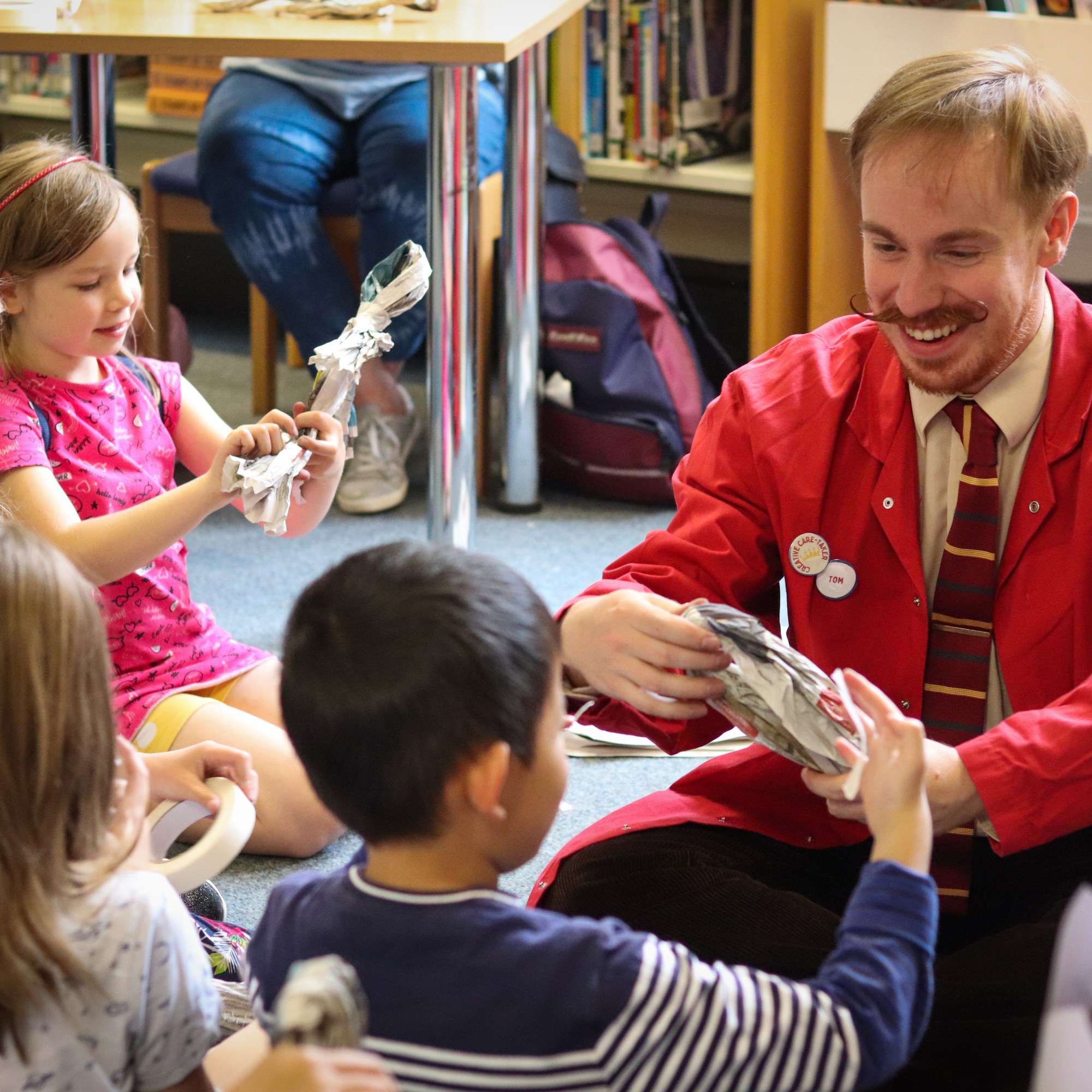
He hopes this picture shows some of the warmth and kindness that he wants have in his workshops.
Designed for families with Neurodiverent Children aged 7-11 (younger and older siblings welcome).
The club provides a friendly environment where families can explore different art forms, boost their confidence and enjoy quality time together.
Families have expressed how welcoming, accepting and supportive our sessions are and the space we host them in. There is comfortable seating, different sizes of tables and chairs or cushions, rugs and mats that can be used.
You may be awaiting a diagnosis, find that other spaces don’t suit or want a different and more flexible approach. You don’t have to prove or justify anything to us, if our space and approach looks or sounds like a good fit, then it might be worth a go.
All sessions are free and take place at The Old School in Warrington.
These sessions were originally developed with support from Cheshire Community Foundation and have now been expanded with the support of The National Lottery Community Fund.
What We Do:
Create worlds and stories together
Use recycled materials and craft tools to make pictures, puppets and objects to tell stories with
Work together or alongside each other as a family
Feel accepted and celebrated for working in a way you enjoy working, without pressure of set targets
Enjoy being creative with family members while meeting new people too.
Details
Day & Time: 3rd Saturday of the month 10.30-12
Location: The Old School, Warrington, WA1 3AJ
To book your place or find out more, please fill in this form below.
Or scroll down for more details about the room we use, access and the people who run the sessions.
Families with neurodivergent children aged 7-11 and their siblings
Adults and children who find some public or education spaces overwhelming
Children, parents and carers who want an accessible space to be creative and spend quality tiime with their family
What do we do?
Creative activities – arts, crafts and imaginative play
Talk about ideas and things we enjoy doing
Meet new people
Have fun
Do I need a diagnosis or anything to show neurodivergence?
No. We will only ask if you have any access requirements. You may be on a pathway or a long way from that. Our environment and approach is here to help your children and you to be creative and feel accepted.
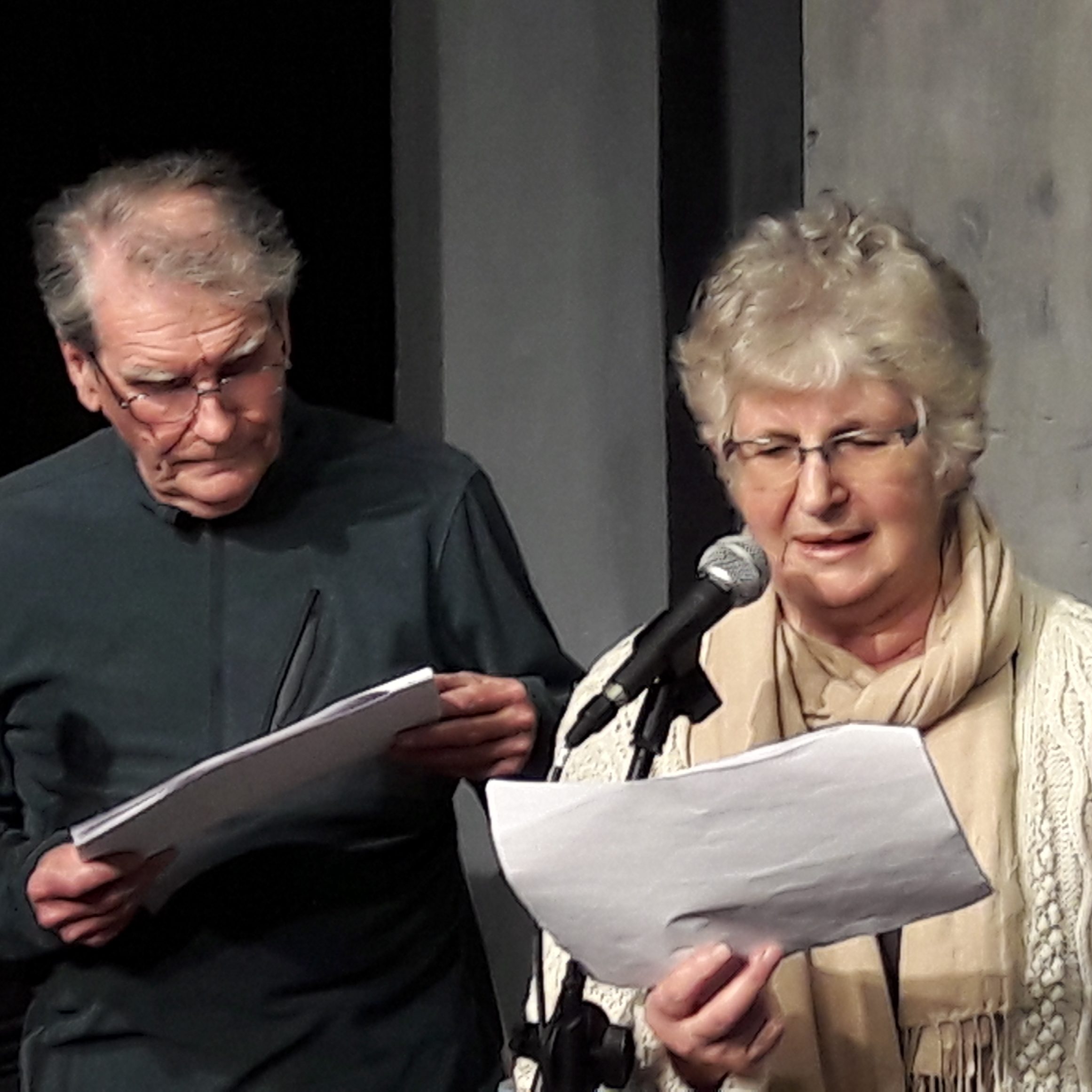
Join our free weekly theatre group and bring those tales to life — on stage, on the airwaves, or just for the joy of it.
No lines to learn, no auditions, no fuss — just fun, laughter, and a friendly bunch who love a good yarn.
Have a play with poetry, try a bit of acting for stage or radio, or dream up your own monologue. You bring the life experience — we’ll bring the applause!
Come stitch your stories together with us. It’s free, it’s creative, and it’s a cracking good time.
All sessions will take place on Fridays during Term time, 11-1 at The Old School, Warrington. These free sessions are part of our Warrington Stories programme funded by the National Lottery Community Fund.
To book your free place, get in touch with Tom through the form below.
Following 8 weeks of Story and Play sessions for under 5s at the Old School in Warrington, we have created a Parenting Playbook to support Parents and Carers with establishing play at home.
Thanks to funding from Cheshire Community Foundation, you can download your own copy to support play with the little ones in your life.
For Families who speak English as a Second Language who have been driven to Warrington by circumstance
At our Story Makers group we aim to support families who have arrived in Warrington through diverse circumstances by offering accessible, arts-based activities that encourage expression, community connection and celebrate our cultures, with support for ESOL learners.
Children, parents and grandparents are all welcome to come together to share stories, play and learn English.
Everyone’s story matters. Everyone is welcome.
What We Do:
Tell and create stories together
Play games with words and imagination
Make art and crafts inspired by stories
Learn English in a fun, friendly way
Celebrate Multicultural Warrington
Details
Day & Time: Tuesdays 4.00-5.30, from 13th January 2026
Location: The Old School, Warrington, WA1 3AJ
Email: hello@storystitchers.co.uk to book your place or find out more
We have secured funding to run this group until June 2026. At the end of the project we may produce some kind of creative outcome like an exhibition or a book. This will be decided by the group in a process of co production.
Get in touch
If you would like to book a place for you family or find out more, please use the form below.
Flick Barry is a CELTA qualified ESOL teacher and has been a community artist for 20 years. She is experienced at storytelling work with all ages, including working with ESOL students and refugee families. She is British born and throughout her life is lucky to have worked and travelled around the world. Flick is supported by friendly staff and volunteers to ensure that your experience is a positive one.
How do I find out more or sign my family up?
Please send an email to hello@storystitchers.co.uk to sign up or find out more.
Please feel free to download and share our poster with anyone who you think might be interested in coming.
We know that circumstances change and often families can be moved about the UK at very short notice. This digital program is here to encourage family activity and community connections across the UK. You can access these activities here
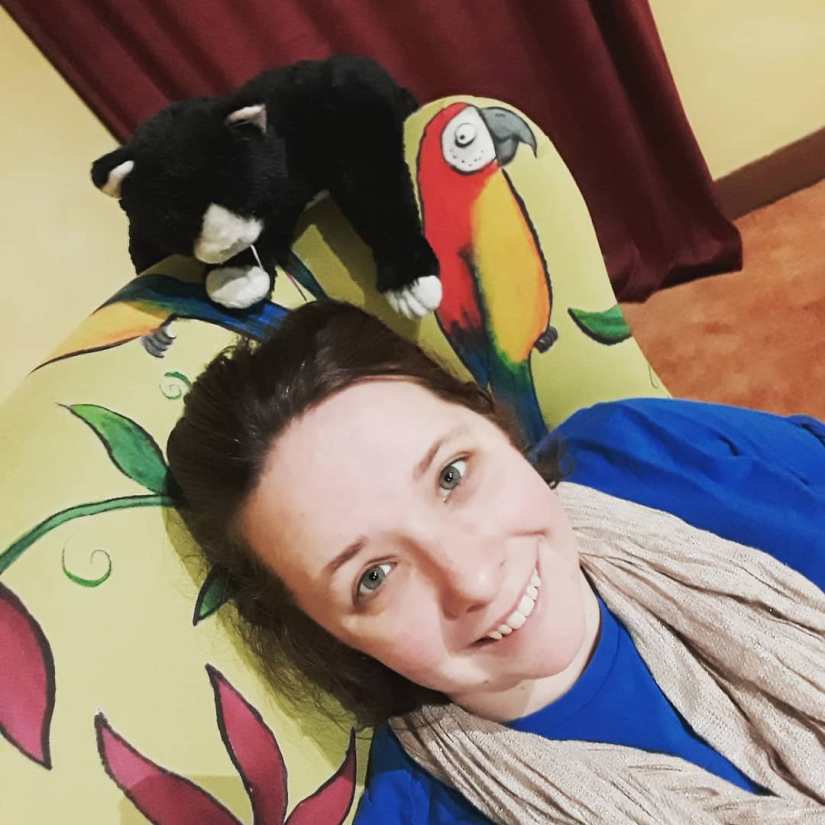
Like stories, beginnings are important. We are often asked
“How do we start a project? What approaches do we have? What attitudes do we foster?”
So this is how we unpack the beginning of things, how we establish relationships and cultivate joy and wonder.
Joy Seeking
If we support folk to discover joy and curiosity, they are more likely to connect with meaningful creative activity. The word glimmer entered our vocabulary from the trauma informed community. For those who don’t know, a glimmer is considered to be the opposite of a trigger. While a trigger may cause trauma, stress or anxiety to surface, a glimmer is considered to be micro moments that induce happiness. Once we become aware of those glimmers, we can start to build upon them and make more time in our life to do the things that generate those glimmers.
However, some of our participants are not ready for glimmer hunting. They are so bogged down in the stresses of life that even a glimmer is beyond them. So we will look for a Spark. If a glimmer is a micro moment, a Spark is a nano second. A flashing twinkle that may fizzle out before the participant has even recognised that jot of joy in their body. As facilitators, it is our job to seek the Spark in our participants and build upon it.
This is a very watchful practice. These Sparks might be a widening of the eyes, a satisfied sigh, a flicker of a smile or a leaning into the work. It cannot be achieved if we are too busy teaching a refined artistic skill or aiming for an explicit finished piece of work. In this stage this is how we establish a relationship, we want to connect to the human before we connect to the artist. This early stage of creative collaboration is built around accessibility and appropriateness for the participant. We call this Scrapbook Storytelling.
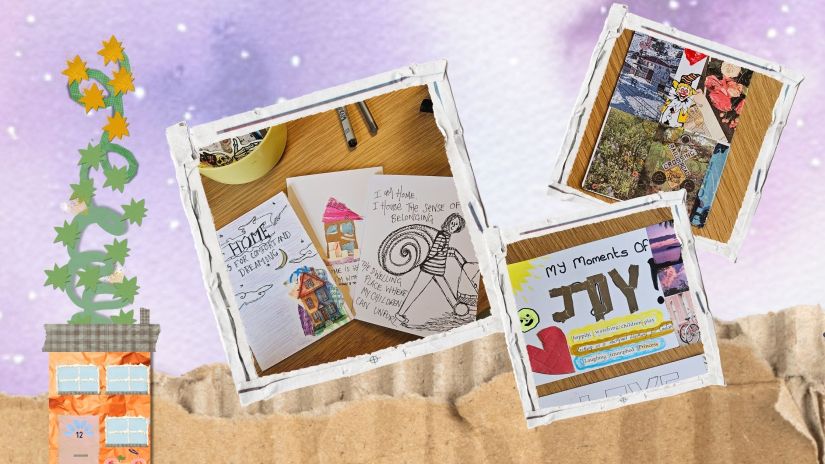
This could be a prompt sheet to encourage words or drawing their favourite things or telling us about their favourite character from a film, TV or book or collaging an object that they use everyday. From this moment we can really start to tailor the creative offer to match the common interests of the group. This is where the glimmers emerge and the participants begin to recognise the joy they are discovering in their creative practice. With our encouragement, we as a group start to seek the joy out.
This is done authentically. We, as artists, are also seeking joy. Instead of commenting on whether someone’s outcome is ‘Good ‘ or not, we give feedback on the approach: “I can see how you have made those dots using the pencil” or “You look happy. Is it the colours that you have used that are making you so happy?”
Wondering
Once there is a collective feeling of joy seeking amongst the group, we are ready to access the next level of an artistic practice – Wondering. Wondering is our way of describing a creative curiosity that is born out of an artistic practice and exploration of an idea. It is not just about the participant wondering, it is also about the facilitator providing high quality artistic stimulus to provoke wonder. It often begins with a Wonder Box. A Wonder Box is a vessel filled with objects to provoke conversation. The box should reflect the conversations and interests that have been discovered in the previous sessions, curated to provoke a more in depth decision. This may evolve into something more specific like the inside of a carriage clock that houses clues to a secret character or a piece of audio that invites inspiration.
The Wondering stage is also there to encourage and cultivate creative skills. In this stage of the process the facilitator should begin sharing techniques to enhance the participant’s creative practice. In the previous stage, we may have used materials that are available at home – lots of recycled card, scrap paper, colouring pencils and pens. In the Wondering stage we will begin to elevate the materials on offer, Aqua markers instead of felt tips, Fineliners over pencils and introducing clay or acrylic paint pens. There is also some creative risk taking that comes with this practice. So we will scaffold this to reduce risk. If making a mark is too overwhelming for fear of getting it wrong, we will incorporate time and materials to practice.
As we work through the group’s Wondering era, the artist starts to see what the outcome could be. This is gently fed back to the group and feedback gathered about whether this idea is exciting to them as a collective.
Where stories and play help children under five thrive.
We are thrilled to share news that we have received funding from Cheshire Community Foundation to pilot an 8 week project for families with children under five that puts imaginative play at its heart. Families will be invited to come along to our friendly sessions where we share stories, craft, sing and play. These sessions will take place at The Old School in Fairfield and Howley in Warrington.
The sessions will combine a more structured storytime session with a softer stay and play format and will be delivered by artists with experience as parents and working with Early Years families and settings. Every session will include open-ended play that sparks creativity, and storytelling that builds confidence and curiosity. We will provide a safe, welcoming space for all families.
There will be the opportunity for parents to play and craft themselves in a bite-sized way to give space for creative reflection. A no pressure activity that can be completed with a child on your knee.
At the end of the 8 week sessions we will take all that we have learnt and create a Parenting Playbook, this would be designed to embed play into the home. We will have digital copies and a limited number of printed copies that we will distribute locally through food banks and pantries.
If you would like to bring your family along or learn more about the sessions, please don’t hesitate to get in touch.
Inspired by the rich history of social movements in the UK, our Revolt Artivism Workshops aim to empower Key stage 2 and 3 students to create change through drama, storytelling, songwriting and poetry. Below you can read about some of those movements that shaped our nation when ordinary people asked for change.
Peterloo
On 16th August 1819, around 80,000 people gathered on St Peter’s Field in central Manchester to demand democratic representation.
Most of them were industrial workers from Manchester and its surrounding towns, who had suffered from an economic depression and left without support from the government.. They peacefully came together to demand the right to make their lives better.
Under colourful banners hand stitched with slogans like “Unity and Strength” ,and “Liberty and Fraternity”, they listened to radicals like Henry Hunt speak up for their rights and democratic reform.
It ended with the government cavalry – instructed to keep the ‘peace’ – armed with swords, charged the crowd of men, women and children. 18 people were killed and 700 people were injured.
Masque of Anarchy
Percy Bysshe Shelley (1792-1822) wrote this in the aftermath of Peterloo. Due to government censorship and fear that the poem would lead to greater civil unrest, the poem wasn’t published for another 13 years. It was never actually published in Shelley’s lifetime.
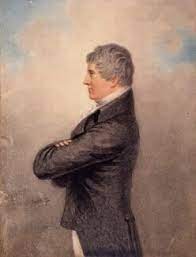
Henry Hunt
1773 -1835
Henry “Orator” Hunt was a British radical speaker and pioneer of working-class radicalism and an important influence on the later Chartist Movement. He campaigned for parliamentary reform. He was the first member of parliament to advocate for women’s right to vote.
Hunt, encouraged people to attend a meeting at Peterloo on the 16 August ‘armed with NO OTHER WEAPON but that of a self-approving conscience’.
After the massacre at Peterloo, Hunt and nine others were charged with ‘unlawful and seditious assembling for the purpose of exciting discontent .’
Hunt was found guilty in March 1820 and sentenced to two and a half years in Ilchester Gaol. In prison, he wrote his autobiography and two book titled “To the Radical Reformers, Male and Female of England, Ireland and Scotland”.
‘I am determined the Working Classes shall have the reform they want.’
Henry Hunt
In 1830 he became a member of Parliament for Preston. As a consistent champion of the working classes, He gave speeches addressed to the urging them to press for full equal rights and hold politicians to account.
The Chartists
The Chartist movement was the first mass movement driven by the working classes. It grew following the 1832 Reform Act which didn’t offer voting rights to people unless they owned property.
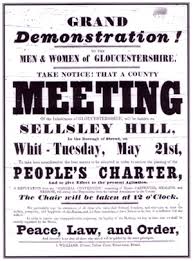
In 1838 a People’s Charter was written, it had 6 demands:
All men to have the vote
Voting should take place by secret ballot
Parliamentary elections every year
Constituencies should be of equal size
Members of Parliament should be paid
You shouldn’t have to own property to be become a Member of Parliament
Chartist Anthem
Here’s Flick singing the Chartist Anthem (1847) by Ben Boucher which dates from the Chartist struggles of the 1840s. Ben Boucher (1769-1851) was a miner who turned to making a living by selling his poems at a penny each in the streets. He died in Dudley workhouse.
You can read all about the different creative Revolt workshops that we offer here